
The Met has added two significant examples of seventeenth-century Dutch architectural painting to its collection. These acquisitions, representing works by Job Berckheyde (1630-1693) and Pieter Saenredam (1597-1665), document the evolution of the genre between 1632 and 1676. In addition, the new works honor the legacy of the late Walter Liedtke, the museum’s former Curator of European Paintings and a preeminent authority on Dutch architectural painting and church interiors.
Job Berckheyde, Interior of the Grote Kerk (Saint Bavo), Haarlem (1676)
This work was gifted to the museum in 2024 by Patricia A. Gruber. Painted over a century after the Reformation, the composition depicts the “cleansed” interior of Haarlem’s principal church.
Berckheyde emphasizes the play of light within the limewashed nave and includes figures that represent various social classes. On the left, a mother and child begging for alms are passed by wealthy parishioners.
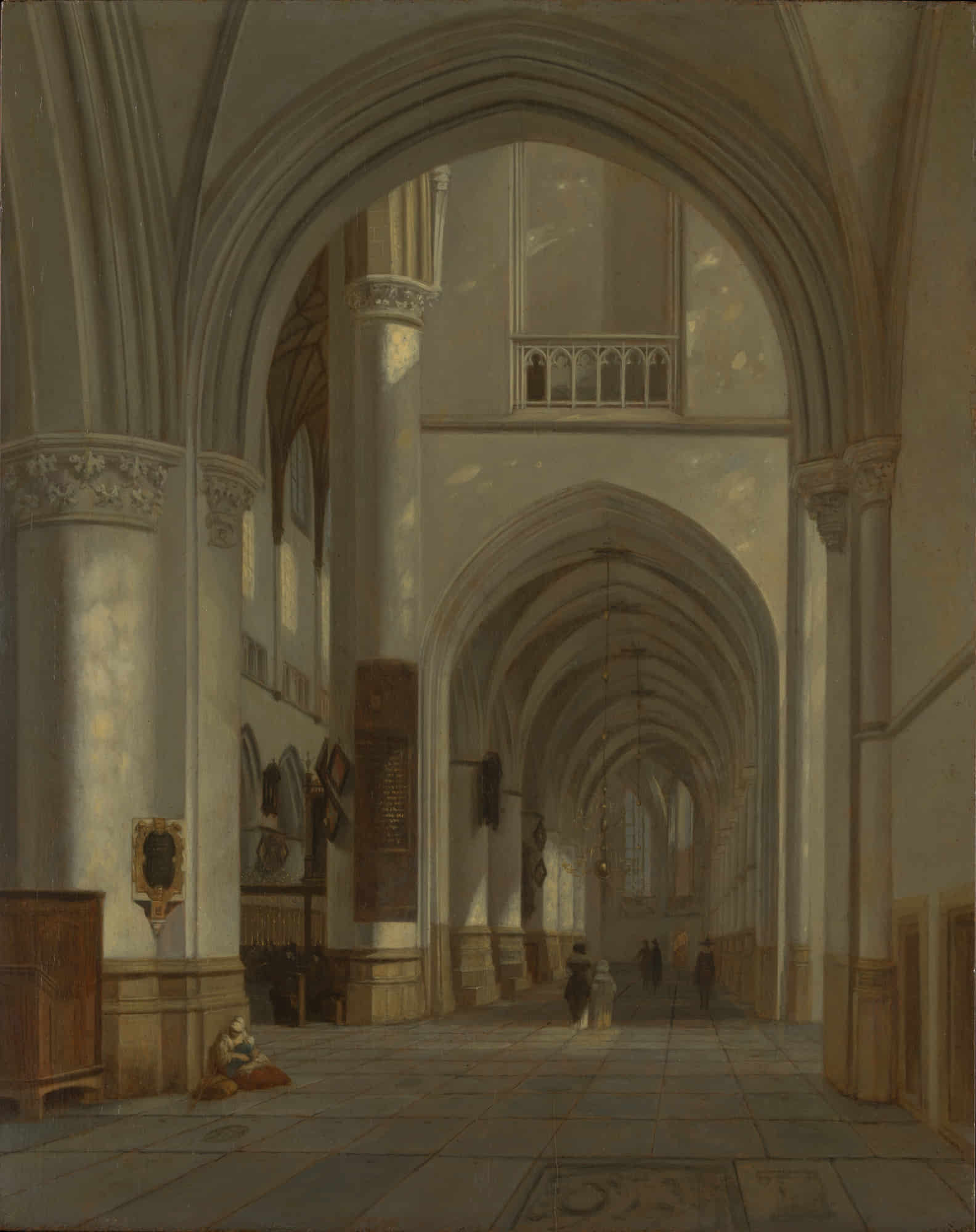
Job Berckheyde (1630-1693), Interior of Saint Bavo Church, Haarlem, ca. 1676
Metropolitan Museum of Art, New York
Pieter Saenredam, The Interior of the Sint-Pieterskerk, ‘s-Hertogenbosch (1632)
Acquired by the museum at the end of 2025, this painting dates to Saenredam’s visit to ‘s-Hertogenbosch shortly after the city was taken by Protestant forces. Saenredam utilized ground plans and construction drawings to achieve a high degree of topographical accuracy.
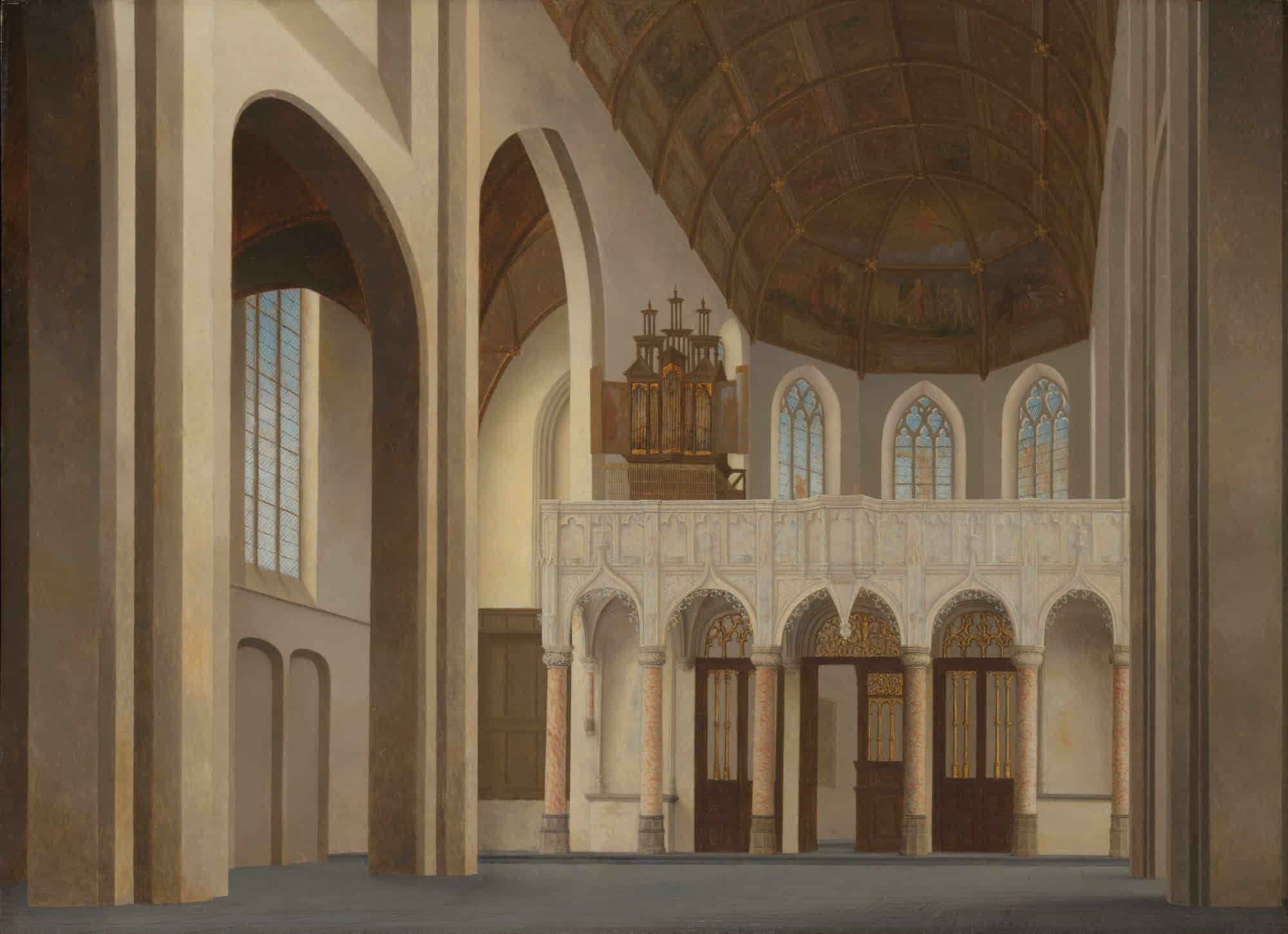
Pieter Saenredam (1597-1665), The Interior of the Sint-Pieterskerk, ‘s-Hertogenbosch, 1632
Metropolitan Museum of Art, New York
The painting depicts the Sint-Pieterskerk, which was demolished in 1646. A preparatory drawing now in the Rijksmuseum shows that furnishings associated with Protestant worship, such as the pulpit and pews, have been omitted from the final composition. This suggests the work may have been intended for a Catholic collector.
The paintings will go on view together later this month.