
To mark the 450th anniversary of Peter Paul Rubens’ birth on 28 June 2027, the two oil sketches for the Flemish master’s Decius Mus cycle – on permanent display at the Staatsgalerie Neuburg – have recently undergone treatment in the conservation studio.
Studies in oil like these played a crucial role in Rubens’s workshop: they served as preparatory pieces for the final canvas paintings, often executed on a monumental scale. While capturing the entire scene, they also worked out the design for individual figures and poses. It is precisely this workshop character that lends the sketches, executed with a remarkable lightness of touch, their appeal. They are a testament to the style that Rubens represented, including an assured handling of form and color. Oil studies were particularly important for a workshop famous for producing complex, multifigure compositions, as they allowed the artist to work out the action and create a coherent visual narrative out of the various gestures.
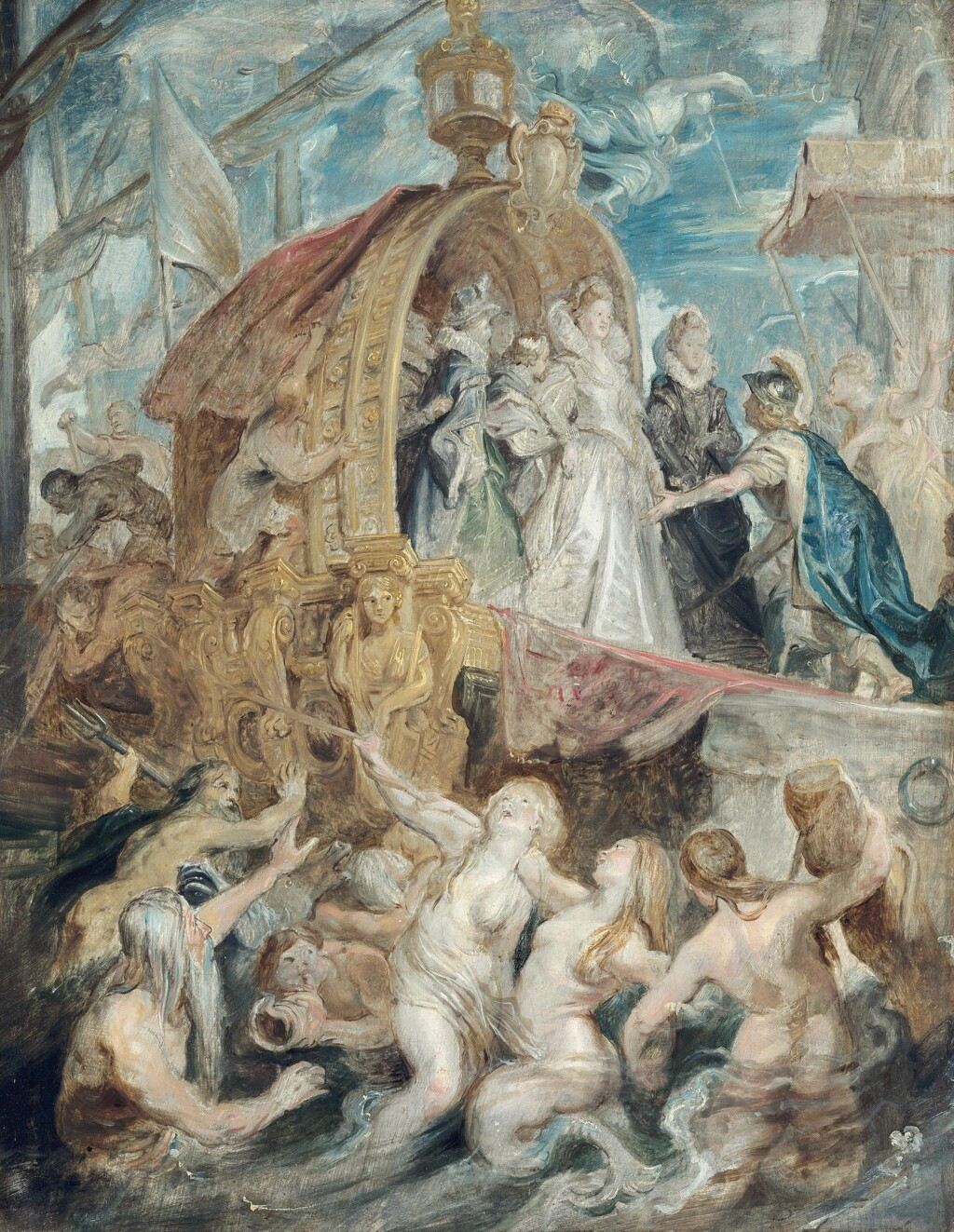
Peter Paul Rubens (1577-1640), The Disembarkation at Marseilles (3 November, 1600), 1622
Bayerische Staatsgemäldesammlungen – Alte Pinakothek Munich
Photo: Bayerische Staatsgemäldesammlungen, Sibylle Forster
The oil studies were not always executed by Rubens himself, however; some were also carried out by his pupils or assistants. Such is the case with the Neuburg sketches, whose attribution still raises questions about the division of labour within the studio. Meanwhile, sketches in Rubens’s own hand, such as those for the Medici cycle, offer a fascinating insight into what such a major commission entailed: the illustration – and glorification – of the life of the royal patron, in this case the deeply unpopular Maria de’ Medici.