
What comes to light when a collection that has grown over 250 years finally takes systematic stock of its women artists for the first time? Expect both familiar names and surprising discoveries: works almost overlooked or wrongly attributed, women artists hidden in inventories, comprehensive groups of works—and considerable gaps. On the occasion of its 250th anniversary, the Albertina Museum makes this stocktaking the point of departure for a new perspective on five centuries of art history. Women artists have been part of this collection from the very beginning. Duke Albert of Saxe-Teschen and Archduchess Maria Christina of Habsburg-Lorraine, who together laid the foundations for this institution, owned numerous works created by women. Yet, entering a collection does not guarantee significant representation. While the Albertina Museum conserves extensive holdings for some women artists, it holds only single works by others. In some instances, the very works that define a woman artist’s public image today are missing. These gaps reflect acquisition priorities and shifting collection focuses, fluid attributions, research interests, political disruptions, as well as mere chance.
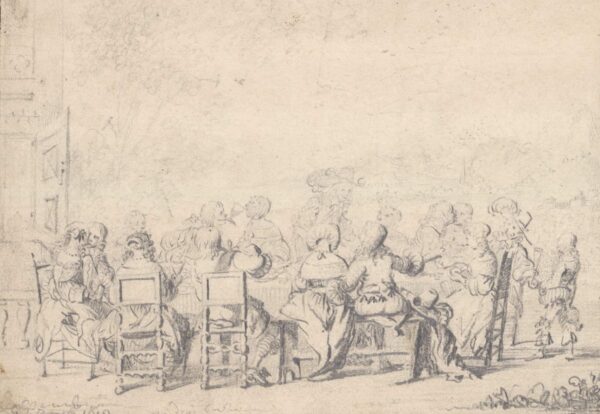
Gesina ter Borch (1631-1690), Cheerful Gathering Out of Doors, ca. 1658
The Albertina Museum, Vienna
In keeping with the Albertina Museum’s collection history, and with only a few exceptions, Her Story focuses primarily on drawings and prints. The exhibition’s timeline extends to the late 1970s, as most of the collection’s blind spots date from earlier eras. Analyzing the holdings and biographies raises recurring questions: Under what circumstances was it possible for women to receive an artistic education and work professionally? How did women manage to make their art visible, and how did they build networks? What possibilities opened up for them, and what restrictions remained? How did departure, persecution, and exile inform their careers—and how lasting was their recognition? From these questions developed the ten chapters of our exhibition. Rather than following a chronology of epochs and styles, it presents women artists as engaged, enterprising, self-directed protagonists, and examines the conditions of their recognition, thus offering a new perspective on art history from within the collection.
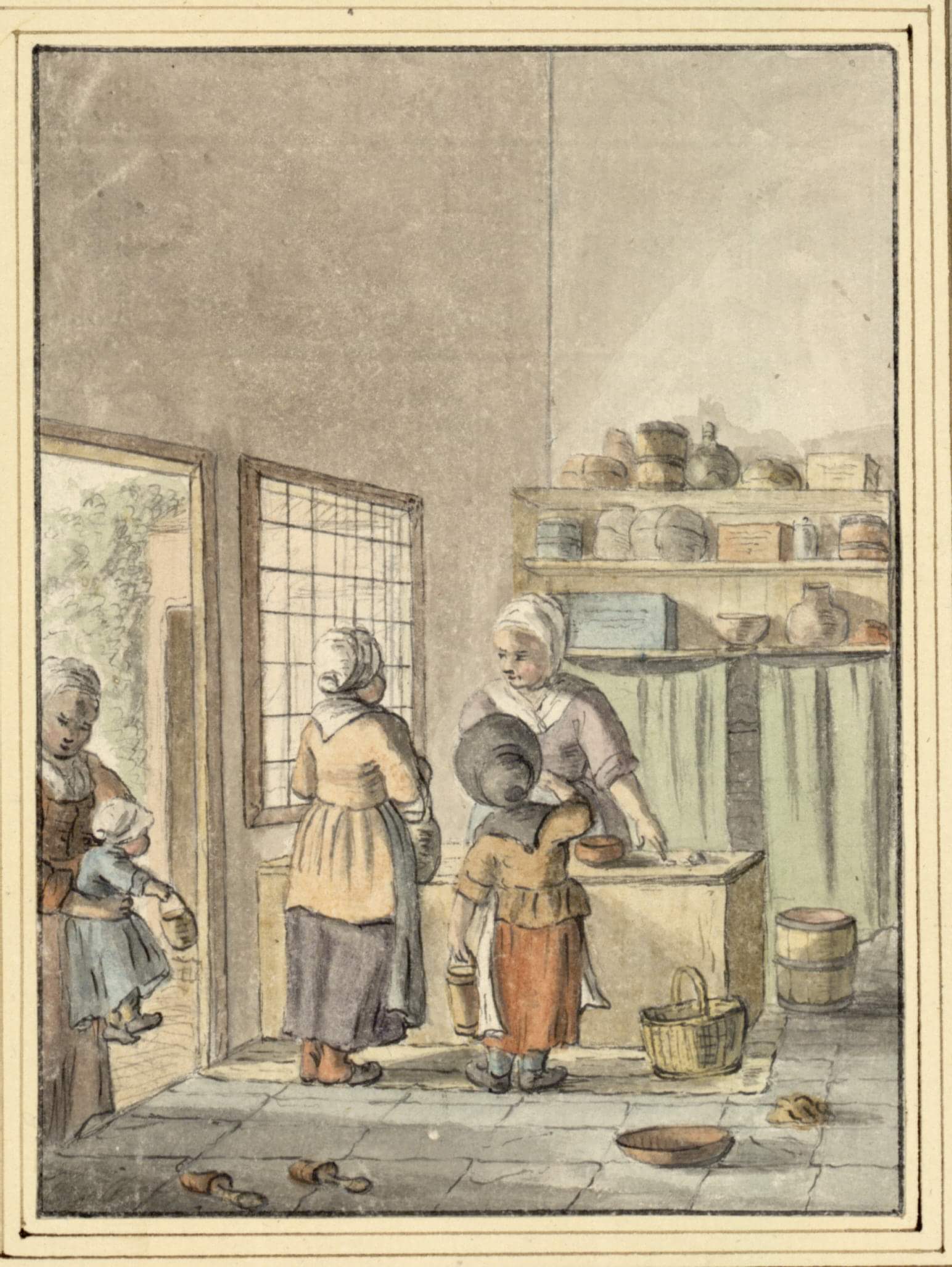
Christina Chalon (1748-1808), Small Shop with Saleswoman and Customers, ca. 1770–1800
The Albertina Museum, Vienna
Featuring works by Diana Scultori, Barbara van den Broeck, Magdalena de Passe, Geertruydt Roghman, Maria Sibylla Merian, Gesina ter Borch, Angelica Kauffman, Christina Chalon, Berthe Morisot, Käthe Kollwitz, Sonia Delaunay, Louise Bourgeois, Maria Lassnig, Valie Export – and many, many more.
The exhibition is curated by Elisabeth Dutz, Katharina Hövelmann, Elsy Lahner and Eva Michel.