
The Getty Museum has acquired Glass Vase with Flowers and Fruit by Jan Davidsz. de Heem (1606-about 1684) and Still Life with Assorted Fruit by Pieter Claesz (1597/98-1660). The De Heem painting went on view last week in the Getty Center’s West Pavilion and the Claesz painting will go on display at a later date. These are the first paintings by these two artists to enter Getty’s collection.
Glass Vase with Flowers and Fruit features a variety of meticulously rendered botanical elements, including ripe plums, berries, roses, morning glory, milk thistle, honeysuckle and flame tulips—still a highly prized flower in the Netherlands. Artists often combined flowers from different seasons in one still life to signify God’s creativity, with some blossoms slightly past their peak, representing the brevity of life.
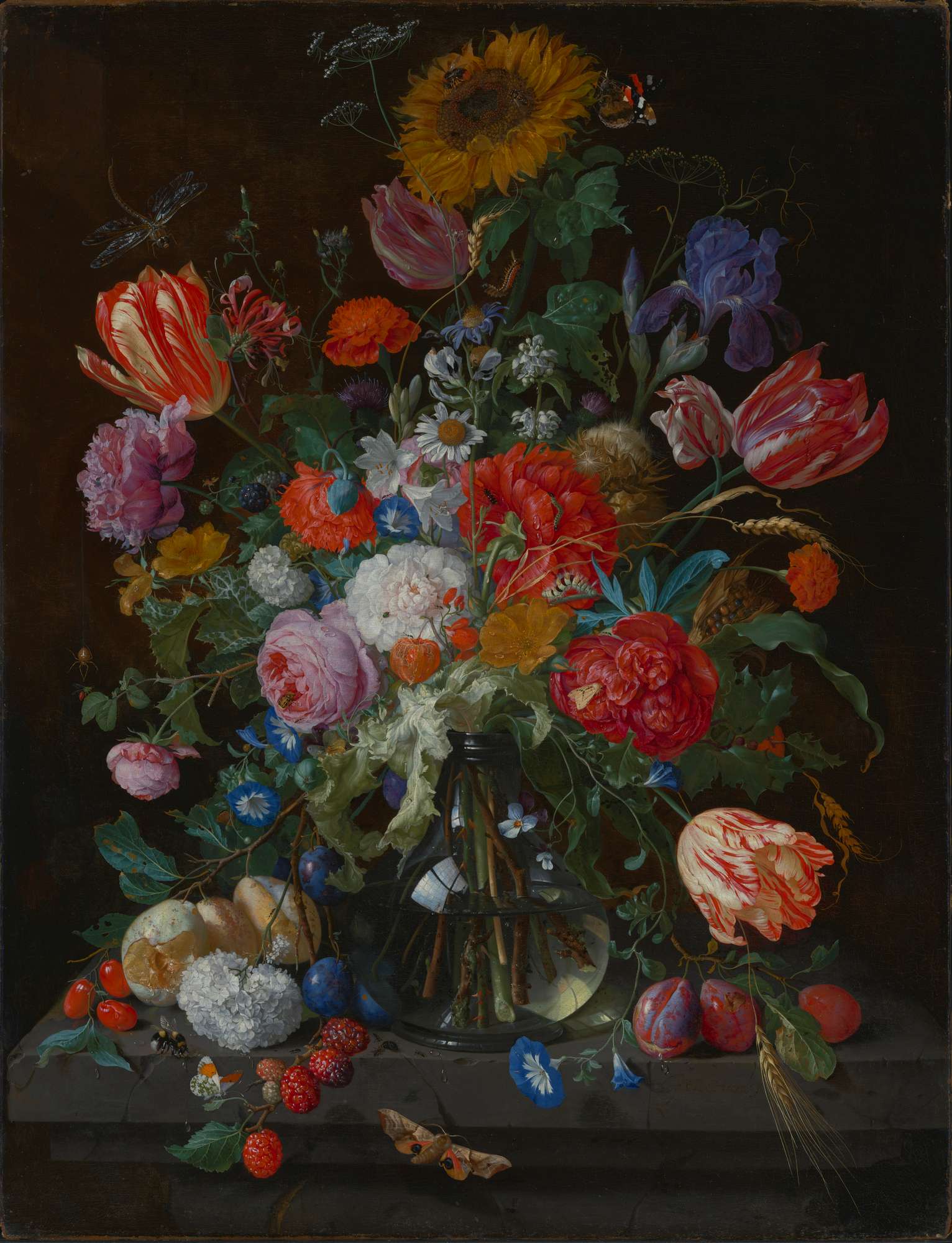
Jan Davidsz. de Heem (1606 – ca. 1684), Glass Vase with Flowers and Fruit, ca. 1673-74, Getty Museum, Los Angeles
Insects busily engage with nearly every section of De Heem’s arrangement and, like certain flowers, carried symbolism. Butterflies and caterpillars, associated with metamorphosis, represented the transience of life and the soul freed from greed and desire. And, according to literary tradition, ants were respected as hardworking and symbolized diligence and frugality.
Considered the most important Dutch still life painter of the mid-seventeenth century, De Heem helped transform the genre of still lifes and developed its early characteristics of refined handling and precise observation into vivid displays. He was inspired by “tonal” still life painters of Haarlem, including Pieter Claesz, who left a lasting mark on his early work.
During the early 1640s, influenced by the lavish still lifes of Frans Snijders, De Heem devised one of his most significant themes—the luxurious banquet still life. Between 1672 and 1675, he created nine extravagant flower arrangements that demonstrate his skill of illusionism and accurate botanical and entomological observations. Glass Vase with Flowers and Fruit was one of these seminal works and was unrecorded until it emerged from a German private collection in 2022.
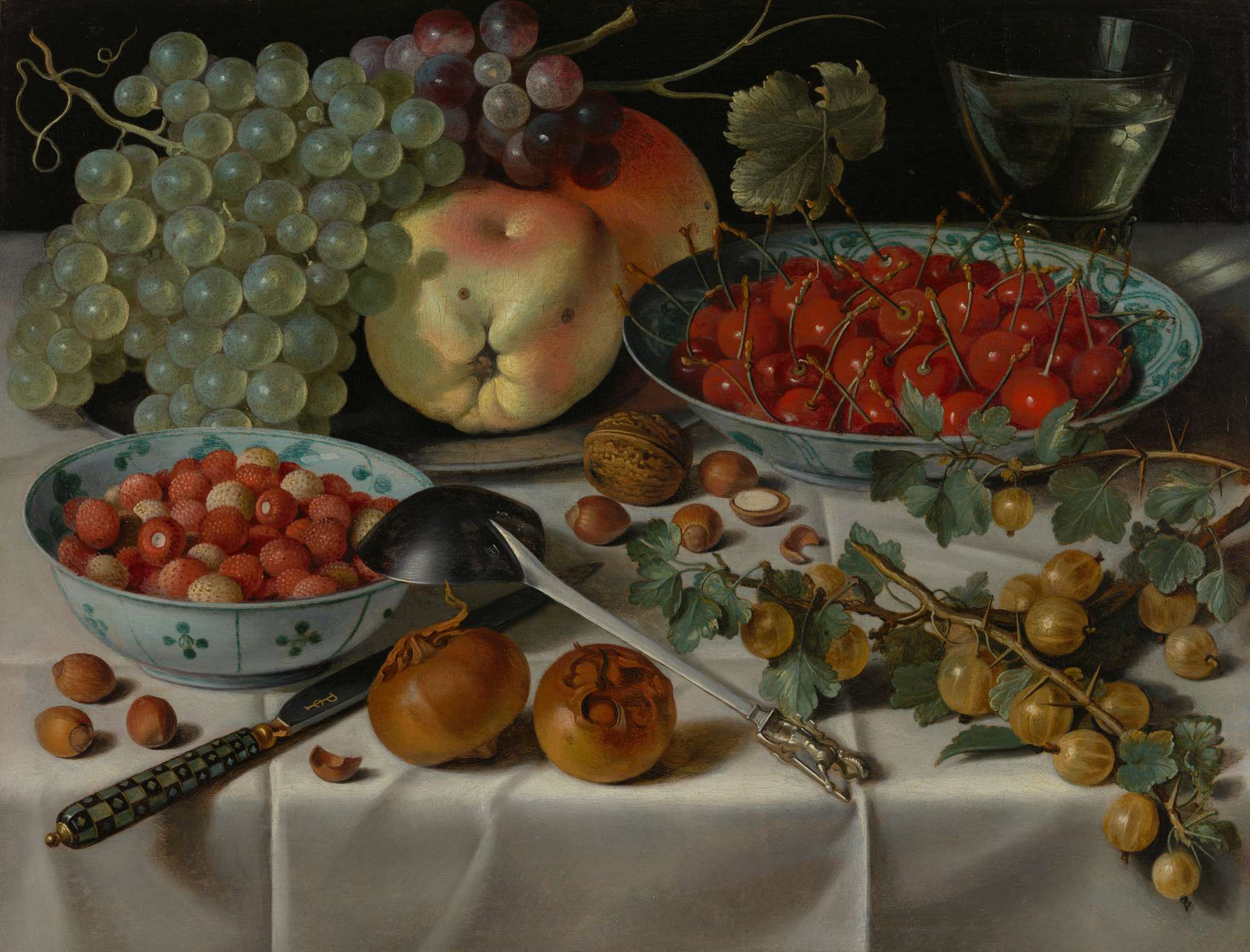
Pieter Claesz (1597/98-1660), Still Life with Assorted Fruit, ca. 1622, Getty Museum, Los Angeles
Claesz’s Still Life with Assorted Fruit is a key painting from the artist’s early career that focuses on fruits, known in Dutch as a “fruitagje.” The painting includes a rich assortment of grapes, strawberries, gooseberries, cherries, apples, hazelnuts and walnuts. Still lifes that portrayed a variety of food often alluded to abundance and prosperity—comforting notions during periods of war and religious upheaval. Certain elements reappear in Claesz’s later paintings, such as the knife resting on the edge of the table and the transparent wine glass, or “birkmaier.”
Still Life with Assorted Fruit was located in an English private collection until the mid-20th century, when it entered the Lester L. Weindling collection of Dutch and Flemish paintings in New York. Getty acquired the work at auction from Sotheby’s on 5 February 2026.