
After a period of two years, the fully restored painting Jupiter and Callisto (1613) by Peter Paul Rubens has returned to the exhibition spaces of the Gemäldegalerie Alte Meister at Schloss Wilhelmshöhe. This major project was made possible through the generous support of the Museumsverein Kassel e.V., which funded an additional one-year restoration post. Christiane Ehrenforth, paintings conservator at Hessen Kassel Heritage, was thus able to dedicate herself exclusively to one of the collection’s most important works. Thanks to the extensive expertise available in-house, the restoration was carried out to a high standard within the paintings conservation department.
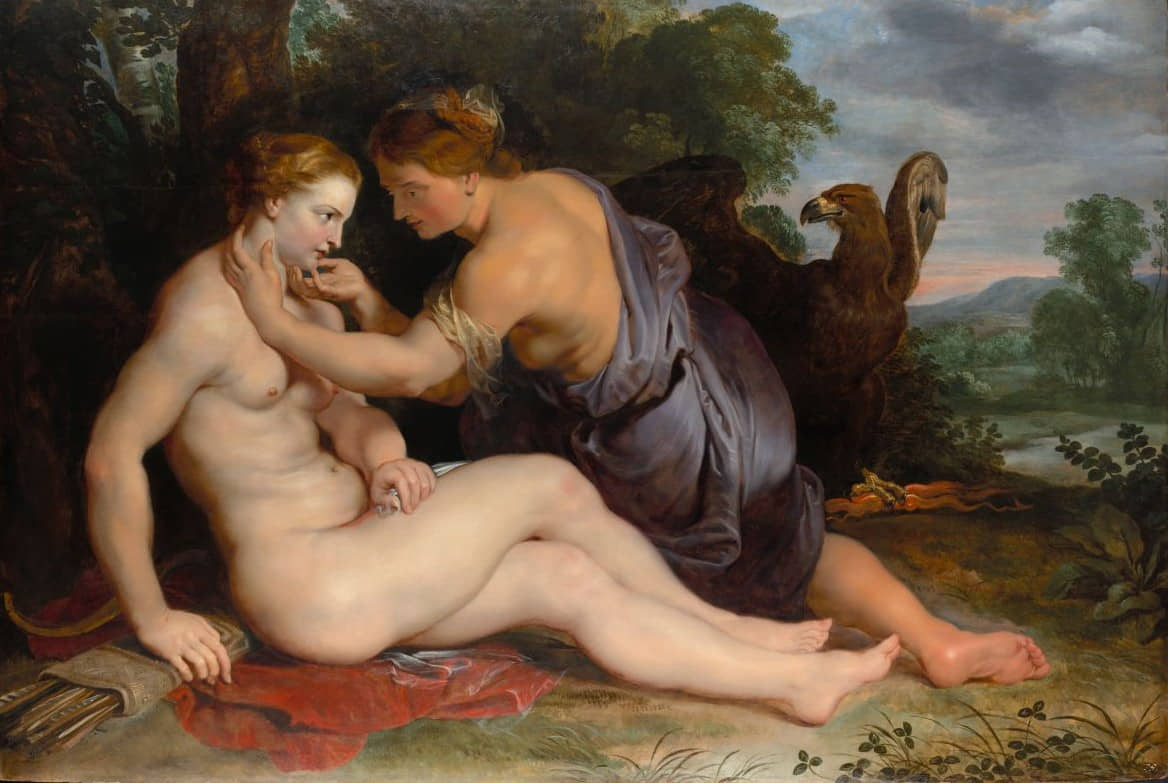
Peter Paul Rubens (1577-1640), Jupiter and Callisto (after restoration), 1613
Gemäldegalerie Alte Meister, Kassel
Previous retouchings and a discolored varnish layer had significantly obscured the painting’s original color scheme. After intensive technological research carried out in the conservation department, the main work consisted of delicately lifting the varnish under a stereomicroscope and removing later overpaintings and retouches. After many hours of meticulous work, Jupiter and Callisto now once again shines with its former brilliance. The painting’s significance extends beyond being one of just six signed works by Rubens: its mythological subject matter provides an important point of entry into early modern gender discourse, which forms a central element of the educational work at Hessen Kassel Heritage.
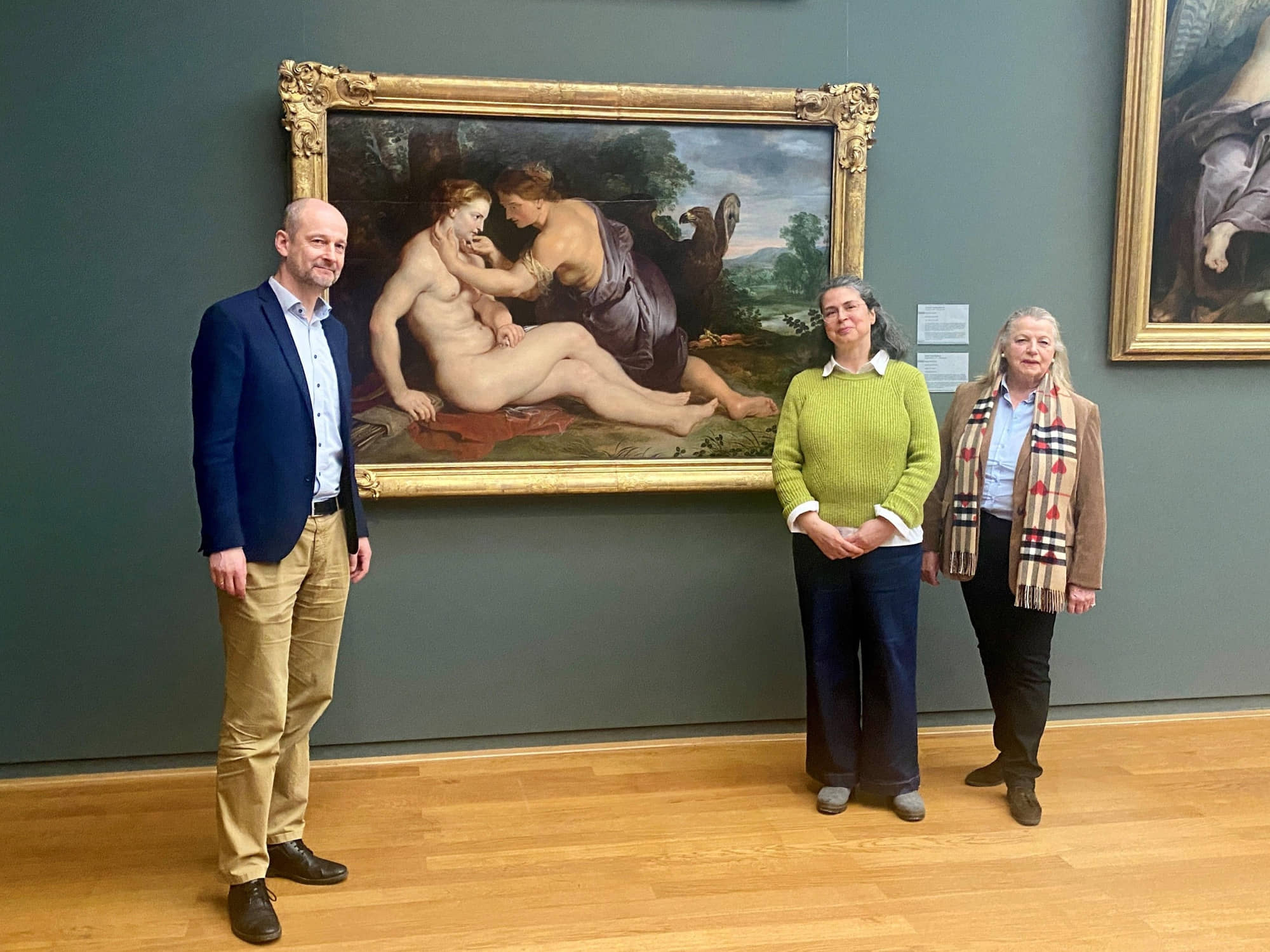
Justus Lange (Acting Director Gemäldegalerie Alte Meister), Christiane Ehrenforth (painting conservator, Hessen Kassel Heritage) and Susanne von Baumbach (Chair of Museumsverein Kassel) presenting the restored painting.
The completed restoration has also provided the opportunity to change the display in the Rubens Gallery. One wall now presents paintings by Rubens and his contemporaries Jacob Jordaens and Arnout Vinckenborch. For the first time, they are arranged again in a Baroque-style hanging to emphasize their direct visual relationships and how Rubens’s compositions served as models for fellow artists.
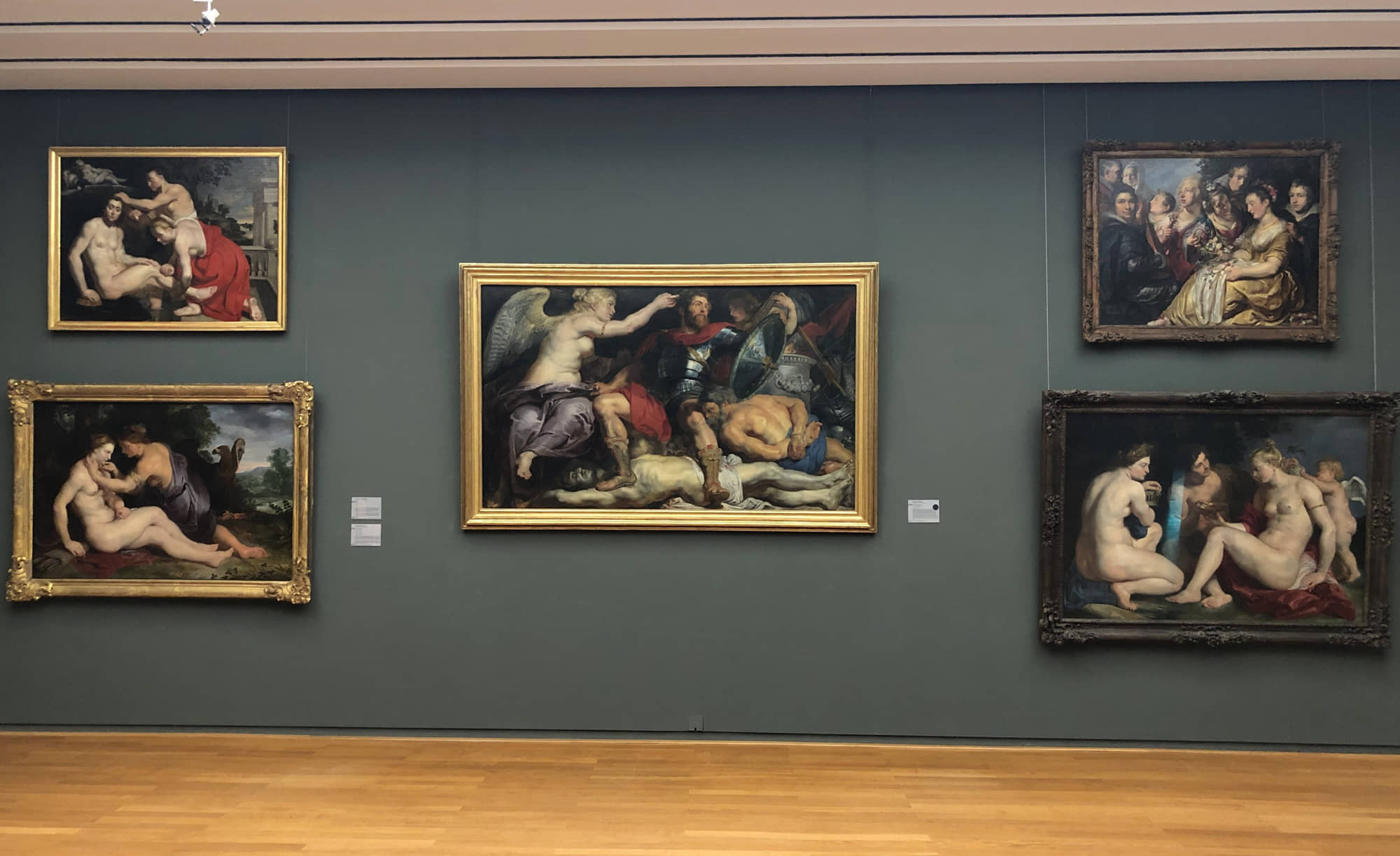
The new hanging in the Rubens gallery