
Pieter Bruegel the Elder (1525/30–1569) transports viewers into a fantastical world full of humorous imagery and enigmatic details. Although he is primarily known today as a painter, Bruegel achieved fame early on as a designer of prints. His pictorial creations range from large-scale panoramic landscapes to moralising religious parables, from scenes of everyday life to allegorical compositions. In these works, Bruegel is both a storyteller and a critical observer of his time.
The exhibition Bruegel. Printed, brings together around 45 extraordinary prints based on Bruegel’s drawings. The Städel Museum’s Collection of Prints and Drawings has an impressive inventory of Dutch prints, including 30 works based on Bruegel’s drawings. These form the basis of the exhibition, supplemented by loans from the Albertina in Vienna and the Staatliche Graphische Sammlung in Munich.
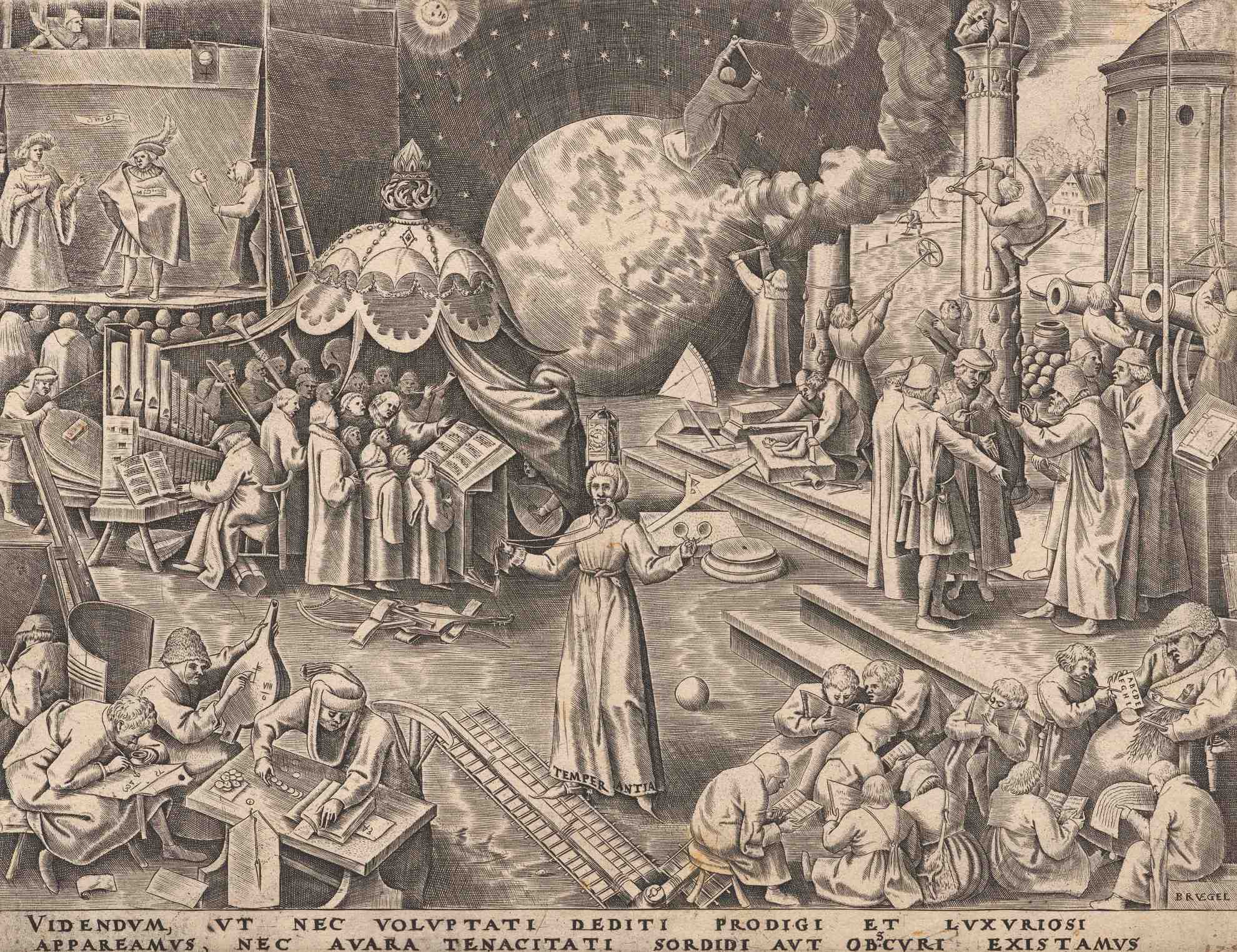
Pieter Bruegel the Elder (1526/1530-1569), engraved by Philips Galle (1537-1612), Temperance (Temperantia), ca. 1560, Städel Museum, Frankfurt am Main
The works on display, including allegorical representations such as Patientia (Patience, 1557) and Temperantia (Temperance, ca. 1560), vividly convey Bruegel’s multifaceted imagery. His work addresses the moral issues of his time while touching on fundamental aspects of human life, combining precise observation with imagination and narrative power. Bruegel addresses human weaknesses and refers to the grandeur of nature, while also focusing on everyday coexistence. The special appeal of his works stems from the interplay of closeness to nature, ingenuity and humorous exaggeration. Even today, his depictions offer surprising insights into social interaction and the question of fundamental human values.