
In the sixteenth and seventeenth centuries, tapestries were the ultimate luxury objects, prized for their monumental scale, precious materials, and highly labor-intensive production techniques. One famous example is the series designed by Raphael for the Sistine Chapel: these tapestries cost no less than five times as much as Michelangelo’s painted ceiling. King Henry VIII of England commissioned tapestry series that were as expensive as a fully equipped warship.
From September 2026, Museum Gouda presents an extraordinary and relatively little-known story: how the largest, most costly, and most prestigious works of art of the seventeenth century in the Low Countries were produced in Gouda.
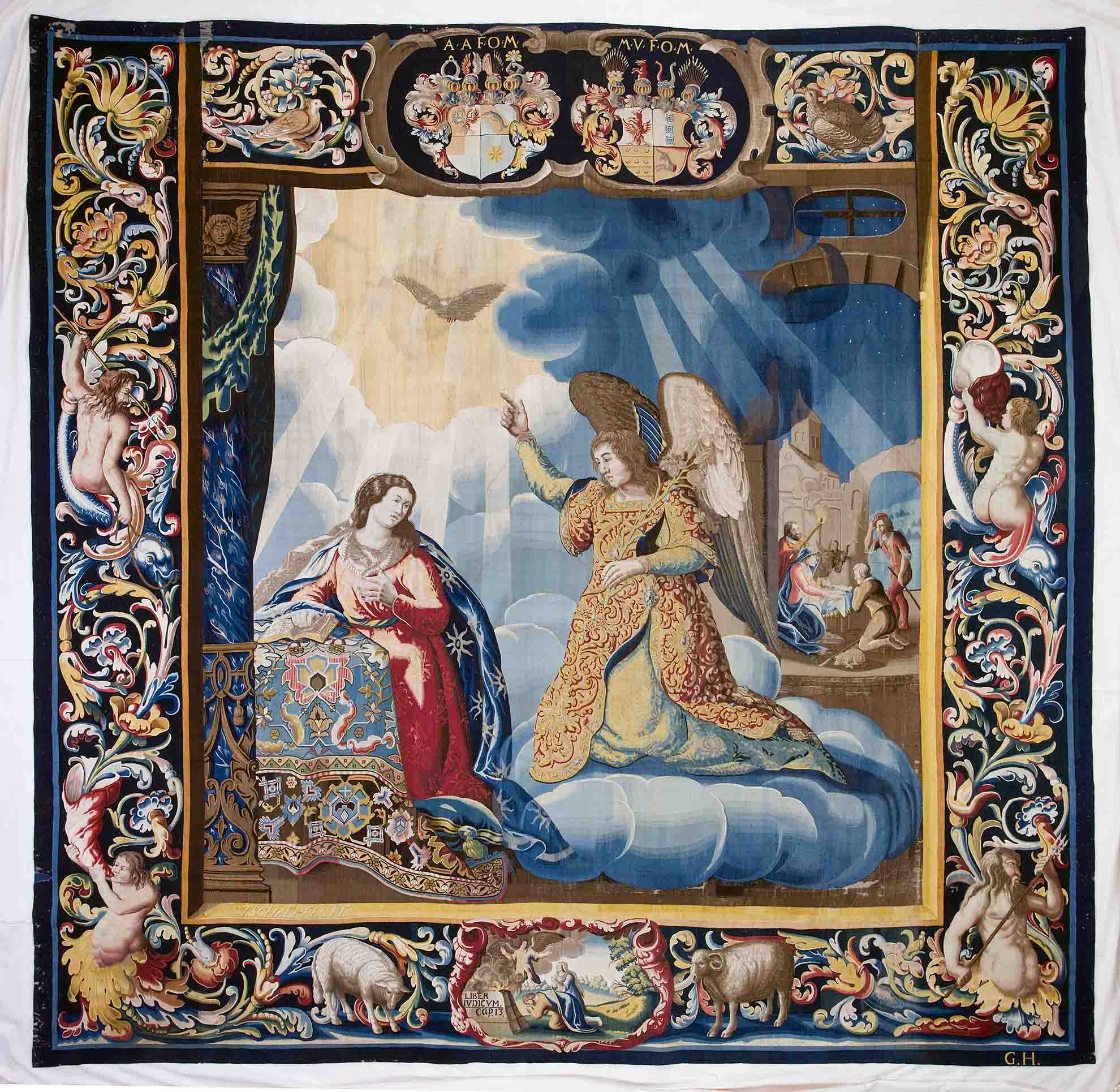
Workshop of Tobias Schaep, Tapestry with Annunciation, ca. 1634-1647, Skoklosters Slott, Sweden
A Lucrative Industry
Between 1580 and 1620, Gouda rapidly developed into one of the leading tapestry-producing centers in the Low Countries. During this turbulent period, Protestant Flemings fled the Catholic south. They were welcomed with open arms in Gouda because they brought with them a thriving and highly profitable industry: tapestry weaving. Before long, Gouda’s weavers were supplying merchants and royal courts throughout Northern Europe.
This exhibition invites you to discover this remarkable craft and marvel at the splendor and grandeur of these monumental works of art. Meet the Flemish migrants who gave Gouda an economic and artistic boost, as well as the determined women who headed many of the weaving workshops. Towering tapestries from collections in the Netherlands and abroad transform ordinary gallery walls into Wonder Walls.
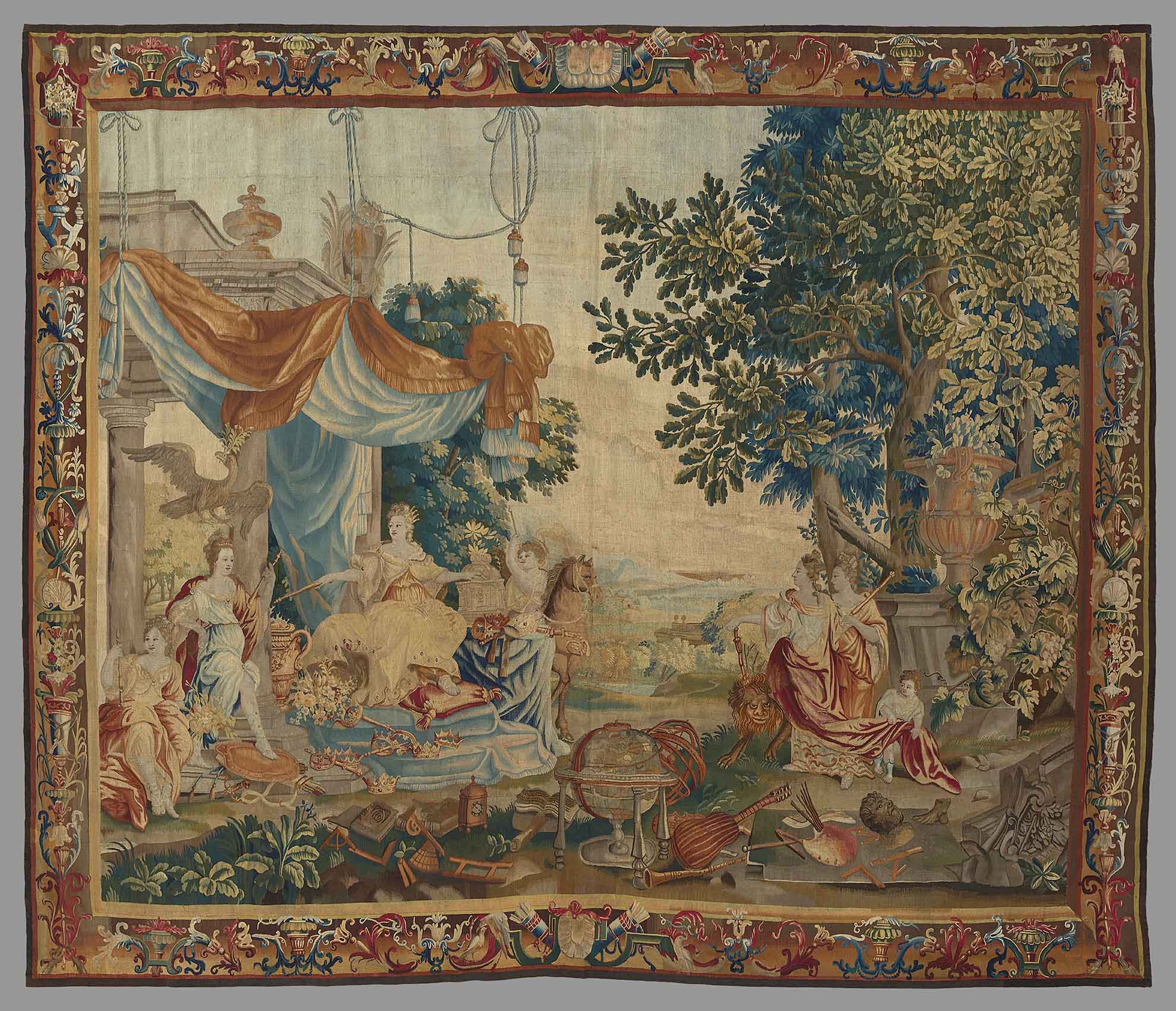
Workshop of Alexander Baert and/or Clara de Hont, Tapestry with Europe, first half of the 18th century, Musée Petit Palais, Paris