
The Dordrechts Museum has received two exceptional seventeenth-century paintings on long-term loan from The Leiden Collection in New York: a rare work by Maria Schalcken (1647/1650–1700) and a self-portrait by Govert Flinck (1615–1660). Both paintings are now on display in the permanent collection of the Dordrechts Museum.
The arrival of Maria Schalcken’s painting is of particular significance for the museum. Schalcken is one of the very few female artists from seventeenth-century Dordrecht whose work has survived. This long-term loan gives her artistic legacy a prominent place in the Dordrechts Museum’s permanent display, enabling the museum to present a richer and more complete picture of painting in Dordrecht during this period.
Maria Schalcken
Maria Schalcken worked in Dordrecht during the second half of the seventeenth century. She developed a refined painting style characterized by careful attention to light, the rendering of fabrics, and an intimate atmosphere. In the painting now on display at the Dordrechts Museum, a boy offers a basket of grapes to a woman. The meticulous depiction of faces, textiles, and fine details demonstrates Schalcken’s remarkable ability to evoke both intimacy and quiet contemplation.
Maria Schalcken’s oeuvre is small, and her work is exceptionally rare. At present, only a handful of paintings can be securely attributed to her. She worked within the same artistic circle as her brother, Godefridus Schalcken, and in the past her paintings—including the present loan—were mistakenly attributed to him. Art historians believe that more of her works survived, but further research is needed to identify them.
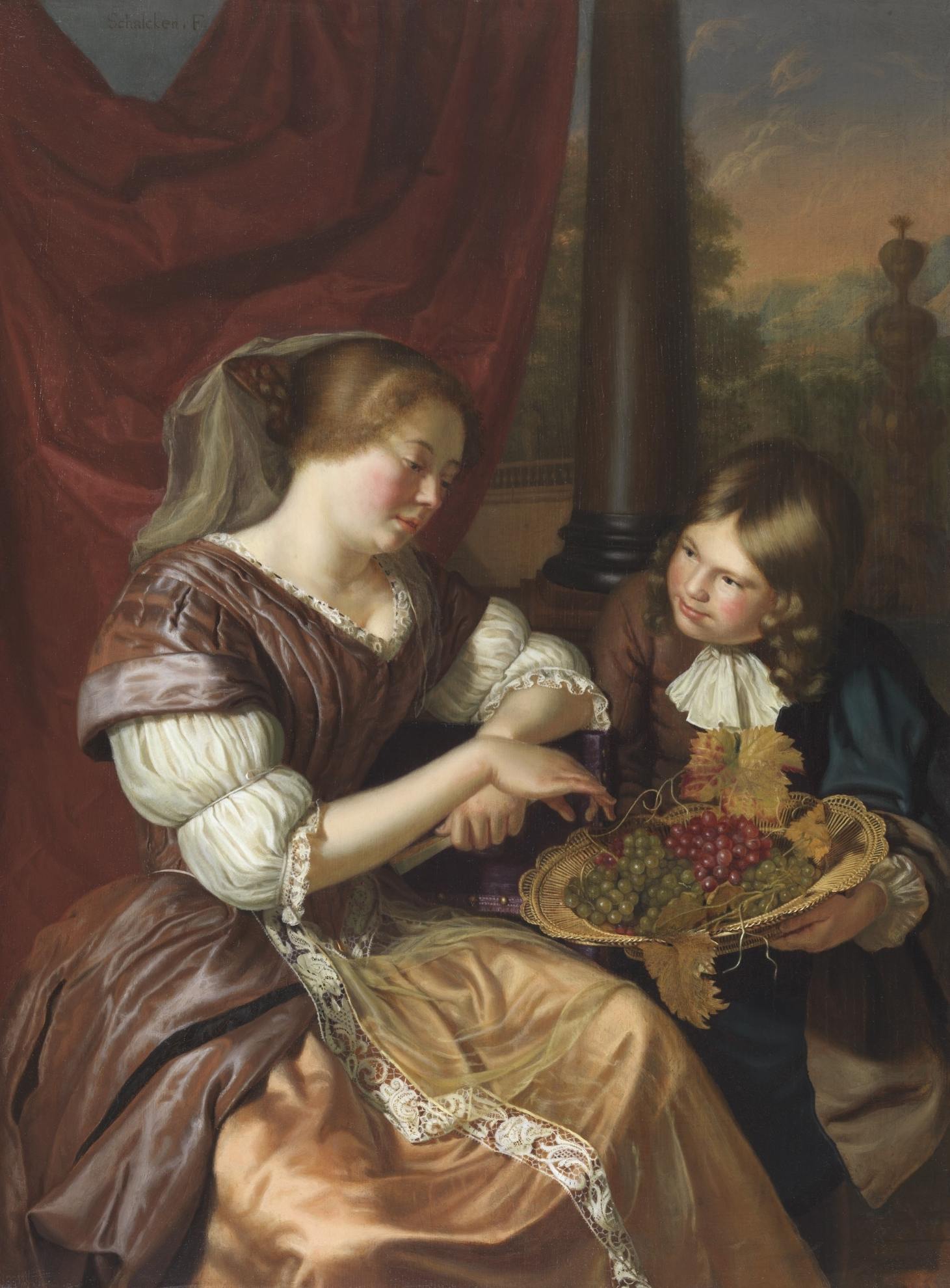
Maria Schalcken, Boy Offering Grapes to a Woman, ca. 1675-1682, on loan from The Leiden Collection, New York
Govert Flinck
Alongside Schalcken’s work, the museum has also received a magnificent self-portrait by Govert Flinck, painted in 1643. The painting complements the presentation From the School of Rembrandt, in which the Dordrechts Museum explores how Rembrandt’s pupils and followers developed into accomplished independent masters.
The self-portrait also has a remarkable history. Owing to its strong resemblance to Rembrandt’s self-portraits, the painting was mistakenly sold in 1943 as a work by the master himself. At some point, the sitter’s clothing was also overpainted in black. Later conservation treatment revealed the artist’s signature, confirming that the painting was in fact by Flinck, while also uncovering the garments’ original rich burgundy color.
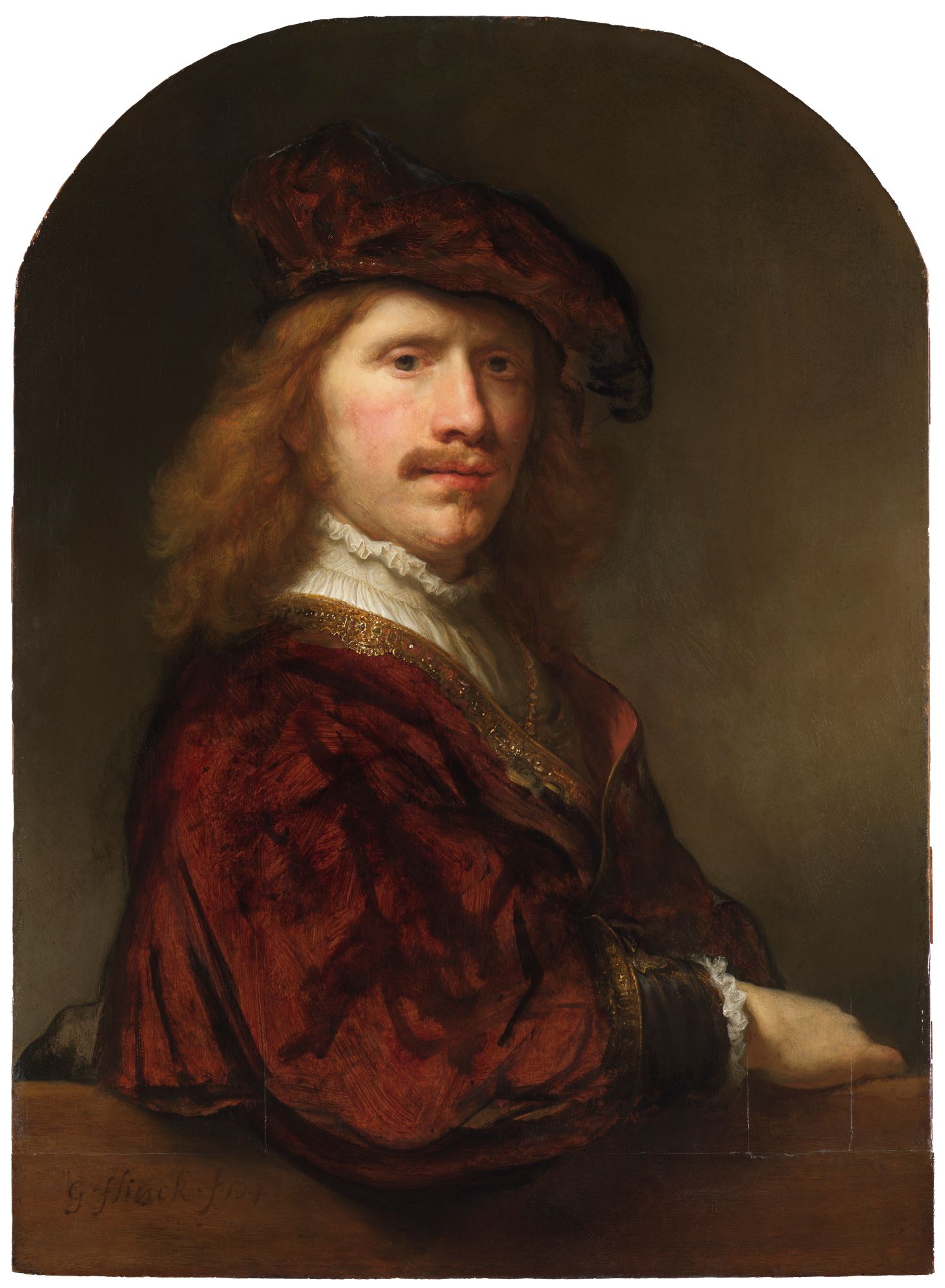
Govert Flinck, Self-portrait, 1643, on loan from The Leiden Collection, New York
Collaboration with The Leiden Collection
These long-term loans mark a valuable collaboration between the Dordrechts Museum and The Leiden Collection in New York. This internationally renowned private collection comprises around 220 paintings and drawings, primarily Dutch works of art from the seventeenth century. Its founders, Thomas S. Kaplan and Daphne Recanati Kaplan, are committed to making the collection as widely accessible as possible through loans and exhibitions at museums around the world. Thanks to this partnership, visitors to the Dordrechts Museum now have the opportunity to admire two outstanding works from this distinguished collection at close range.