
In the current issue of Simiolus, Elizabeth Rice Mattison analyzes a group of fifteenth- and sixteenth-century funerary monuments for clergymen in Liège, presenting them as an expression of collective identity, and Ruben Suykerbuyk discusses the emergence, spread and religious meaning of the monumental priant tomb in the Low Countries in the sixteenth century. Niels Weijenberg, laureate of our Haboldt-Mutters Prize, delves deeply into the life and work of Valerius van Diependaele, a Netherlandish artist who moved to Milan and made a career there as a glass painter for the Duomo. Gert Jan van der Sman proposes a new iconographic interpretation of Caravaggio’s famous The Taking of Christ in Dublin and Ilja Veldman presents a long-overdue study of Cornelis Ketel’s career in Amsterdam, drawing a highly detailed portrait of his circle of friends and patrons.
Contents
Elizabeth Rice Mattison
Carving Clerical Identity in the Serial Tombs of the Churches of Liege
Ruben Suykerbuyk
Ritual Participation in Netherlandish Priant Tombs, c. 1520-85: From Devotional Self-Fashioning to Community Exhortation
Niels Weijenberg
The Success of Netherlandish Artists in Spanish Milan: Valerius van Diependale and the Glass Painters of the Fabrica del Duomo
Ilja M. Veldman
Cornelis Ketel and His Amsterdam Circle of Friends and Patrons
Gert Jan van der Sman
Patience Incarnate: Re-Reading Caravaggio’s The Taking of Christ
Simiolus Netherlands quarterly for the history of art
Simiolus is an English-language journal devoted to the history of Dutch and Flemish art of the fifteenth to seventeenth centuries, with occasional forays into more recent periods and other schools. Simiolus is published quarterly by the Stichting Nederlandse Kunsthistorische Publicaties. For subscriptions visit www.simiolus.nl.
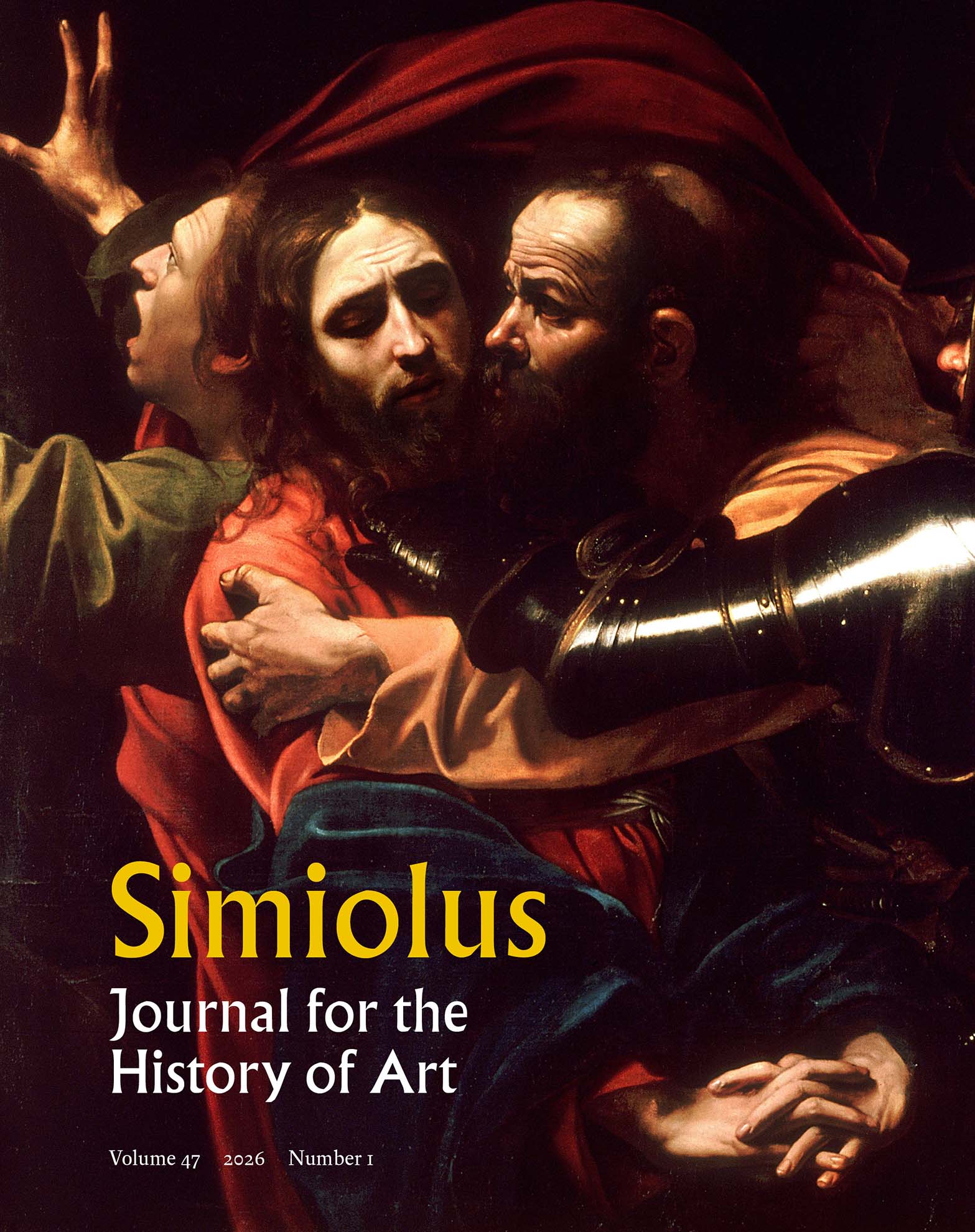
Simiolus. Journal for the History of Art, volume 47, number 1