
Speakers
Tuesday, 24 November
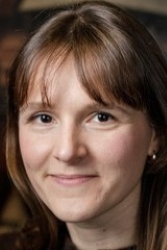 Hannah Iterbeke
Curator of the exhibition
Hannah Iterbeke (b. 1993) is Curator of Old Masters at the Museum Hof van Busleyden (Mechelen, Belgium). After completing her master’s degree in art history at KU Leuven in 2015, she took up a position as a junior researcher at Illuminare – Centre for Medieval and Renaissance Art (KU Leuven). Her primary research interests revolve around the art and history of Mechelen during the fifteenth and sixteenth centuries. She developed her expertise on this subject in the course of research on Mechelen’s sixteenth-century Enclosed Gardens (Besloten Hofjes), which are among the highlights of the Museum Hof van Busleyden’s collection.
As curator, Iterbeke was responsible for the exhibitions Hidden Gems: Seven Centuries of Masterpieces from Mechelen (2022–23) and Knights of the Golden Fleece: A Brilliant Myth Unraveled (2024). In recent years, she has mainly been occupied with preparing the exhibition Burgundian Dining: At the Table in the Low Countries.
Introduction to the exhibition
The exhibition Burgundian Dining: At the Table in the Low Countries at the Museum Hof van Busleyden (Mechelen) explores hospitality practices and shared experiences of dining structures – in terms of inclusion and exclusion – both in Burgundian history and in the present day. It critically interrogates this perception by asking how “Burgundian” the Burgundian Netherlands actually were, and how historical ideas of luxury and abundance may have been shaped, amplified, or distorted over time. From this conceptual starting point, the exhibition takes visitors on a journey through the food culture of urban society as it existed some 500 years ago: from grand banquets to kitchens, inns, markets, and agricultural production, and back to questions of ingredients, circulation, and consumption. It brings together approximately 80 artworks and historical objects from both the museum’s collection and external lenders.
This presentation focusses on the curatorial construction of the exhibition. It addresses the decision-making processes that shaped Burgundian Dining, focusing especially on the balancing of conceptual ambition versus practical feasibility.
Niels Schalley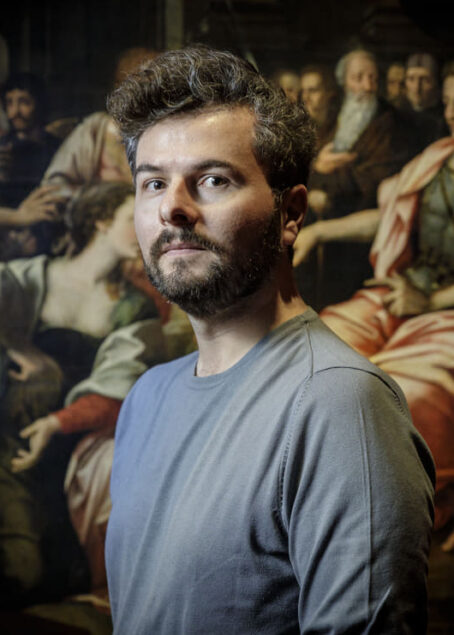
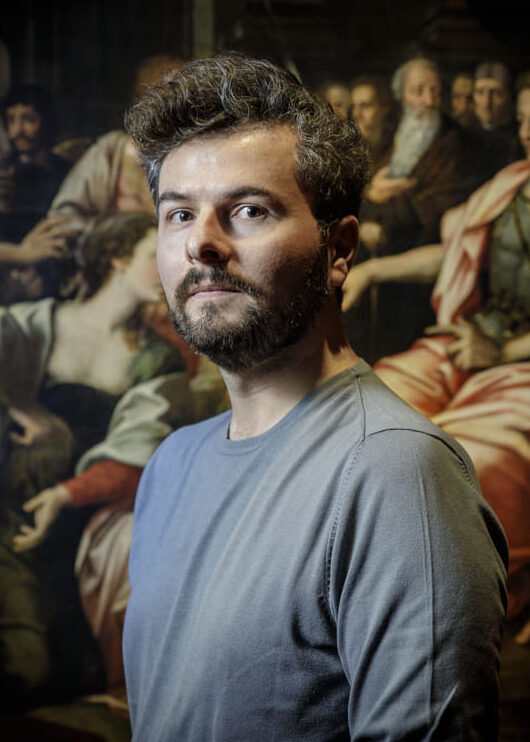
Speaker
Niels Schalley (b. 1989) is Curator at Museum Hof van Busleyden in Mechelen. He recently curated Rik Wouters & Nel. Muze en Manager (2025–2026), an exhibition foregrounding the cultural agency of Nel Wouters, and is currently preparing Laat mij gerust! Beguinage Culture in the Low Countries (2027–2028). Before joining the museum, he spent nearly a decade at The Phoebus Foundation as a project manager and curator’s assistant, where he coordinated international exhibitions, publications, and acquisitions. His curatorial practice explores the social dimensions of heritage and the role of museums in fostering dialogue between historical collections and contemporary audiences. His current research focuses on female agency, cultural networks, and the intersections of heritage, gender, and museological practice.
Lecture abstract: Rethinking the Permanent Exhibition
In 2022-2023, the exterior of Museum Hof van Busleyden in Mechelen underwent thorough restoration. Since the sixteenth-century city palace was forced to close for some time, staff took the opportunity to renew the permanent exhibition. They conducted a public survey to poll visitors’ experiences of the museum and to identify areas for improvement and used the results to guide their renewal of the permanent display. Curator Niels Schalley explains the challenges the museum faced in this project, the choices made and the principles that underpinned the new concept and design.
Wednesday, 25 November
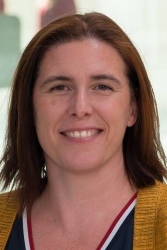 Marjan Debaene
Curator of the exhibition
Marjan Debaene studied Art History and Cultural Studies at the KU Leuven. She is currently Head of Old Masters at M Leuven. She specializes in late Gothic sculpture and painting from Brabant. She published the first collection catalogue of M’s sculpture department and curated several exhibitions for the museum including Sculptures from Bruges (2015–2016), Crossing Borders: Medieval Sculpture from the Low Countries (2017–2018), Borman and Sons. The Best Sculptors (2019), and Alabaster (2022). She wrote and coordinated various publications about medieval sculpture and in 2014 became the coordinator of ARDS, the platform for medieval sculpture. In her own doctoral research, she takes a closer look at sculpture from Leuven around 1500.
©Foto Gillissen
Frits Scholten
Speaker
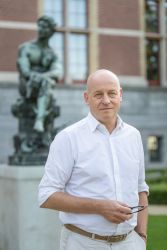
Frits Scholten served as Senior Curator of Sculpture at the Rijksmuseum in Amsterdam from 1993 to 2026 besides which he is Professor of the History of Western Sculpture to 1800 at the University of Amsterdam.
He has published widely on European sculpture and decorative arts, with titles including The Modeller: Adriaen de Vries in Search of the Viva Figura (2025). He has also organized exhibitions including Adriaen de Vries, Imperial Sculptor (Amsterdam, Stockholm, Los Angeles, 1998–1999), Willem van Tetrode Sculptor/Guglielmo Fiammingo Scultore (Amsterdam, New York, 2003), Small Wonders (Toronto, New York, Amsterdam, 2016–2017), and, as co-curator, Giuseppe Penone in the Rijksmuseum (2016), Caravaggio-Bernini: Early Baroque in Rome (Vienna, Amsterdam, 2019), Richard Long at the Rijksmuseum (2023), Isamu Noguchi at the Rijksmuseum (2025), and Metamorphoses: Ovid and the Arts (Amsterdam, Rome, 2026).
Lecture abstract: Netherlandish sculptors and Italian cadavers
In the sixteenth century, many sculptors from the Low Countries travelled to Italy, where they immersed themselves in classical antiquity as well as absorbing the latest developments in Italian art and art theory. These Fiamminghi developed a passionate interest in the anatomical study of the human body, particularly from 1563 onwards, when the Accademia del Disegno in Florence made the dissection of corpses a regular feature of its annual program. Their interest in human anatomy inspired artists such as Willem van den Broecke (also known as Paludanus), Johan Gregor van der Schardt, and Willem van Tetrode to produce muscular figures or écorchés for use in the artist’s workshop as well as for discerning collectors.
Vera De Boeck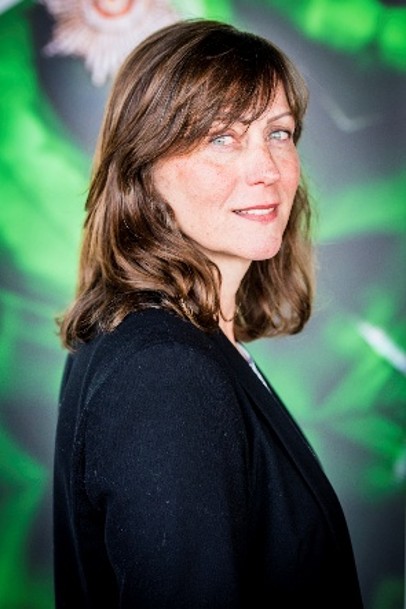
Speaker
Vera De Boeck is curator of the Antwerp–Europe Collection at MAS | Museum aan de Stroom in Antwerp. MAS possesses a highly diverse collection of both Western and non-Western fine and applied arts, ethnographic and folk art, as well as a maritime collection. With the combining of these collections, the museum is perfectly placed to explore Antwerp’s relationship with the wider world, past and present, through its permanent and temporary exhibitions.
Vera De Boeck studied Modern History at KU Leuven, Communication Sociale at UCLouvain, and World Religions at KU Leuven. She subsequently worked for Europalia International and the Royal Museums of Art and History in Brussels. In 2000, she helped to establish Antwerp’s heritage program before joining the team established to develop the new MAS | Museum aan de Stroom.
At MAS, she curated the exhibitions Dazzling Desire (2018), Life & Death: Religions of the Book (2018-2022), and Compassion (2025). She is currently preparing the museum’s new permanent display on world views, scheduled to open in 2028.
Vincent Cattersel
Speaker
Vincent Cattersel is an Assistant Professor at the University of Antwerp (ARCHES research group) and a senior researcher at the Royal Museums of Art and History (KMKG-MRAH) in Brussels. His expertise lies in the technical analysis of materials and the contextualization of historical decorative methods across large corpora of artworks and historical written sources.
After a research project on “The ‘Master of Elsloo’ and Pieter Coecke van Aelst’s Antwerp loggia,” which he conducted at the Royal Institute for Cultural Heritage (KIK-IRPA), he completed his PhD on European lacquer in 2019. Since 2021, he has been the lead researcher in the ten-year FED-tWIN project HOME-AGE (a partnership between the Royal Museum of Art and History and the University of Antwerp), studying the materials and techniques used in domestic interiors of the Southern Netherlands in the seventeenth and eighteenth centuries. HOME-AGE currently focuses on the materials and techniques used, as well as the networks of makers, traders, and consumption, in the Antwerp and Brussels furniture production of the seventeenth century. Cattersel is also supervising three linked doctoral projects (FWO UNMASC, La Toile Cirée, and La Peinture en Bois).
Lecture abstract Vera De Boeck and Vincent Cattersel: Beyond the Wall: The Antwerp Renaissance Loggia of the city palace Den Grooten Sot, attributed to Pieter Coecke van Aelst (1549)
In 1549, the patrician Dierik de Moelenaere acquired two adjoining houses on the Sint-Jacobsmarkt in Antwerp — Den Grooten Sot and Den Cleynen Sot — and converted them into a city palace. As part of this conversion, De Moelenaere commissioned a spectacular wooden loggia to connect the two houses – an enclosed upper-level gallery overlooking the central courtyard.
The eight-meter loggia was embellished with eight sculpted panels and four sculpted supporting structures (corbels) in oak and finished in a bichromatic faux-stone color scheme. These decorative elements, attributed to Pieter Coecke van Aelst (1502–1550) or his workshop, exemplify an Italian-inspired Renaissance imagery with satyrs, herms, garlands, and scrolls bearing the date “1549,” along with four life-sized satyrs on the corbels.
In 1698, the Norbertine Abbey of Tongerlo purchased one of the houses – Den Grooten Sot – for use a a refuge. It is believed that the loggia was then concealed behind a masonry wall. During renovation work in 1864, the loggia was rediscovered and its historical significance acknowledged. It was then dismantled and moved to the Antwerp Museum of Antiquities. Today, the ensemble is part of the collection of the MAS (Museum aan de Stroom), successor to the former Museum of Antiquities.
This presentation looks at the surviving decorative elements of one of the most remarkable exterior Renaissance architectural ensembles surviving in the Low Countries from two perspectives. The first part presents the loggia’s historical and art-historical context, discussing its patronage, attribution, and architectural history. The second part discusses the results of the scientific and material research project, including dendrochronological analysis, the study of the paint layers, and a critical reflection on the authenticity of the nineteenth-century drawing of the structure by Pieter Truyman.