
In 2025, CODART hosted the second edition of the Mentoring Program, pairing sixteen early-career curators to a mentor with years of experience. One of the participating pairs was Jane Simpkiss, curator at Compton Verney Art Gallery & Park (mentee), and Austėja Mackelaitė, curator of drawings at the Rijksmuseum in Amsterdam (mentor). In this interview they share how their process took shape, what their biggest take-aways are and what they would advise future participants.*
Why did you decide to participate in the program?
Austėja Mackelaitė (AM): “I have been very lucky to have encountered mentors organically in the beginning of my career. The conversations I had with them were very beneficial to my career progression, and I saw it as my responsibility to make myself accessible to other curators in the field. To share what I know and what I’ve experienced. I must admit, however, that I was hesitant to participate in the program at first, thinking: ‘what do I have to offer?’ I have been in the field now for about ten years, which is a good chunk of time, but there are many more experienced members in our network. So, I felt that whomever I would be partnered with, it would be more of a conversation between peers.”
Jane Simpkiss (JS): “I had participated in an earlier edition of the CODART Mentoring Program, in 2023. That was a positive experience, and I was keen to participate again. As I was working on an exhibition of drawings, I thought it would be helpful to spend some time with a drawings expert who I could discuss ideas with and learn a bit more from, as my experience of Dutch and Flemish art had mainly focused on paintings up to this point. It worked out very well with Austėja – I can fully say that I’m a drawings convert now!”
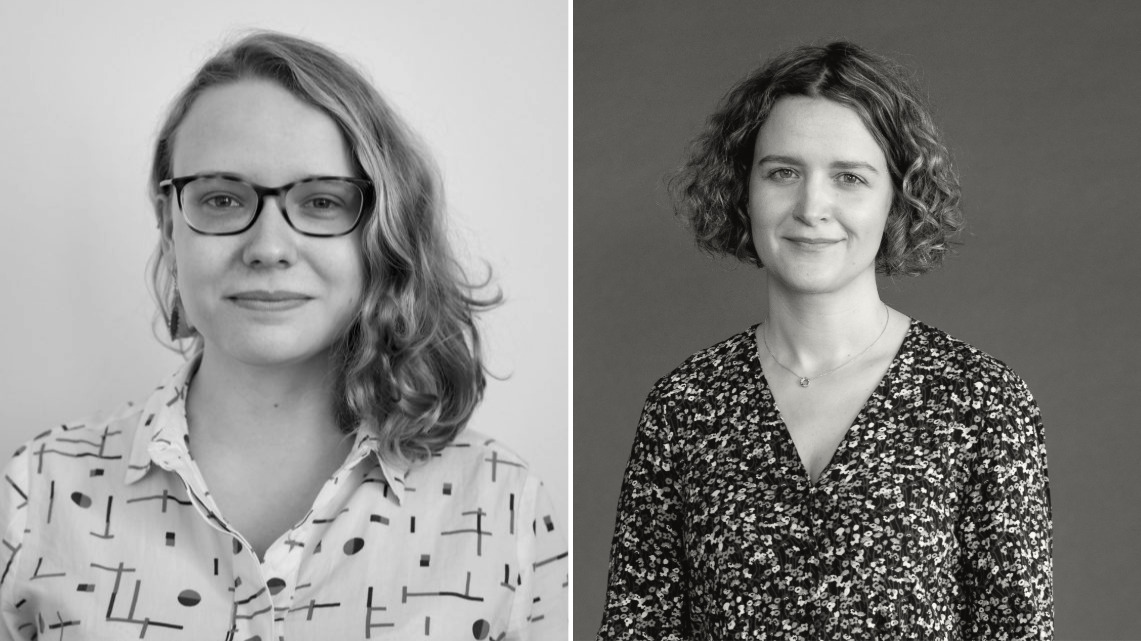
Jane Simpkiss and Austėja Mackelaitė
What were your expectations?
JS: “I hoped to meet with someone friendly and willing to share their experience and answer questions. In Austėja, I found a very helpful colleague. Because of my previous participation in the mentoring program was so positive, I had high hopes for this round too.”
AM: “I mostly hoped to be helpful. Also, I was intrigued about meeting new colleagues. The drawings world is quite small, so I suspected to be paired with a non-drawings specialist. I hoped it could offer me a sense of where the field is at, what kind of questions younger colleagues are asking. Also, broadening my horizons, learning about a new institution and meeting someone in an earlier stage of their career were things that motivated me to apply.”
How did your journey take shape? How (often) did you meet? What did you discuss?
JS: “We met three times during the year. We both have a busy schedule, and we wanted to be mindful of each other’s time. It was also good to leave enough time between the meetings, so there would be plenty to discuss when we next met or spoke. Our first meeting was fairly early on in the program. It allowed us to get to know each other, speak about our careers so far, learn about each other’s institutions and what our expectations for the program were.
The second time we met we focused on the exhibitions we were both preparing. The emphasis was on my show, as I specifically entered the program looking for a drawings specialist to act as a sounding board. The scope of my exhibition, Bruegel to Rembrandt: Drawing Life, Sketching Wonder, was potentially huge, so I had some questions around the thematics to run by Austėja. I wanted to think about the balance between being sufficiently detailed for a specialist visitor without overwhelming people who might not know anything about the subject matter. We also discussed storylines and object lists which was helpful, and Austėja told me about the methodology behind her exhibition.
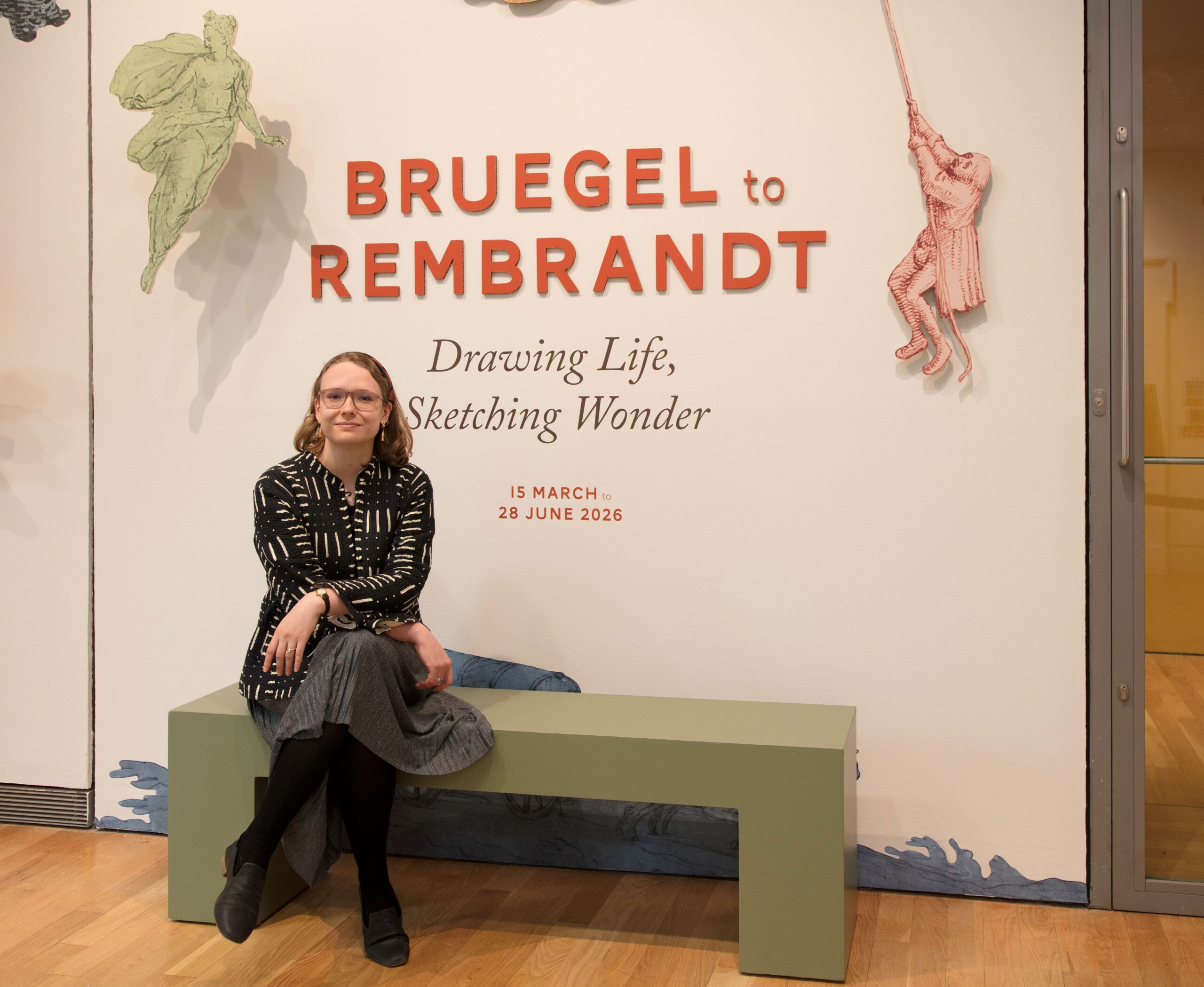
Jane Simpkiss in the exhibition Bruegel to Rembrandt: Drawing Life, Sketching Wonder at Compton Verney Art Gallery & Park
The third and final meeting we were able to have in person. A grant offered by the Friends of CODART allowed me to travel to Amsterdam following the congress in Ghent, and to visit the print room of the Rijksmuseum with Austėja. This was after my exhibition had opened, and I was thinking about becoming more involved with drawings in the future. We spent some time in the Prints and Drawings cabinet looking at some interesting drawings together. It was really great doing this and to discuss how to better train my eye and techniques and questions of connoisseurship. We also visited the conservation studio where some of the drawings to be featured in Austėja’s show were being examined. Hearing the conservators talk about their approaches to drawings and their findings was so insightful. It was a really valuable day and so generous of Austėja and her colleagues to share their time and expertise.”
AM: “I think a big part of our journey was making clear to Jane that just because she hadn’t previously studied Dutch and Flemish drawings, she’s not an imposter in this field. Everyone is learning curatorial skills and developing new expertise on the job. Especially in the field of drawings, looking, looking again, and asking questions about what you see is the only way to learn and to train your eye.
It was so nice that we both had exhibitions in different stages of development. We focused more on Jane’s project, but our meetings were really helpful for me as well, encouraging me to reflect on the development of my own ideas. Jane’s show was quite broad, while the exhibition I was developing for the Rijksmuseum (which will open in February 2027) was more specific, focusing on Dutch drawings in the circle of Hendrick Goltzius around 1600. Interestingly, we will actually show some of the same drawings in the two exhibitions! Jacques de Gheyn’s II Four Studies of a Nude Woman Combing Her Hair (Royal Museums of Fine Arts of Belgium) is a work we both love. It was on view in the Compton Verney exhibition, and visitors will also be able to see it in the Rijksmuseum show.”
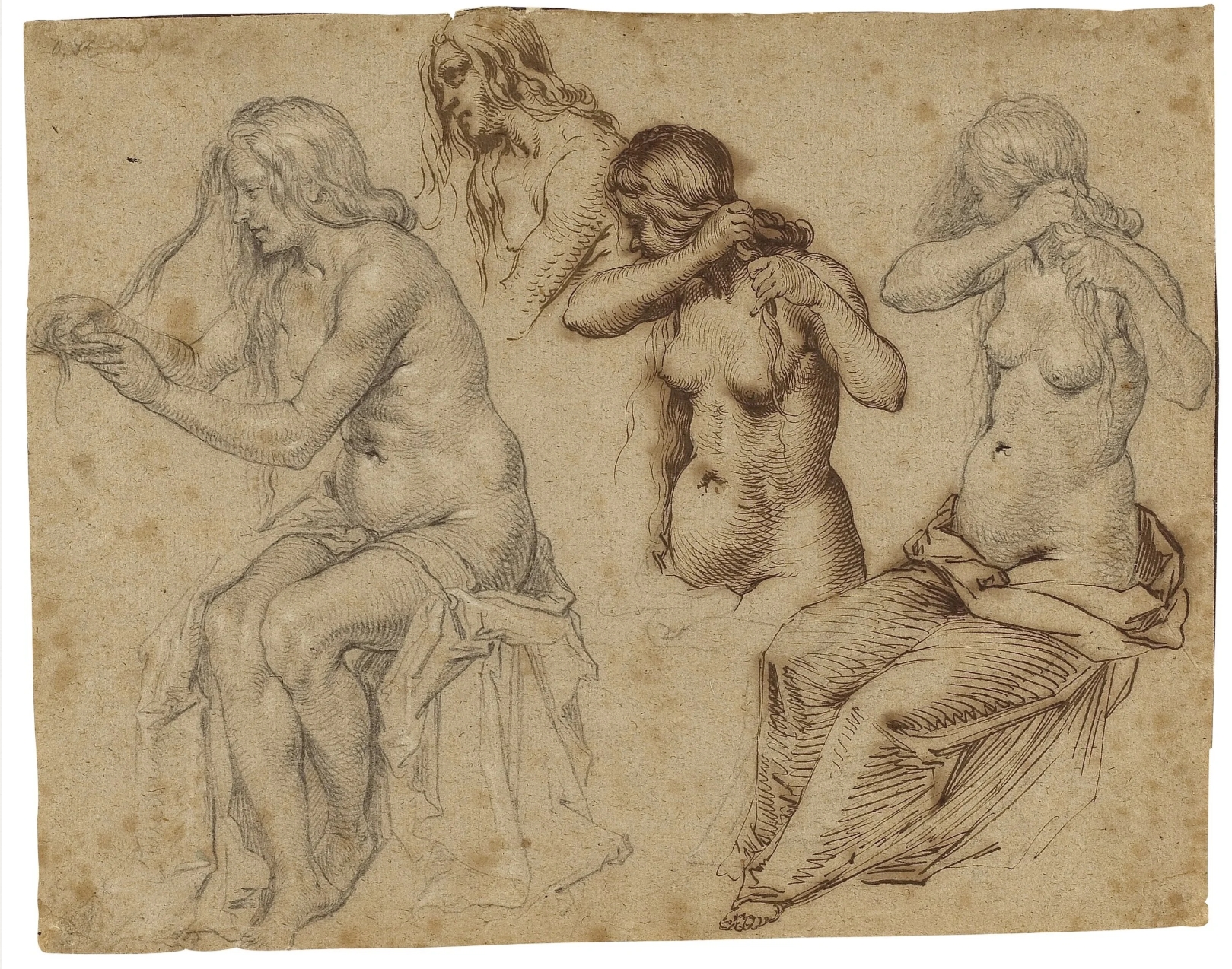
Jacques de Gheyn II (1565-1629), Four Studies of a Nude Woman Combing Her Hair
Royal Museums of Fine Arts of Belgium, Brussels
Austėja, had you mentored someone before (outside of the CODART program)? How was your experience?
AM: “Never in a formal mentoring program, only informally. These were more career development conversations, helping people answer questions such as ‘How do I position myself to get my first job?’, or ‘Should I do a fellowship in the US or in Europe?’ The CODART mentoring trajectory has been more interesting to me because it was career mentoring, but it also had a content aspect to it. We did talk about where Jane would want to be in 10 or 15 years, but the drawings and exhibition development were really at the heart of it, making the experience more meaningful.”
What was it like being matched to a mentor/mentee from a different size institution?
AM: “I’ve been at the Rijksmuseum for three years now, but before that, I worked in several smaller institutions, like the Morgan Library & Museum, and university museums. So I understand the challenges and opportunities afforded to you when you’re part of a small team, especially when there is such a robust exhibition program such as at Compton Verney. I am now in a very different place, at a museum with a large curatorial body, and I’m still getting used to being part of this big team. Seeing Jane in her position felt very familiar. Another major difference between our two institutions has to do with exhibiting Dutch art outside versus within the Netherlands. The audiences are very different, and so the questions you will raise in an exhibition will have a different angle to them. So, yes, the fact that we come from two very different institutions was an important aspect of our experience of working together… It’s something to keep in mind when matching participants of the mentoring program in the future.”
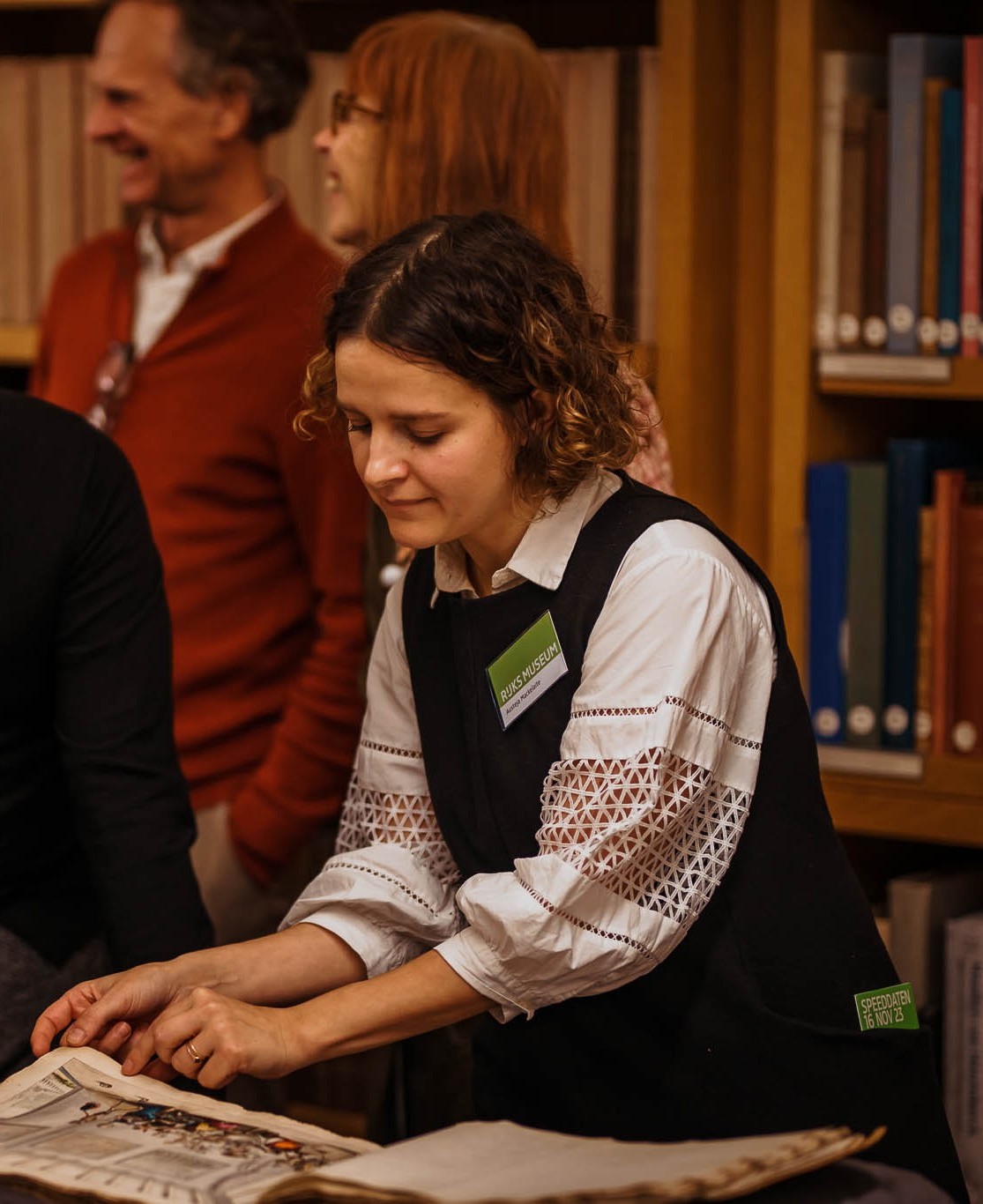
Austėja Mackelaitė in the study room at the Rijksmuseum
JS: “Yes, I think it’s important for people from different types of organizations to spend time together and talk about how they approach the work that they do. There are a lot of similarities in what our goal ultimately is, which is to encourage more people to be interested in the objects we work with. However, there is a difference between being one in forty curators and getting to work on a project for multiple years, researching for an in-depth catalogue, and being a curator who makes an exhibition every year. For my drawings show, we couldn’t expect all our audiences to be familiar with Dutch and Flemish (drawings) history, so we needed to find a way to tell a broader story, which hopefully inspired visitors to go on to learn more about the subject, whereas at the Rijksmuseum you are working on exhibitions in the context of a museum that already tells that foundational story. I think it’s really useful for different colleagues to understand each other’s approaches to their collections and projects, and the wider goals of other institutions. Big museums can learn from small ones, and vice versa. It’s especially helpful to understand the limitations of smaller institutions, and how issues of finance and capacity can effect curatorial choices, and how, in turn, this shapes the museum landscape.”
Are there any specific outcomes of your participation in the program?
JS: “For me, it really furthered my interest in drawings, which of course is also because of the exhibition I was working on. It also taught me to not be afraid to put myself out there and talk to people about the projects I’m working on. Most people are really open and willing to share their knowledge, and if you’re asking them about something they’re interested in, they will want to talk about it with you.”
AM: “Although we mostly focused on Jane’s exhibition, our discussions enriched my thinking about my own project as well. It was very helpful to talk about the broadness of Jane’s audience and how to best convey her message to the visitors of Compton Verney. These conversations have encouraged me to think more about the wide variety of people that come to the Rijksmuseum, and the expectations and experiences which they bring along. More generally, Jane’s thoughtful approach made me reflect on the challenges of presenting Dutch and Flemish art outside of the Netherlands and Belgium, and the responsibility that curators in these countries have towards outside colleagues who are doing this important work.”
What would your advice for future participants be?
AM: “To have clear goals for what you want to get out of the program, especially as a mentee. The clearer, the better! These can be small, focused goals, because over the course of the year, you will not have too much time – probably only three to four meetings – to actually grapple with them. This clarity makes for a more meaningful experience for everyone involved, I believe.”
JS: “I would advise to be as open as possible. And be respectful of each other’s time. So come prepared and make the most of the time with your mentor.”
AM: “I’d like to add some advice for those considering to be a mentor: don’t worry too much about whether you have enough to offer. Everyone has some kind of expertise to share. And, in any case, I think the most rewarding part is the exchange of insights and experiences between the two participants. The conversations will have an impact on the mentor as well, and make them reflect on their own activities. So be open to this and allow the experience to change you too, not just the mentee.”
Jane Simpkiss is Curator at Compton Verney Art Gallery & Park in Compton Verney. She has been a member of CODART since 2022.
Austėja Mackelaitė is Curator of Drawings at the Rijksmuseum in Amsterdam. She has been a member of CODART since 2018.