
A brief history of the collections
The Bibliothèque nationale de France is one of the country’s oldest cultural institutions, tracing its origins to the personal libraries of the French kings. Over the centuries, it grew from a royal library into a national and imperial institution. It adopted its current name, Bibliothèque nationale de France (BnF), in 1994. The Department of Prints and Photography traces its origins to the reign of Louis XIV and the acquisition of the extensive print collection of Michel de Marolles in 1667. This marked the founding of what was to become the Cabinet des estampes, which was made an official department of the king’s library in 1720.
Today, the collections of the Department of Prints and Photography are estimated to comprise more than fifteen million images in the broadest sense: prints, photographs, drawings, posters, playing cards, textile samples, postcards, calendars, and artists’ books. A defining characteristic of the collection is its expansion through legal deposit, which was instituted in 1537 by Francis I and extended to prints in 1672. Under this system, a copy of every print offered for sale in France must be deposited at the Bibliothèque nationale, sustaining the steady growth of the collections since the seventeenth century. Acquisitions and donations of prestigious private collections have also played an important role in the history of the department. As a result, while French works form the core of the collection, foreign schools are also strongly represented, especially in the field of old master prints.
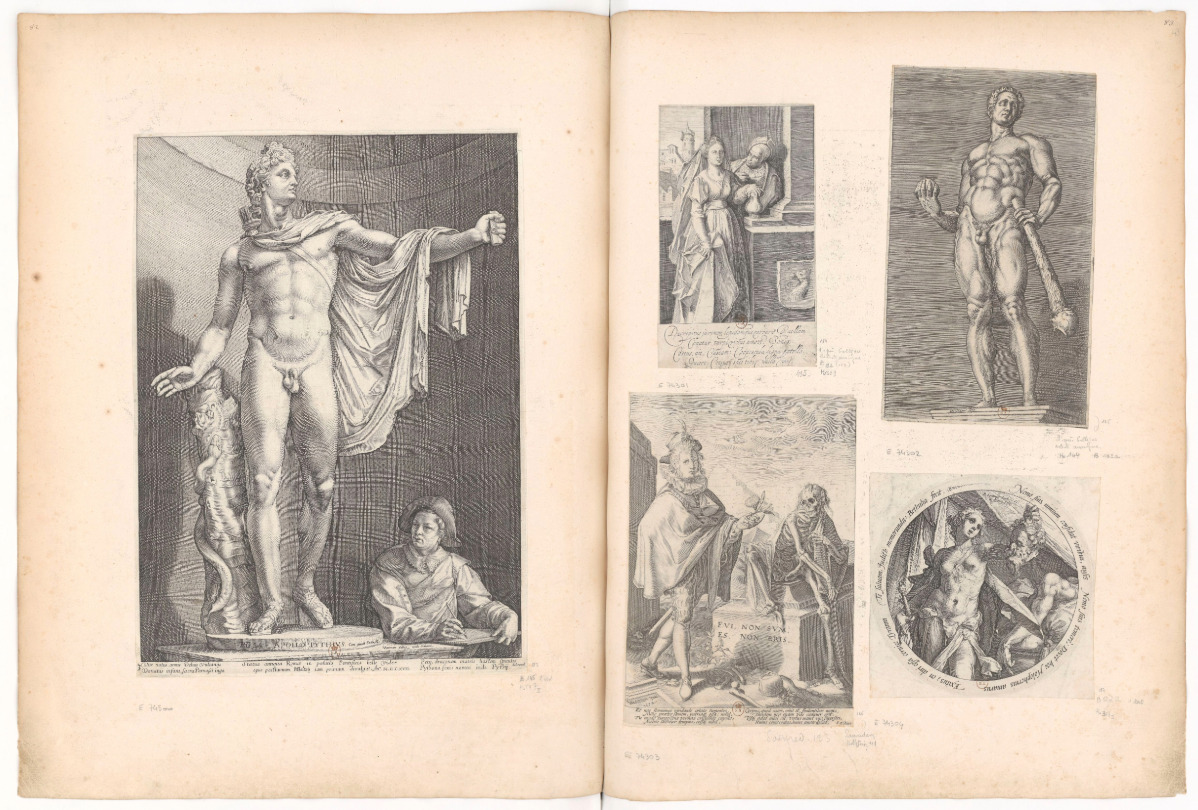
Fig. 1. Marolles Volume dedicated to Hendrick Goltzius, fols. 82 and 83
Bibliothèque national de France. Source: gallica.bnf.fr / BnF
Dutch and Flemish prints occupy a prominent place within the department’s holdings, reflecting their central role in the history of the medium. This ensemble gradually took shape through the acquisition of major collections. From the very creation of the department, Northern artists figured prominently among the “123,000 pieces by more than six thousand masters” donated by Michel de Marolles (fig. 1), which constituted the initial nucleus of the collection, notably including 364 works by Lucas van Leyden and 224 prints by Rembrandt. The acquisition of the Marquis de Beringhen’s collection in 1731 was a major milestone: the 100,000 prints that then entered the royal library included numerous works by the Antwerp engraving dynasties of the Galle, Wierix, and Sadeler families. Several bequests further enriched these holdings in the modern period. The gift of 10,000 prints from the collection of Atherton Curtis in 1943 included works by Lucas van Leyden, Goltzius, Rembrandt, and Van Dyck. In 1974, a donation of 209 prints by Johann and Maurice von Kuffner introduced into the collection important works from the sixteenth century (Lucas van Leyden, Dirk Vellert, Goltzius) and the seventeenth century (Rembrandt, Jan Lievens, Adriaen van Ostade).
Overview of the Dutch and Flemish collections
The department’s Dutch and Flemish collections extend back to the very origins of printmaking. Several masters active during the first half of the fifteenth century are represented, including the Master of the Gardens of Love, of whom four prints from a Passion cycle are preserved pasted onto the pages of a German prayer manuscript. The holdings also include twenty-six works by the Master WA, an individual or workshop active in Bruges in the second half of the century, among them three engravings from his series of the Battles of Duke Philip of Burgundy. Masters from the northern regions are also present, such as the Master I. A. M. of Zwolle and the Master of the Banderoles.
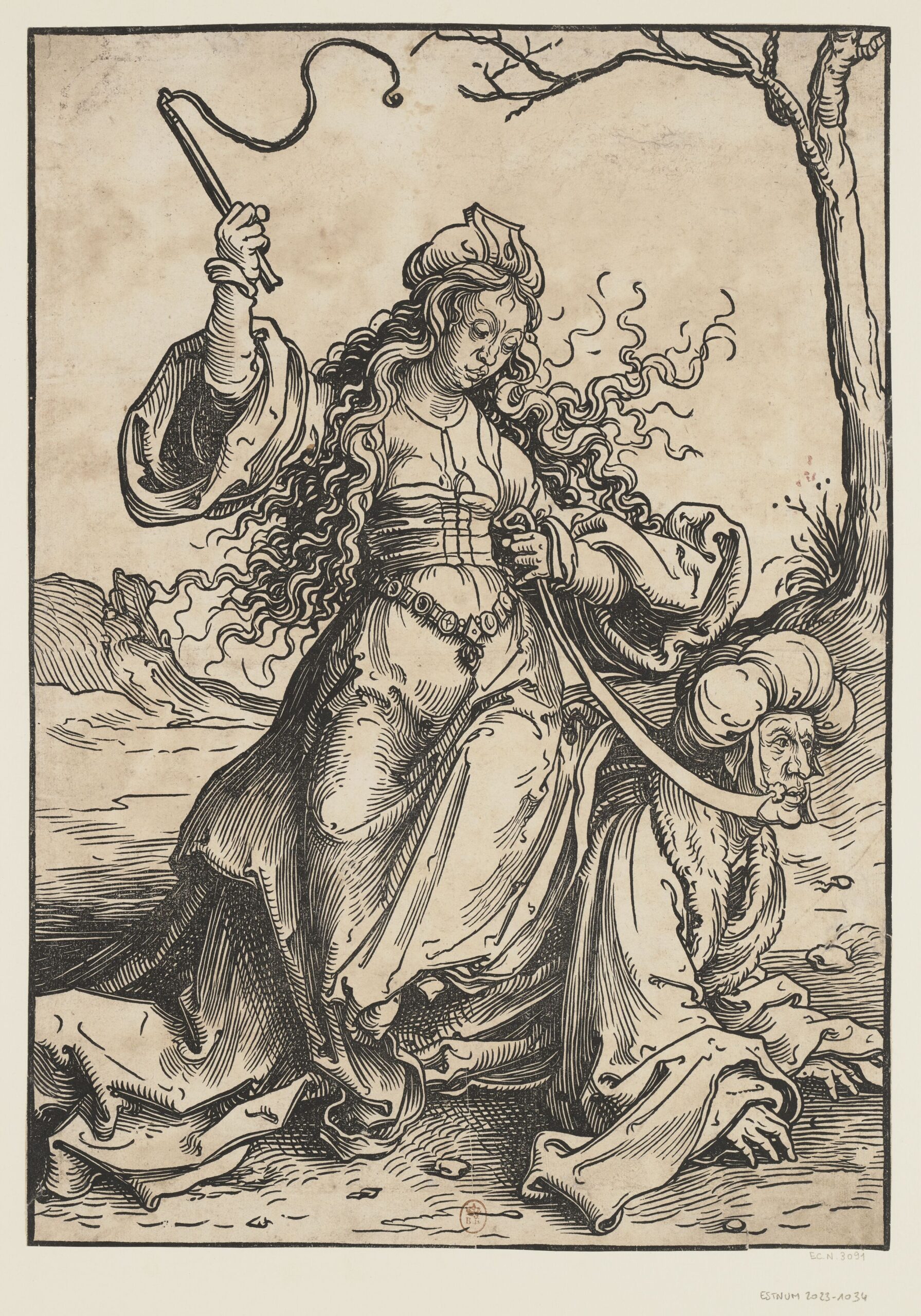
Fig. 2. Lucas van Leyden (ca. 1494-1533), Aristotle and Phyllis, 1515, woodcut, 41,2 x 29,2 cm
Bibliothèque national de France. Source: gallica.bnf.fr / BnF
The sixteenth century constitutes one of the richest ensembles within the Dutch and Flemish collections. The Reserve possesses a sizable body of work by Lucas van Leyden comprising ten volumes, one of which was inherited from the Michel de Marolles collection. These include fine engravings alongside several etchings, notably the Portrait of Maximilian I, often considered the first etching executed in the Low Countries, as well as two unique woodcuts: The Prodigal Son and Aristotle and Phyllis (fig. 2). Seven volumes are devoted to the work of Hendrick Goltzius, two of which derive from the Marolles collection. These contain some important engravings as well as outstanding chiaroscuro woodcuts, such as the series of gods and goddesses, of which three color variants are preserved, including a grey tone, among the earliest printed. Other major engravers of the northern Netherlands are also richly documented, such as Cornelis Cort, Jan Saenredam, and Jacob Matham. In the Flemish holdings, the exceptional series of engravings after Pieter Bruegel, published by Hieronymus Cock, is particularly notable, alongside works by major Antwerp masters such as Jan Gossaert and Frans Floris. Of the latter, the collection preserves precious chiaroscuro woodcuts, including the very rare Hunting frieze (fig. 3) and the unique impression of a Head of a Dryad. The great dynasties of Flemish engravers occupy a significant place in the holdings, with six volumes dedicated to the Wierix, three to the Sadeler, and seven to the Galle families.

Fig. 3. Joos Gietleughen after Frans Floris, The Hunts, 1555, chiaroscuro woodcut, 48,4 x 262,5 cm
Bibliothèque national de France. Source: gallica.bnf.fr / BnF
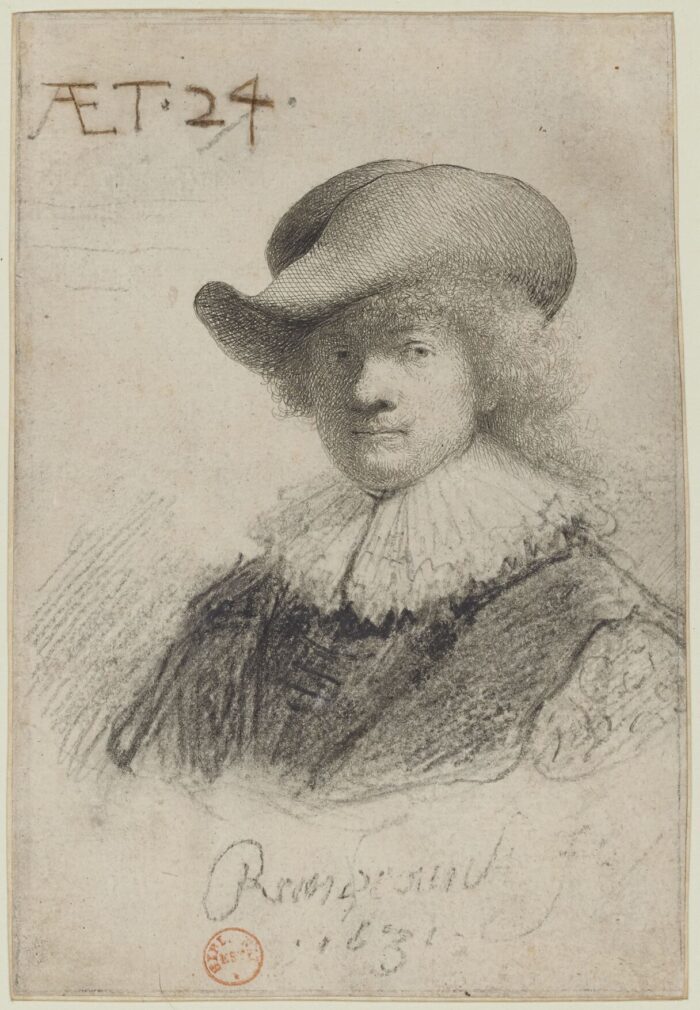
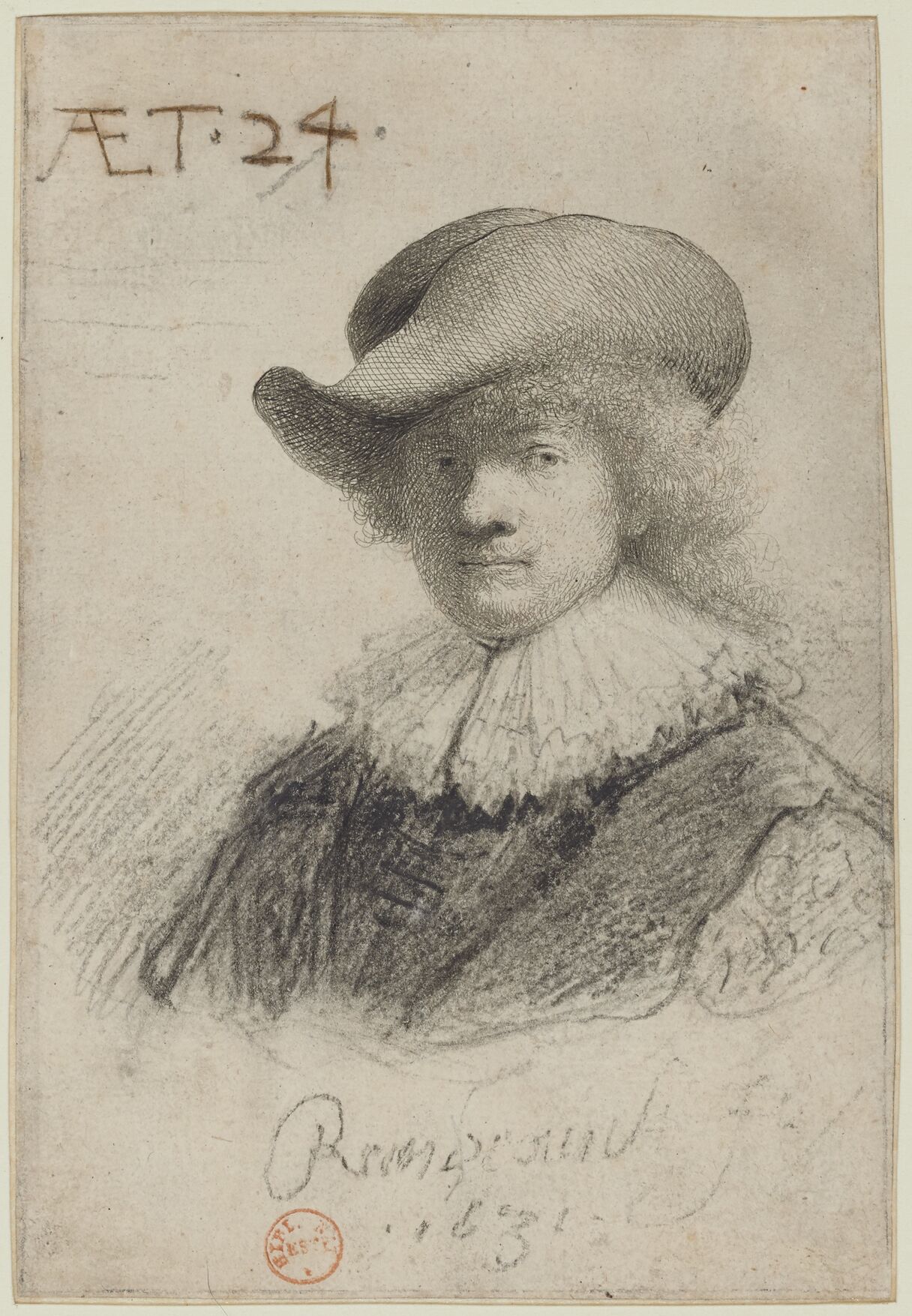
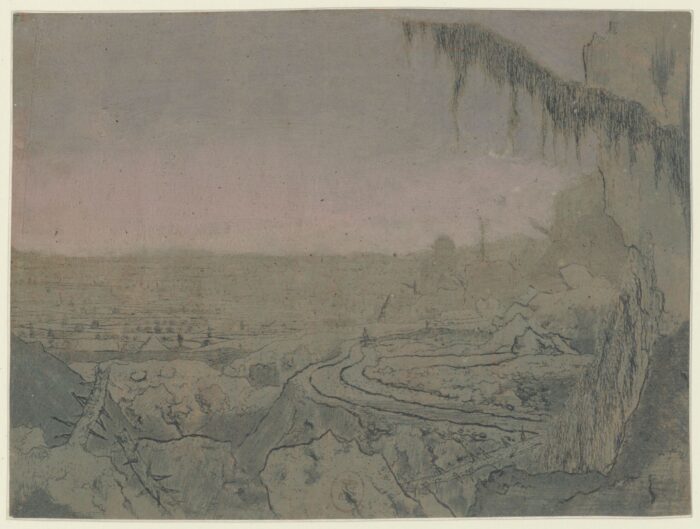
The seventeenth century naturally forms the core of the Dutch collections. The BnF holds approximately nine hundred prints by Rembrandt. This corpus, remarkable for the richness of its impressions and states, began to be assembled during the artist’s lifetime: a quarter of the works entered the collection as early as 1667, with the Marolles acquisition. It was expanded in the following century with the Beringhen collection and, above all, through the purchase of 736 prints from Antoine de Peters. In the modern period, further additions from the collections of Baron Jan Gijsbert Verstolk van Soelen (1847), Robert Holford (1896), Eugène Béjot (1933), and Atherton Curtis (1943) added substantially to the corpus. The holdings encompass a wide variety of impressions (seven of The Three Crosses, including one on vellum) and some extremely rare pieces such as the sixth state of the Self-Portrait in a Soft Hat and Embroidered Cloak (fig. 4), in which the bust is executed in black chalk, and two original copper plates (Woman Bathing Her Feet at a Brook and The Baptism of the Eunuch). Other Dutch highlights include thirteen impressions of the extremely rare etchings by Hercules Seghers (fig. 5). Also worth mentioning are the engravings of Jan Harmensz. Muller, landscapes by Jacob Ruisdael, genre scenes by Adriaen van Ostade and Cornelis Dusart, and animal prints by Paulus Potter and Nicolaes Berchem. The Flemish collections of the seventeenth century are equally rich. Among their masterpieces is the album, acquired at the Mariette sale in 1775, of proof impressions after Rubens, reworked by the master with ink or gouache. Equally notable is the fine group of portrait etchings by Anthony van Dyck and works by Flemish engravers active in Paris at the end of the century, such as Nicolas Pitau and Gérard Edelinck.
-
-
Fig. 4. Rembrandt (1606-1669), Self-Portrait in a Soft Hat and Embroidered Cloak, 1631, sixth state, etching, drypoint and black chalk
Bibliothèque national de France. Source: gallica.bnf.fr / BnF
-
-
Fig. 5. Hercules Seghers (ca. 1589/1590 – 1633/1640), Landscape with Spruce Branch, third state, hand-colored etching and drypoint, 13,5 x 18,3 cm
Bibliothèque national de France. Source: gallica.bnf.fr / BnF

Later periods are less extensively covered, but nevertheless comprise a number of important ensembles. From the eighteenth century, works by Pieter Tanjé and Reinier Vinkele deserve mention. The nineteenth-century collections feature the entire oeuvre of Johan Barthold Jongkind, interesting ensembles by Armand Rassenfosse and James Ensor, and four of the ten prints executed by Vincent van Gogh.
The Department of Prints also holds a remarkable collection of drawings, comprising approximately 200,000 sheets from the fifteenth to the twenty-first century including some important northern-school works.1 The sixteenth century is particularly rich, with pieces by Jan Gossaert, Joachim Patinir, Maarten van Heemskerck (fig. 6), Frans Floris, Marcus Gheeraerts the Elder, Jan van der Straet, Maerten de Vos, and Otto Venius. Fine seventeenth-century sheets are preserved as well, ranging from Abraham Bloemaert and Pieter Saenredam to Jacob Jordaens, as well as drawings of the Rembrandt and Rubens schools. The holdings also include French landscapes by Dutch masters such as Joachim Duviert and Herman van der Hem, as well as by Brussels-born artist Adam Frans van der Meulen.
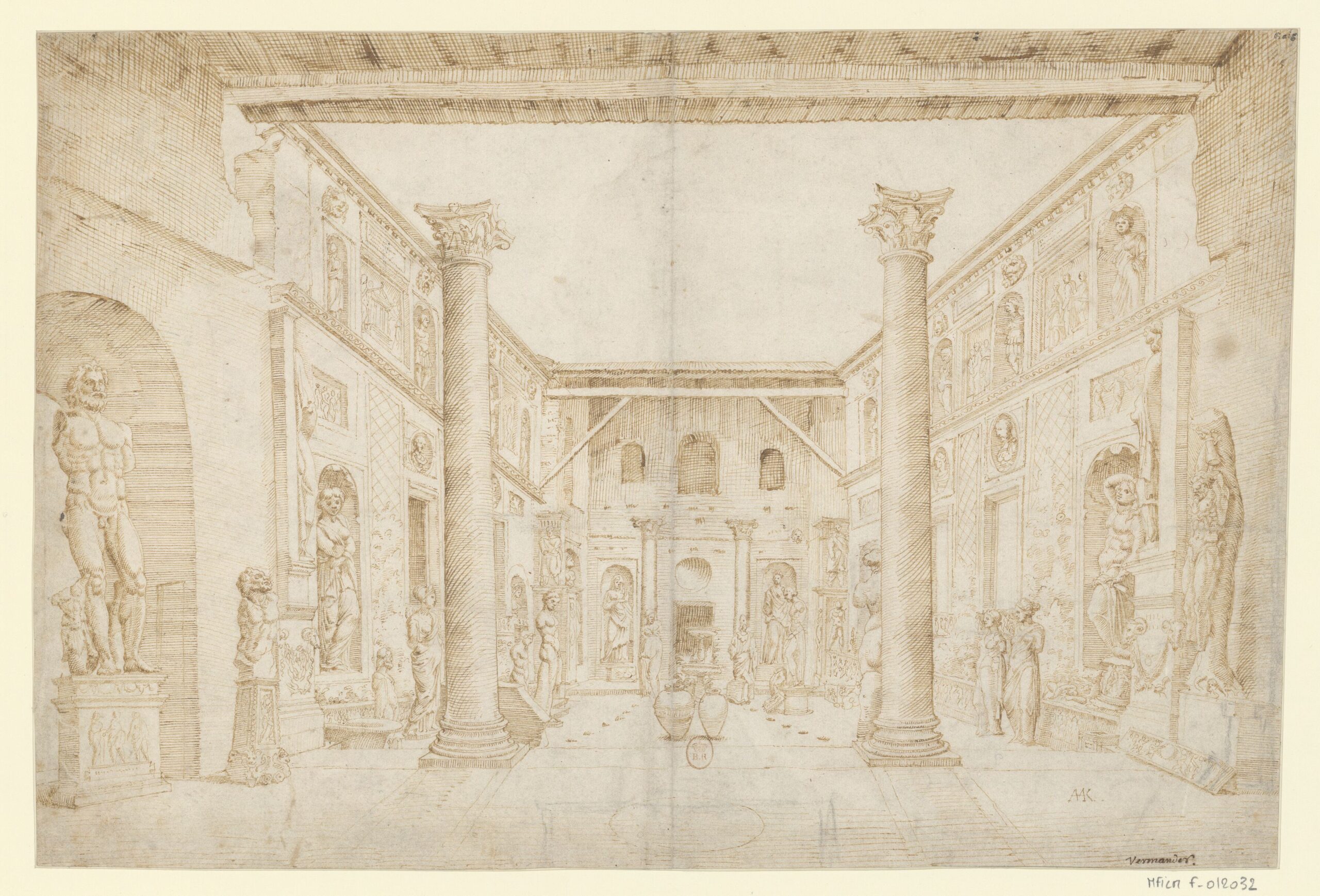
Fig. 6. Maarten van Heemskerck (1498-1574), Courtyard of Antique Sculptures in the Palazzo Della Valle, 1532-1536, pen and brown ink
Bibliothèque national de France. Source: gallica.bnf.fr / BnF
The Dutch and Flemish collections continue to be enriched by acquisitions. This is exemplified by the purchase, in 2023, of a portrait of Henri II of France executed in engraving and etching by Jan Cornelisz Vermeyen, a printmaker active at the court of Emperor Charles V whose prints are now extremely rare. Surviving in only two impressions, this work assumes a double significance within the collections: it supplements the Department’s twenty-five sixteenth-century portraits of Henry II, and enhances the ten prints by Vermeyen already held, thereby establishing the BnF as the public institution holding the most extensive corpus for this artist. Recent acquisitions attest to the diversity of the holdings, as demonstrated by the purchase of a copper matrix by Paulus Pontius after Rubens (fig. 7), or a drawing by Crispijn II de Passe. This drawing, a portrait of Jacob Edelheer on vellum, which relates directly to an engraving held by the BnF, sits perfectly within the œuvre of the de Passe family, which spans seven volumes.
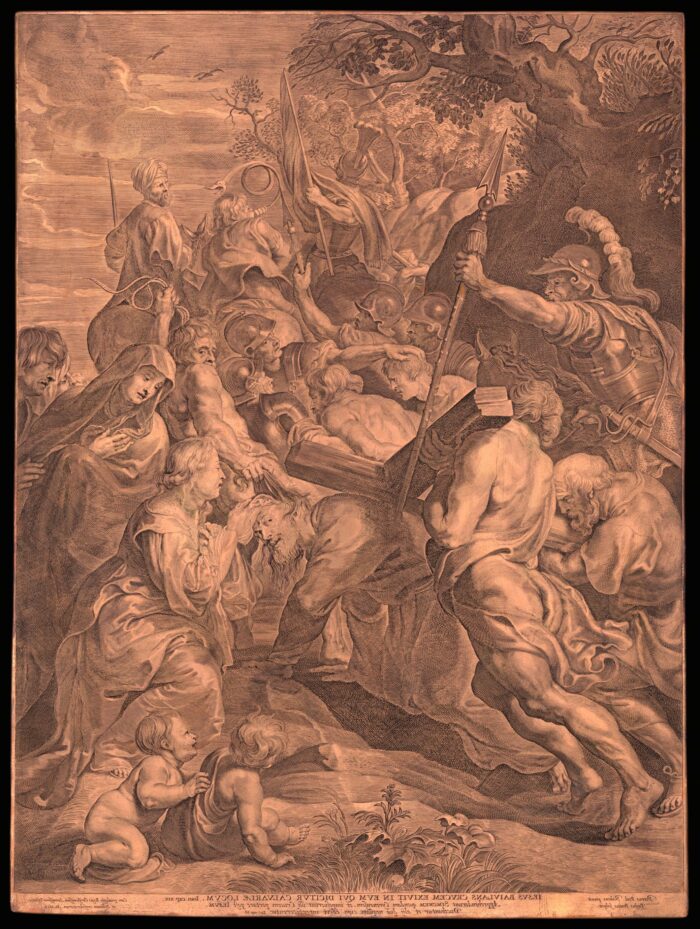
Fig. 7. Paulus Pontius (1603-1658) after Rubens, Copper plate with Christ Carrying the Cross, copper, 62 x 46.5 cm
Bibliothèque national de France. Source: gallica.bnf.fr / BnF
Exploring the collections: practical information for researchers
The collections of the Department of Prints are classified according to a system first established by Hugues-Adrien Joly in 1750 and later refined by Jean Duchesne between 1800 and 1850. The works are grouped into bound volumes. Each volume is allocated a shelf-mark in keeping with the classification system, based on twenty-five alphabetical series. Classification is based on both artistic and documentary principles: on the one hand artists’ works (shelf-marks A to E); on the other thematic series (shelf-marks F to X). The rarest pieces are kept in the Reserve (their shelf-marks prefixed by “Rés.”).
The department’s prints are accessible to researchers in its two reading rooms (General Collection and Reserve) at the BnF’s Richelieu site. A researcher interested in prints of the Low Countries may consult shelf-marks “Cb” for painter-engravers of the Dutch school; “Cc” for those of the Flemish school; and “Ec” for professional printmakers of the two schools. Dutch and Flemish drawings are grouped together under the shelf-mark “B-12.” As with the collections as a whole, many works by printmakers of the Low Countries are also classified among the various thematic series according to their subject: portrait, history, costume, architecture… Moreover, thirty-three volumes in the topographical series are dedicated to the Low Countries (Vc-47 to Vc-77).
The Department’s holdings are partially catalogued in the BnF’s general catalogue and digitized on Gallica. All volumes are recorded in the catalogue with their shelf-marks and subject headings, although without item-level descriptions. Individual cataloging and digitization exist for certain major artists (for example Rembrandt) and significant groups (such as drawings from the Northern schools), but remain a work in progress for the rest of the collections. For early northern-school prints, the illustrated inventory published by Michèle Hébert, which records every item for the period 1440–1550, constitutes an especially valuable reference tool.2
Accessible to scholars for study, the collections are also regularly presented to the public through exhibitions. The sustained attention devoted to the Dutch and Flemish collections reflects a long-standing institutional commitment to their study and dissemination. As early as the nineteenth century, the “permanent exhibitions” organized by curator Jean Duchesne at the Cabinet des estampes already placed special emphasis on Dutch and Flemish prints of the seventeenth century.3 This tradition continued into the twentieth century, in particular with the exhibitions La gravure dans les Provinces-Belgique au XVIe siècle (Printmaking in the Belgian Provinces of the Sixteenth Century) in 1947 and De Van Eyck à Rubens: les maîtres flamands du dessin (From Van Eyck to Rubens: Flemish Masters of Drawing) in 1949. More recently, monographic exhibitions have showcased the most noteworthy individual corpora, as in the case of Rembrandt: La lumière de l’ombre (Rembrandt: the light of shadow) in 2007. Other exhibitions, such as Les origines de l’estampe en Europe du Nord (1400–1470) (The Origins of Printmaking in Northern Europe, 1400–1470) in 2013 and Gravure en clair-obscur: Cranach, Raphael, Rubens… (Chiaroscuro woodcuts: Cranach, Raphael, Rubens…) in 2019, both held at the Musée du Louvre in partnership with the BnF, have drawn attention to the early Netherlandish holdings. The collections are also presented on a rotating basis at the BnF museum and travel widely for exhibitions in France and abroad, ensuring that these remarkable Dutch and Flemish works continue to be studied, appreciated, and made accessible to the public.
Lila Wickers-Levy is Curator of fifteenth- and sixteenth-century prints in the Department of Prints and Photography at the Bibliothèque nationale de France.
Translated from the French by Richard George Elliott
1 A catalogue has been compiled by Frits Lugt and Jean Vallery-Radot: Inventaire général des dessins des écoles du Nord (Paris: Editions des Bibliothèques nationales de France, 1936). The pieces described therein have been digitized and are accessible online in the general catalogue of the BnF and Gallica.
2 Michèle Hébert, Inventaire des gravures des Ecoles du Nord, 1440–1550 (Paris: Bibliothèque nationale, 1982).
3 Véronique Meyer, “Les premières expositions permanentes au département des estampes de la Bibliothèque Royale puis Impériale,” Nouvelles de l’estampe [online], 262 | 2019, uploaded on January 1, 2019, consulted on March 5, 2026. URL : http://journals.openedition.org/estampe/1360.