
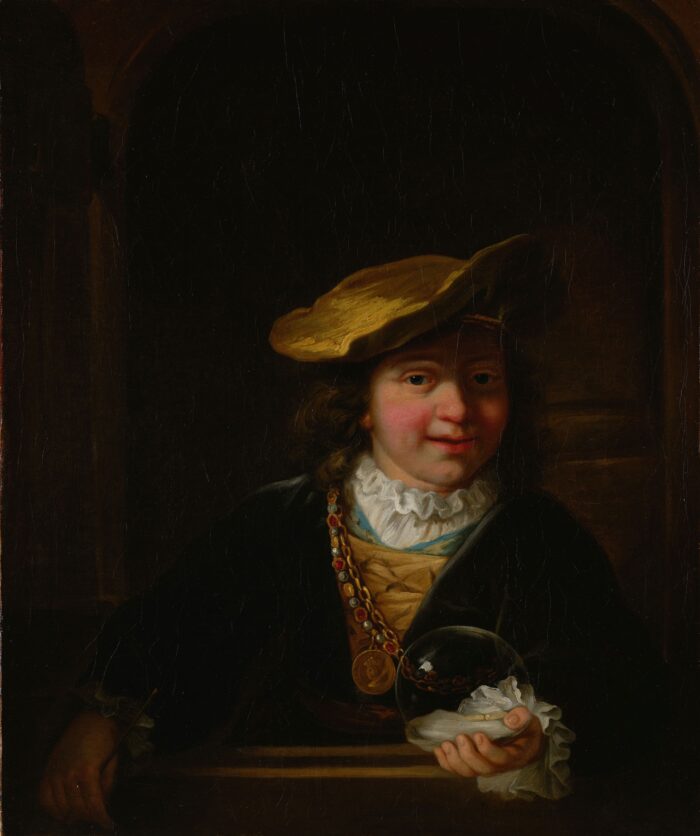
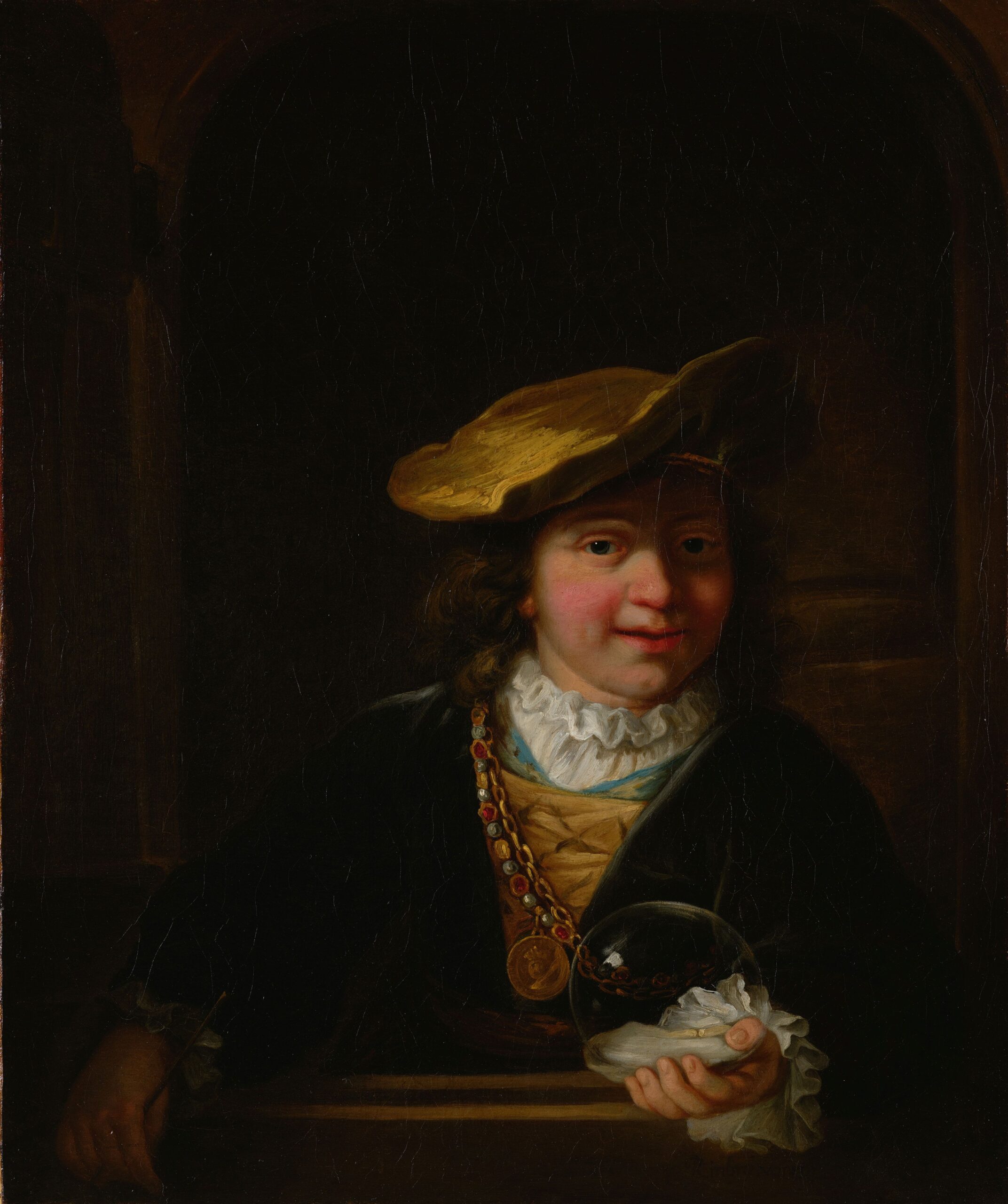
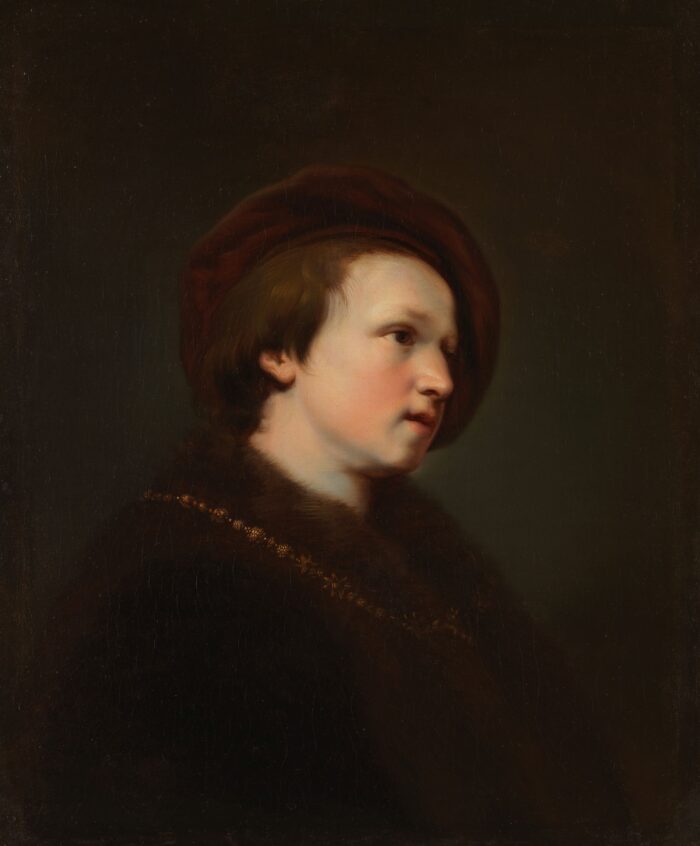
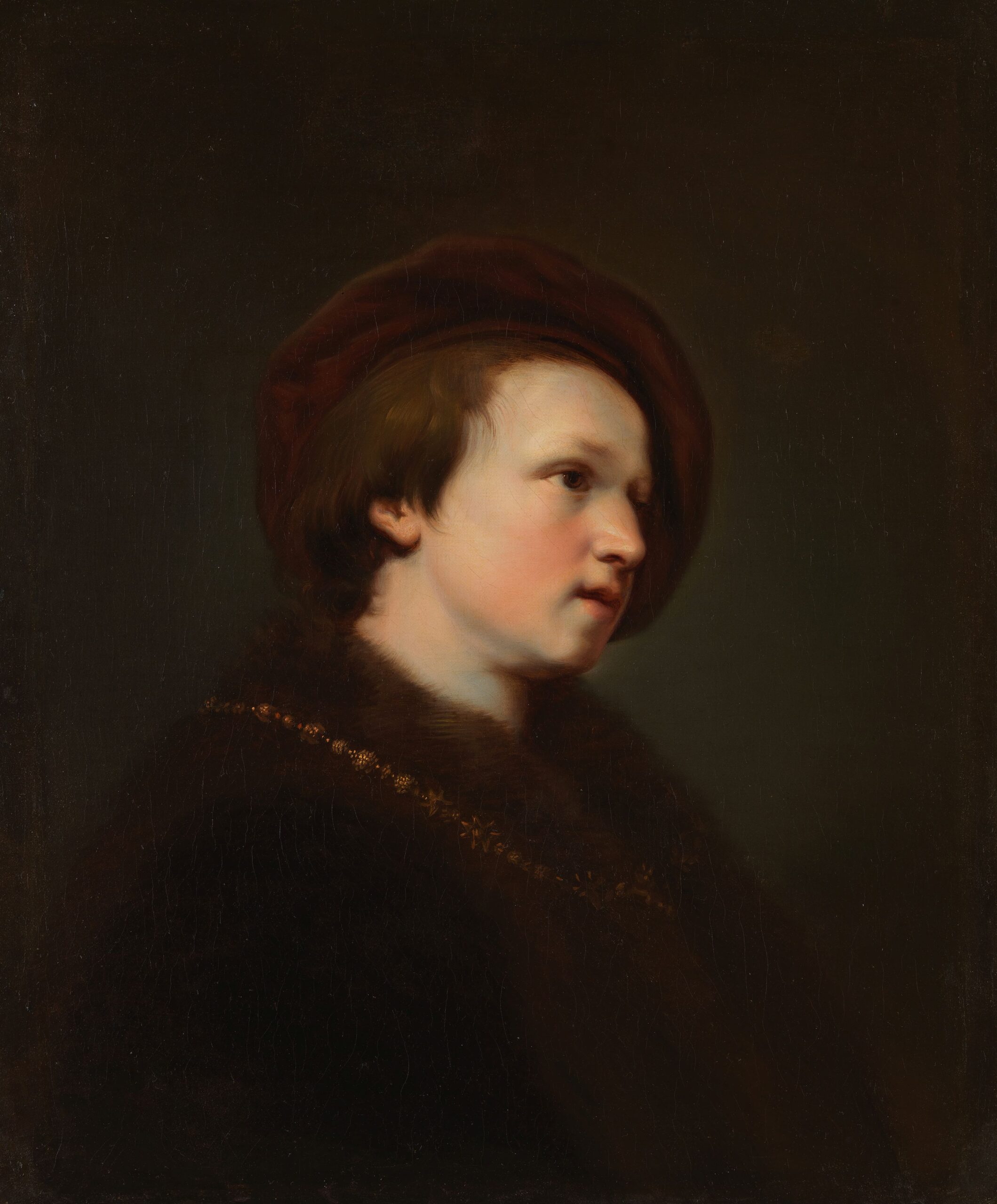
Until 15 March 2026, the recently refurbished Musée des Beaux-Arts in Draguignan is presenting the exhibition Le Phare Rembrandt. Le mythe d’un peintre au siècle de Fragonard (Rembrandt the Beacon. The Myth of a Painter in the Century of Fragonard). Labeled an exhibition of national importance by the French Ministry of Culture, Le Phare Rembrandt examines the afterlife of the Dutch painter in France in the eighteenth century, a time when his paintings were increasingly being collected and scrutinized—by artists as well as collectors. The show aims to shed light on Rembrandt’s developing reputation in Paris between the end of the seventeenth century and the French Revolution and the ways in which his paintings (by or reputed to be by him) were “translated” by modern French artists. Since its founding in 1794 the museum in Draguignan has owned two eighteenth-century pastiches long attributed to Rembrandt himself (figs. 1 and 2), which serve as the starting point for the exhibition. Accompanied by a 304-page catalogue published by In Fine Éditions d’Art, featuring contributions by 22 French, US, and Dutch authors, the exhibition presents sixty loans from museums and collectors in France and abroad.
-
-
Fig. 1. French school, after a model by circle of Rembrandt, Boy Holding a Large Soap Bubble, early 18th century
Musée des Beaux-Arts, Draguignan
-
-
Fig. 2. French or German school, Bust of a Young Man Wearing a Red Cap and a Gold Chain, 18th century
Musée des Beaux-Arts, Draguignan
Rembrandt in a New Age
The influence of northern painting on French artists was already acknowledged in the eighteenth century, when Rembrandt’s name was regularly mentioned by art critic Denis Diderot on the one hand and dealer-experts on the other. In terms of modern art historical studies, it was not until the 1960s that the master’s French legacy was more precisely defined in two articles by art dealer Jean Cailleux. Two original exhibitions were organized in the 1980s: one by Christopher Wright at the Yale Center for British Art in 1983, focusing on Rembrandt’s influence in England; the other by Hervé Oursel, Catherine Louboutin, and Annie Scottez in Lille in 1985 on the relationships between French eighteenth-century painters and their northern models. I wanted to confine our researches to just one of these guiding lights in order to focus on its originality, and in so doing to make use of the growing number of studies of dealers and collectors.
An exhibition I curated at the Musée des Beaux-Arts et d’Archéologie de Besançon in 2019–20, in which I examined the vogue for chinoiserie and the role played by François Boucher in the acculturation of Chinese forms to the French gaze, encountered the interest of a public attracted by an approach that revolved around the history of taste and forms. This time I wanted to assess how this conversion of Rembrandtism (a typology of works similarly new on the market) to French taste actually occurred.
The Choice of Works
The space available at the Draguignan museum (approximately 180 m2) prompted me to adopt an approach based on paintings alone, leaving aside prints and drawings.
The principle of the exhibition is to present paintings considered in the eighteenth century to have been by Rembrandt, ten out of thirteen of which have subsequently been attributed to his workshop (in some cases with the suggestion of a more specific attribution, such as Ferdinand Bol, Carel Fabritius, Gerbrand van den Eeckhout, Willem Drost) alongside works by French painters (Jean-Baptiste Santerre, Hyacinthe Rigaud, François de Troy, Alexis Grimou, Jean-Baptiste Greuze, Jacques André Joseph Aved, Jean-Honoré Fragonard, Jean-Baptiste Oudry, Jean-Siméon Chardin, Charles Antoine Coypel) whom we know were familiar with the paintings of Rembrandt and his circle because they either copied or collected them. Visitors are thus invited, in the different sections of the exhibition, to glance from a “Rembrandt” painting to direct or indirect French translations of it, thereby finding themselves in the position of the “uninitiated,” of a “learner,” just as eighteenth-century viewers would have been when faced with Rembrandt’s oeuvre. If visitors are able to “train their eye” during the exhibition, the very misattributions and approximations they encounter become valuable tools in recreating the authentic viewing conditions of the Age of Enlightenment.
To allow visitors to become acquainted with the lost language of the eighteenth century, most of the titles of the exhibition sections and subsections are taken from contemporary commentaries. Meanwhile, wall texts quote period critics like Roger De Piles, Jean Baptiste Descamps, and Jean-Baptiste Pierre Lebrun, thereby guiding the eye in understanding compositions and brushwork.
-
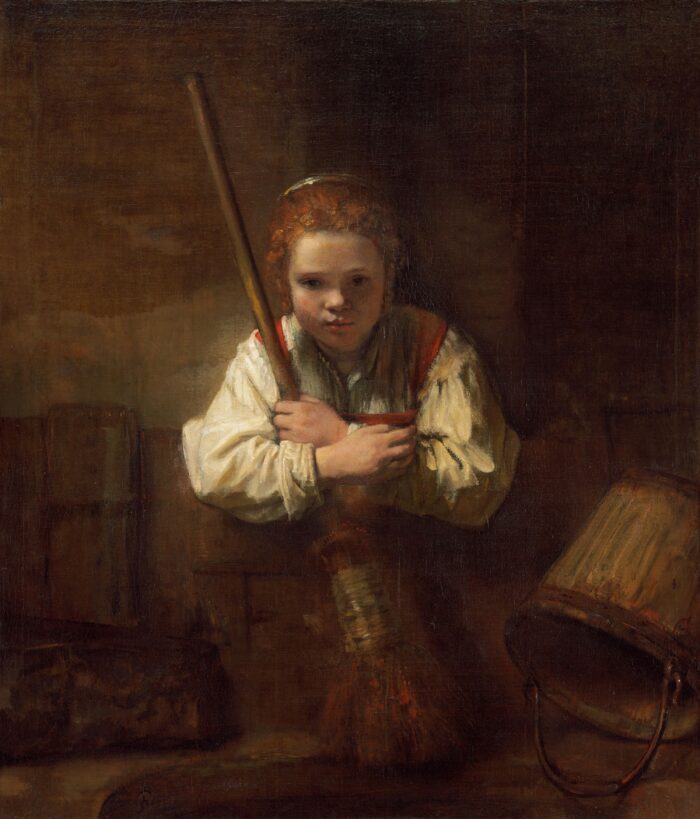
-
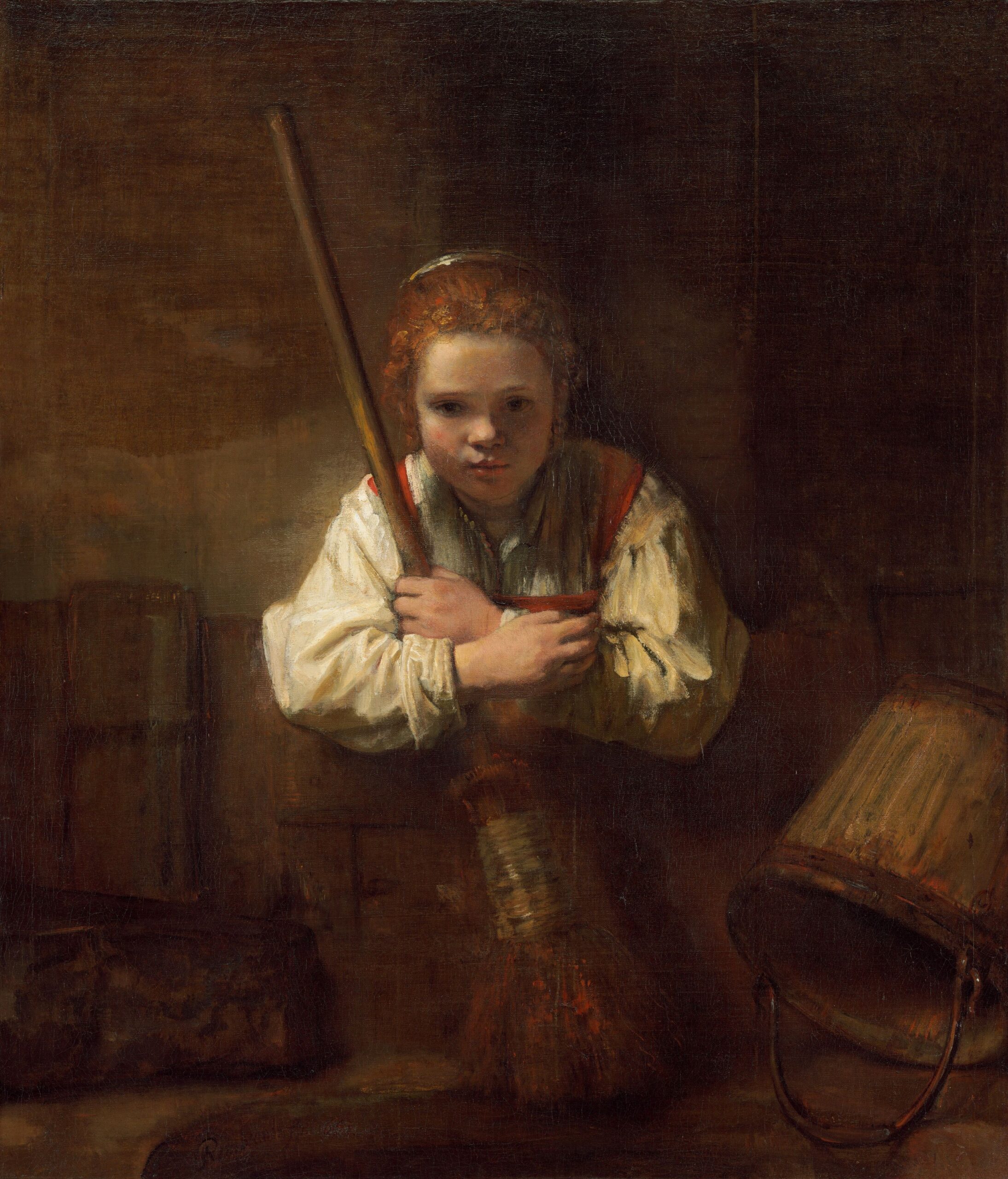
Fig. 3. Rembrandt Workshop, A Girl With a Broom, probably begun 1646/1648 and completed 1651
National Gallery of Art (Andrew W. Mellon Collection), Washington DC
-
-
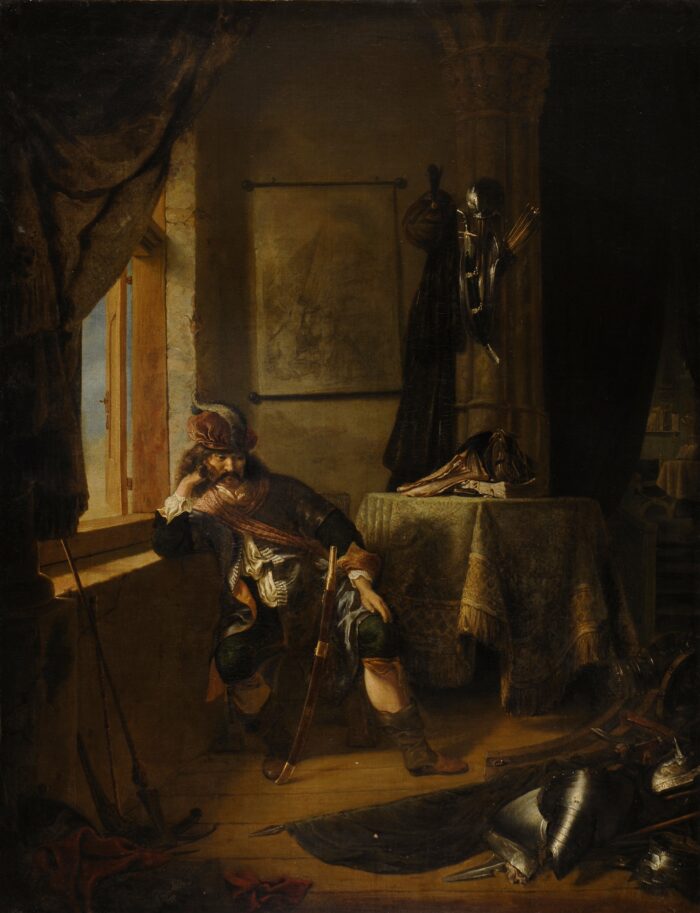
Fig. 4. Attributed to Gerbrand van den Eeckhout (1621-1674), Meditating Warrior, ca. 1645
Musée des Beaux-Arts, Blois
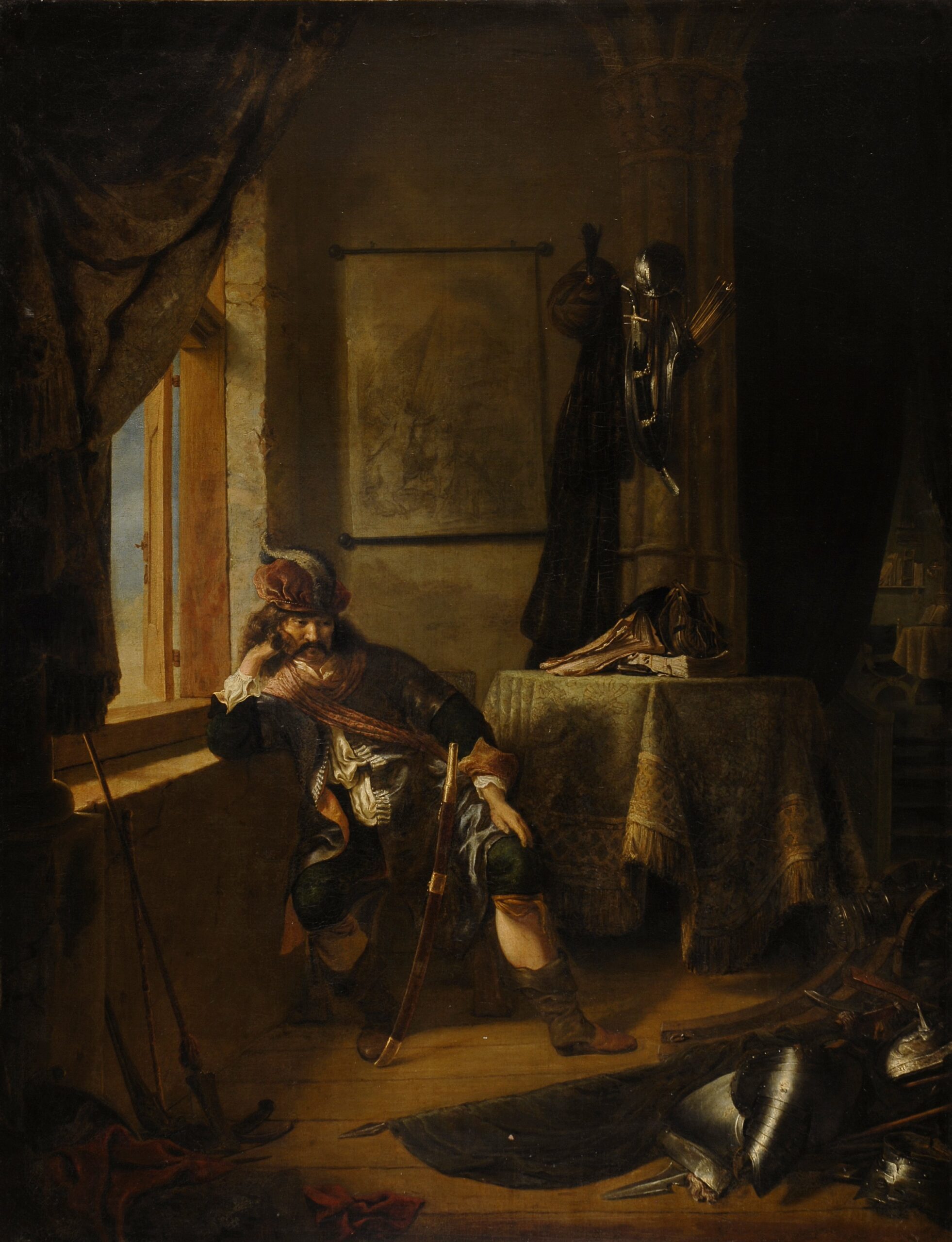
A decision was taken early on to present only works that had been on view in France in the eighteenth century. The selection of paintings by Rembrandt (and his workshop or circle) was based on a list compiled from the Getty Provenance Index, cross-referenced with various other sources. This led to the identification of a little over 400 paintings under the name of Rembrandt (the majority not identified or traced). Through the works ultimately exhibited—in some cases with better-established provenances as a result of this research—the exhibition is able to tackle a range of issues. For instance, the Washington Girl with a Broom (attributed to Rembrandt’s workshop, possibly Fabritius, fig. 3) was an early arrival in France, was greatly admired within the Crozat collections, and is known to have been copied by Fragonard soon after its arrival in Paris. The Man in Oriental Costume from the Leiden Collection, which also bears a signature and a date, was identified via market records as one of two versions of a composition that had passed through the Mazarin collection before reaching Chatsworth in 1742. Pierre Lebrun presented the Blois Guerrier dans son cabinet (fig. 4) for sale as a work by Rembrandt six times before his son eventually parted with it in 1774 as a work by Gerbrand van den Eeckhout, which the painting has retained ever since.
Many eighteenth-century works are suspected of Rembrandtism. We chose to include paintings by artists who collected works by Rembrandt (Jacques Aved, Charles Coypel, Hyacinthe Rigaud) and/or copied him (Fragonard, Chardin, Santerre), while searching as far as possible for works explicitly linked by Salon critics or art market experts to the name of Rembrandt (as in the case of Fragonard’s têtes de vieillards [old men’s heads]).
A magnificent example, intended to be especially instructive here, was one of Rembrandt’s most famous paintings in France in the eighteenth century: the Holy Family in an Interior with Saint Anne, loaned by the Musée du Louvre. The history of this work can be traced more or less exhaustively up to its acquisition by the Louvre in 1793 for what was then a record price for a Rembrandt painting in France. Possessing an impeccable pedigree (the Comtesse de Verrue held it “in great veneration”), this painting is an exquisite embodiment of all that was admired in Rembrandt: use of color, virtuoso brushwork, and above all “supreme intelligence in his handling of light.” In the exhibition (fig. 5), this jewel is shown in conjunction with two compositions by Coypel, who possessed a larger-scale copy, and two others by Fragonard, who would have been well aware of such a famous work. It was so renowned that Abbé Le Blanc compared its delicate lighting to Oudry’s Lice with Her Young, one of the successes at the Salon of 1753, which has been lent by the Musée de la Chasse et de la Nature.
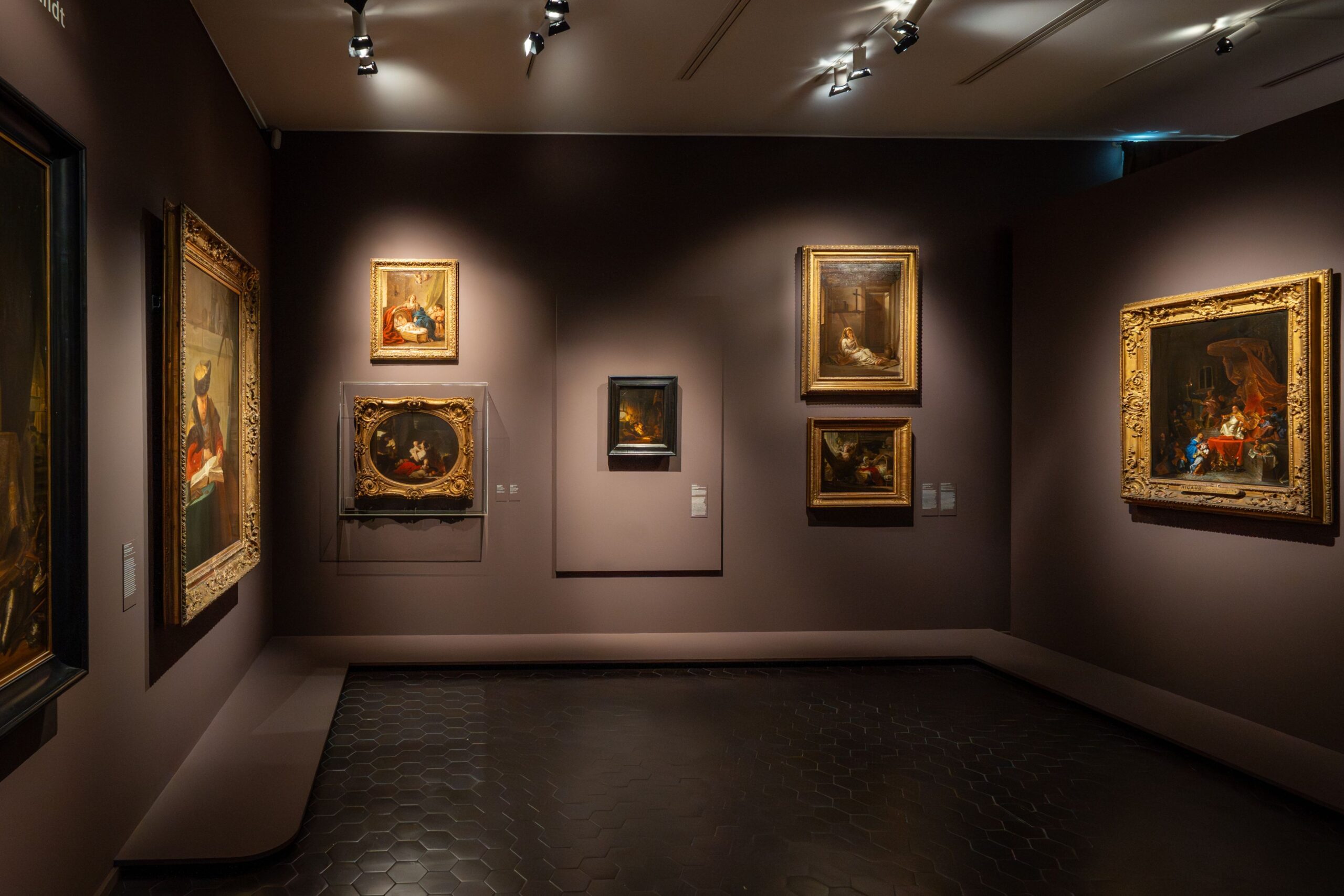
Fig. 5. View of the gallery with Rembrandt’s Holy Family in an Interior with Saint Anne in the center
An Exhibition in Five Parts
Following an introduction on the collecting scene in both Paris and the provinces (with the Musée de Rennes lending all its paintings, drawings and prints attributed to Rembrandt by the Marquis de Robien), the exhibition opens with the portrait of Amalia von Solms from the Musée Jacquemart-André, one of the earliest portraits with which Rembrandt started to make a name for himself in Amsterdam. This portrait must have left the Orange-Nassau collections in the eighteenth century because it is known to have been in Paris before the French Revolution. It evokes the French taste for the delicate style of the painter’s early work and his reputation for portraiture, in which genre contemporaries ranked Rembrandt’s talent alongside that of Rubens and Van Dyck. The first part of the exhibition is dedicated to the figure and the “feeling of life” achieved by Rembrandt (and his workshop) through effects of framing, brushwork, and light. It also includes a section that focuses on accessories, oriental (such as the turban) as well as fantasy (beret, feather, breastplate, chain) that, for Rembrandt, evoked Enlightenment Man. It also covers the têtes de vieillards genre, a category of works represented early and abundantly in French collections, in particular in those of artists. The second part looks at questions of style: variations on chiaroscuro and visibility of brushwork. A subsection consisting of three etchings lent by the Fondation Custodia examines the main criticism of Rembrandt’s work at the time: the ugliness of his nudes, especially the female ones. Rembrandt’s paintings of nudes were very rare in France in the eighteenth century; their unanimous rejection was based on prints, as testified by Edme-François Gersaint’s comments in his catalogue raisonné published in 1751.
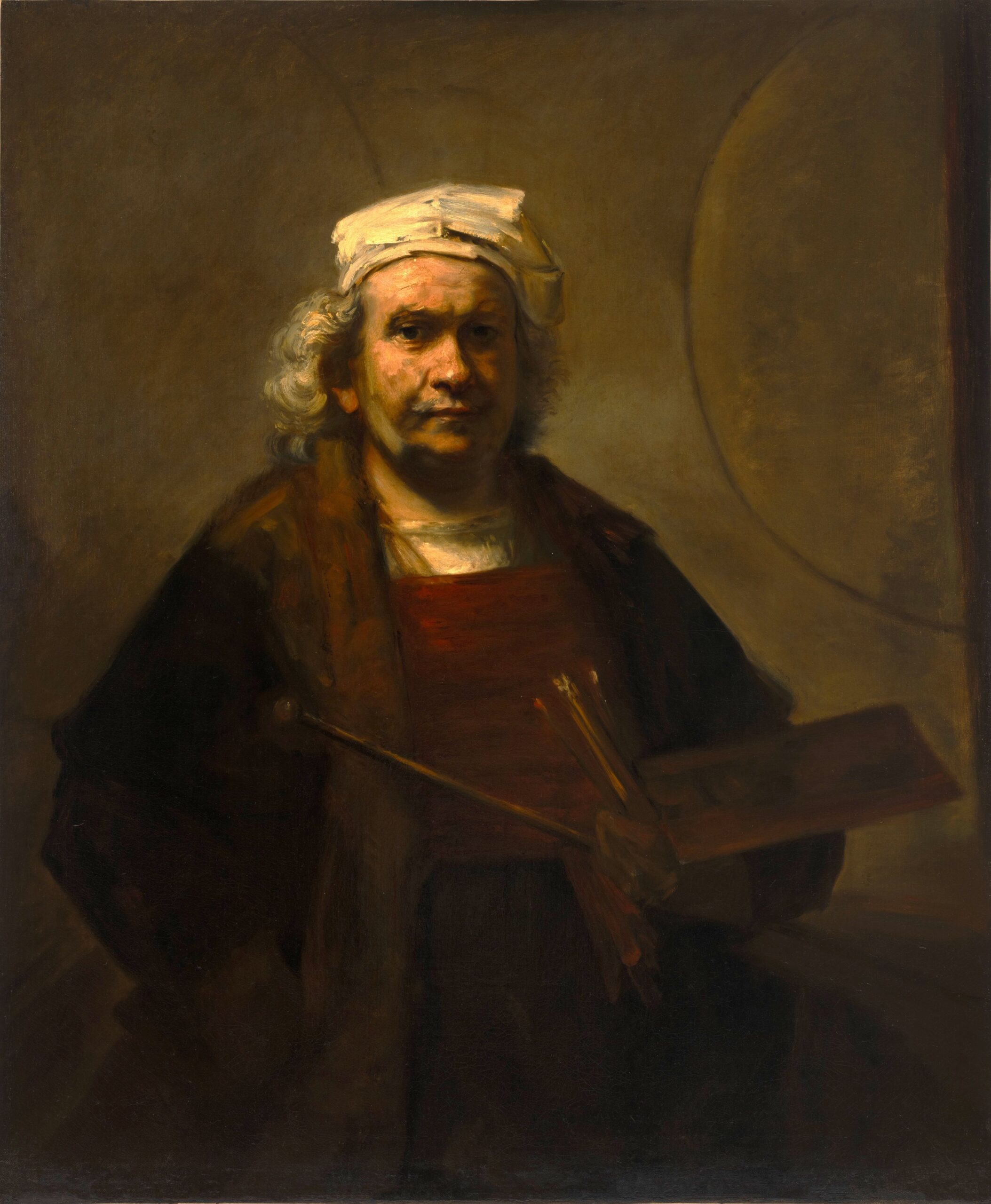
Fig. 6. French school, after Rembrandt, Self-Portrait with Two Circles, 18th century
Musée Granet, Aix-en-Provence
The exhibition closes in playful manner with a copy of the Kenwood Self-portrait with Two Circles (fig. 6). Until 1761, the original was one of fifteen Rembrandts in the collection of the Comte de Vence. Lent by the Musée Granet in Aix-en-Provence, this copy was made in the eighteenth century from the original (in the Vence gallery?) by an anonymous French artist who concentrated on the face, seeking to reproduce its varied impasto. Louis Malbos erroneously saw in it the hand of Fragonard, whose wash drawing after the original is presented alongside. But this drawing was made long after the Vence sale, when, in 1773, Fragonard rediscovered in Brussels a Rembrandt he had been able to admire in the Vence collection as a young man. It therefore sheds no light on the attribution of the copy. Cleaned especially for the exhibition, the painting from Aix has retained a yellow tonality that attests to the condition of the original in the eighteenth century! It also heralds a fascination with the self-portraits that was not to develop until well after the French Revolution, once fresh and imaginative ideas had been vested in the name of Rembrandt in the nineteenth and then twentieth centuries.
Yohan Rimaud is director of the Musée des Beaux-Arts de Draguignan in Draguignan. He has been a member of CODART since 2025.