
Case Studies
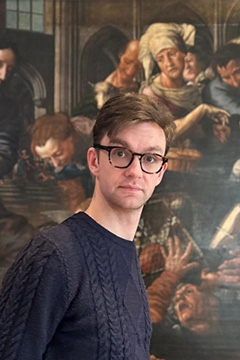
Maarten Bassens
Snijders&Rockhoxhuis, Antwerp
Dr. Maarten Bassens is Curator at the museum Snijders&Rockox House in Antwerp. He was awarded his PhD by the Catholic University of Leuven for a dissertation on the graphic oeuvre of Pieter Bruegel the Elder. His academic focus lies in 16th-century Netherlandish print and drawing culture, while his curatorial work extends into early modern Antwerp painting and tapestry. Bassens has previously held positions at diverse museums and institutions, including The Royal Library of Belgium (KBR) in Brussels and The Courtauld Institute of Art in London.
Catharina van Hemessen: Fact, Fiction and Flemish Brushwork
Today, Catharina van Hemessen stands as the archetype of female artistic achievement within the canon of Netherlandish art. This is especially true since her small but refined oeuvre establishes her as the earliest known female painter of the Northern Renaissance, with securely attributed pieces. Already lauded by her contemporaries, Catharina continues to resonate powerfully, particularly in today’s climate of heightened awareness around gender, authorship, and cultural inclusion. Yet the question remains: what rightful place can she claim within our shared cultural heritage?
Rather than presenting her as a “rediscovered anomaly,” the forthcoming exhibition Van Hemessen & Father at The Snijders&Rockox House (Winter 2026–27) seeks to contextualize Catharina within the familial workshop, where she painted alongside her father Jan Sanders, her brothers, and several assistants. Following the Antwerp exhibition, a selection of works will travel to the National Gallery in London in spring 2027. In his talk, Bassens will reflect on the curatorial complexities of this project and treat attendees to an enticing preview.
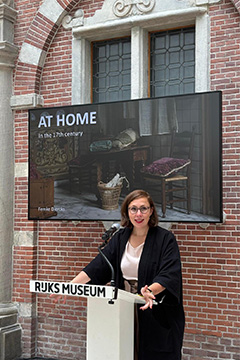 Femke Diercks
Rijksmuseum, Amsterdam
Femke Diercks is Head of Decorative Arts and Curator of European Ceramics at the Rijksmuseum in Amsterdam. Her scholarly interests include Delftware, Meissen, the history of collecting, and an interdisciplinary approach within the study of decorative arts. Most recently she was a member of the curatorial team of the exhibition At Home in the 17th Century (2025-2026).
Women’s Stories and the Use of Objects in the exhibition “At Home in the 17th Century”
In 2025-2026, the Rijksmuseum mounted the exhibition At Home in the 17th Century, which focused on everyday family life by profiling the objects that helped to define the domestic environment in that era. Although the exhibition did not specifically center women, in highlighting the home it celebrated women’s key role in running the household and shaping the domestic space. By using the medium of physical objects rather than pictorial images, the exhibition avoided the stereotypes of domesticity that have been created through the painter’s lens. The exhibition was conceived and developed in the early years of the project Women of the Rijksmuseum. In crafting the exhibition’s art historical and broader historical narrative, we were able to draw on the specialist scholarly expertise within that project team. The next stage is to continue integrating the insights arising from this exhibition into the permanent installation.
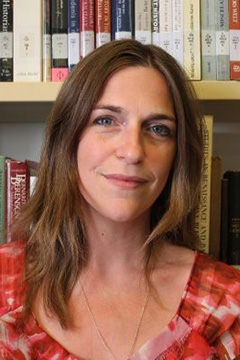 Veronique Van de Kerckhof
Museum Plantin-Moretus/Prentenkabinet, Musea Antwerpen, Antwerp
Véronique Van de Kerckhof has been a CODART member since 2002. She has worked in various roles at the Royal Museums of Fine Arts of Belgium in Brussels, M Leuven, and in Antwerp at the Rubenshuis, the Rubenianum and the Museum Mayer van den Bergh. She is currently Head of Collections and Curator of the Historic House collections at the Museum Plantin-Moretus. Among the exhibitions she curated are The Painter and the Surveyor: Imagining Brussels and the former Duchy of Brabant (2000) and Wonderlycke dieren op papier in de tijd van Plantin (2007).
Women’s Business/Business Women
How can museums address the blind spots in centuries of historiography regarding the historical role of women? In 2025, the Plantin-Moretus Museum sought to redress this imbalance by foregrounding nine generations of women who helped to shape both the museum’s building and the printing business. The project resulted in a temporary exhibition that was very well received by the public. But our aims are more ambitious. We intend to permanently correct what we see as museological myopia, starting with an updated presentation of our collection, opening in late 2026.
The principal sources for these revised narratives are the family and business archives preserved in situ. In illuminating the lives of sisters, mothers, maids, and businesswomen, the project employed a diverse array of media and interpretive tools and – crucially — invited new voices into the curatorial process. One year later, we ask: What have we learned from Women’s Business / Businesswomen? How can our research findings further inspire curatorial practices?
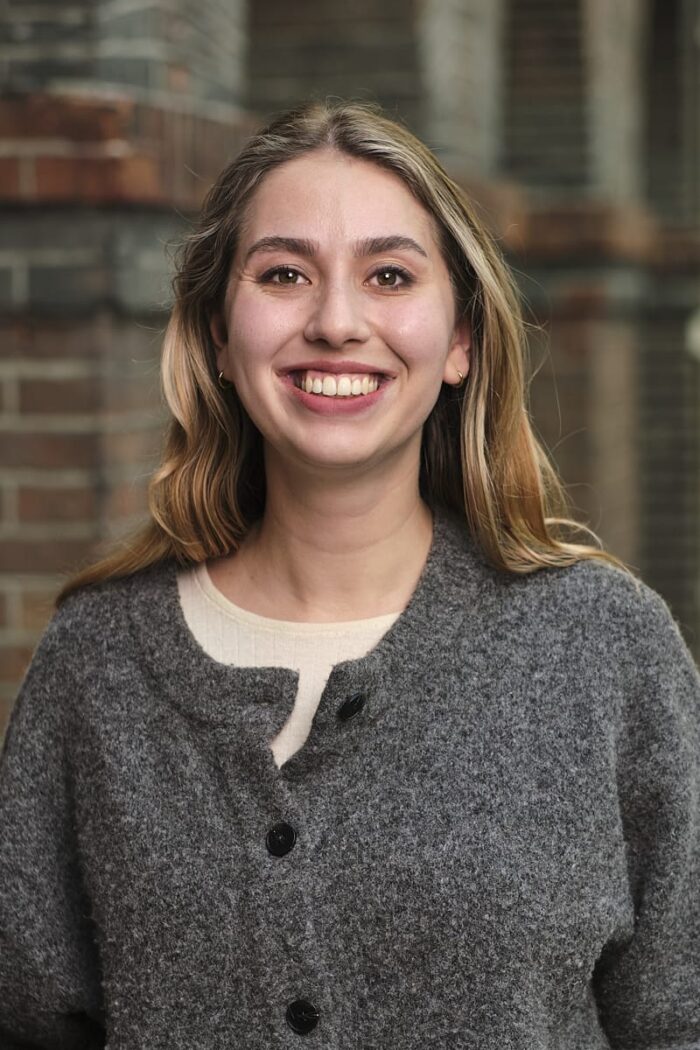 Anne-Linde Ruiter
Museum Boijmans Van Beuningen, Rotterdam
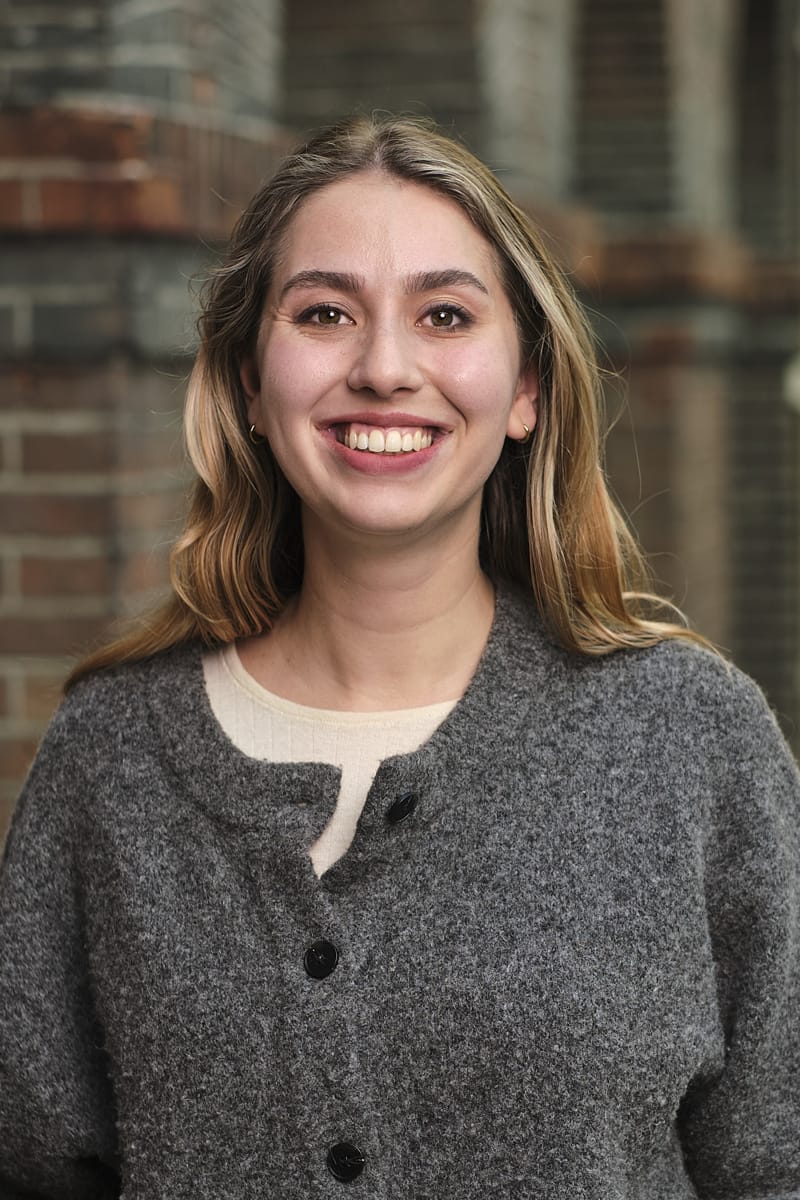
Anne-Linde Ruiter is Researcher at Museum Boijmans Van Beuningen. With support from the Vereniging Rembrandt (thanks to their Ekkart Fonds) and the Bröcker Fonds, she has spent the past year researching the lives, backgrounds, and motivations of five female donors in Museum Boijmans Van Beuningen’s history. Her case studies will be published in Boijmans Studies, the museum’s scholarly journal. Previously, she was a Prof. J.C.M. Warnsinck Fellow at The Dutch National Maritime Museum in Amsterdam, where she researched the iconography of seventeenth-century portraits of admirals’ and captains’ wives.
Exhibiting Female Donors: How Museum Boijmans Van Beuningen is Recovering Overlooked Contributions to the Collection
Private donations have always been of vital importance to Museum Boijmans Van Beuningen’s collection. Male donors have been well documented: two of them are credited in the museum’s name, besides which a study of male donors was published on the museum’s 150th anniversary in 1999. However, roughly one in ten objects was donated by a woman. Over the last five years, as part of a collaborative research project, we have discovered the names of 556 female donors of paintings, drawings, decorative arts, and design from 1864 to the present day. The research will be presented to the public in the form of an exhibition and a publication in 2027. Case studies of the most significant donors will explore their reasons for donating items and their networks in the city of Rotterdam. This paper discusses the processing of new data into a scholarly publication and the exhibition as a space in which the workings of the museum and its institutional histories take priority over traditional art-historical approaches.
Niels Schalley
Museum Hof van Busleyden, Mechelen
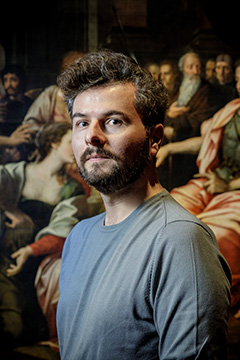
Niels Schalley (b. 1989) is Curator at Museum Hof van Busleyden in Mechelen. He recently curated Rik Wouters & Nel. Muze en Manager (2025), an exhibition foregrounding the cultural agency of Nel Wouters, and is currently preparing Susters Samen. Beguinage Culture in the Low Countries (2027). Before joining the museum, he spent nearly a decade at The Phoebus Foundation as project manager and curator’s assistant, where he coordinated international exhibitions, publications, and acquisitions. His curatorial practice engages with the social dimensions of heritage and the role of museums in fostering dialogue between historical collections and contemporary audiences. His current research focuses on female agency, cultural networks, and the intersections of heritage, gender, and museological practice.
This lecture introduces research underpinning an exhibition to go on view at Museum Hof van Busleyden in 2027: Susters Samen: Beguinage Culture in the Low Countries. It examines the ways in which beguines — women who pursued spiritual lives without taking monastic vows — negotiated their autonomy within restrictive social structures, emerging as significant cultural actors. Focusing on the beguines of Mechelen, the lecture shows how their initiatives shaped artistic production through personal patronage and collective commissions. By examining beguinages as spaces of female solidarity, creativity, and civic participation, it illuminates the beguines’ enduring impact on visual culture. Finally, the lecture reflects on ways in which their legacy can inspire contemporary museological approaches to representing women’s agency and community.