
Lectures
 Katlijne Van der Stighelen
University of Leuven
Katlijne Van der Stighelen was Full Professor at KU Leuven until 2024. Her first book (1987) focused on the polyglot scholar and artist Anna Maria van Schurman. In 1999, together with Mirjam Westen (Museum voor Moderne Kunst Arnhem), she curated the first exhibition on women artists in Belgium and the Netherlands (1500–1950), Elck zijn waerom / À chacun sa grâce. She curated an exhibition on Michaelina Wautier at the MAS Museum in Antwerp in 2018 and is co-author and co-editor of the catalogue accompanying the Michaelina Wautier exhibition currently on view at the Kunsthistorisches Museum in Vienna and, from March 2026, at the Royal Academy in London. With Anna Orlando, she is preparing Van Dyck l’Europeo. The Journey of a Genius from Antwerp to Genoa to London, opening in spring 2026 at the Palazzo Ducale in Genoa.
Women Looking for Women: A Precarious Journey
In 1994, Marijke Seresia founded in Antwerp the non-profit organization Gynaika to address discrimination against women in the art world. Through exhibitions and monographs on both contemporary and historical women artists, she challenged the structural gender bias embedded in the field. At the time, however, such an approach attracted little attention, and the rediscovery of overlooked women artists remained a marginal pursuit within art history and cultural studies, exclusively carried out by women researchers. Since 2000, interest in Flemish and Dutch women artists has gained momentum as part of a broader, global movement of reassessment and recovery. At the same time, the notion of the ‘woman artist’ was reconfigured to allow for new perspectives. Gradually, it became clear that the very notion of artistic practice itself needed to be reconsidered.
 Judith Noorman
University of Amsterdam
Judith Noorman is Associate Professor of Early Modern Art History at the University of Amsterdam and Principal Investigator of The Female Impact, a Dutch Research Council (NWO)–funded project (2021–2026) on women’s roles in the seventeenth-century art market. Her research examines how women shaped art production, collecting, and consumption in the Dutch Republic. She is the co–author of publications including Het unieke memorieboek (2022), Art, Honour and Success (2020), Gouden Vrouwen (2020), and Rembrandt’s Naked Truth (2016). She is currently completing a book on women as art buyers and connoisseurs in the seventeenth century.
Beyond the Artist: Women as Consumers, Collectors, and Connoisseurs
Even the most committed curators struggle to achieve gender balance in their galleries: works by women artists — especially from the Early Modern era — remain rare and are increasingly expensive. Still, focusing exclusively on artists leaves many stories untold. Drawing on years of research from The Female Impact project, Judith Noorman explores how women in the seventeenth-century Netherlands shaped the art world as consumers, collectors, and connoisseurs. These women were not exceptions, but active and powerful participants in the creation of cultural value. Using examples from her collaborations with the Museum of Fine Arts (MSK), National Museum of Women in the Arts (NMWA), the Mauritshuis, Museum Prinsenhof Delft, Stedelijk Museum Alkmaar, the Rijksmuseum, and the Museum of Fine Arts (MFA) Boston, Judith shows how museums can meaningfully diversify narratives – each one short and accessible yet paradigm-shifting — by illuminating the full spectrum of women’s participation in the art world.
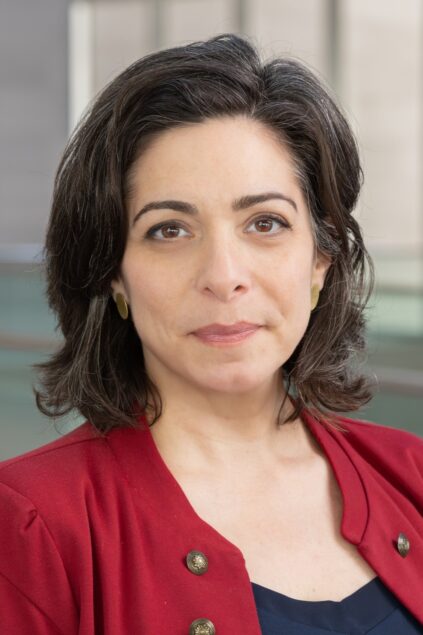 Andaleeb Badiee Banta
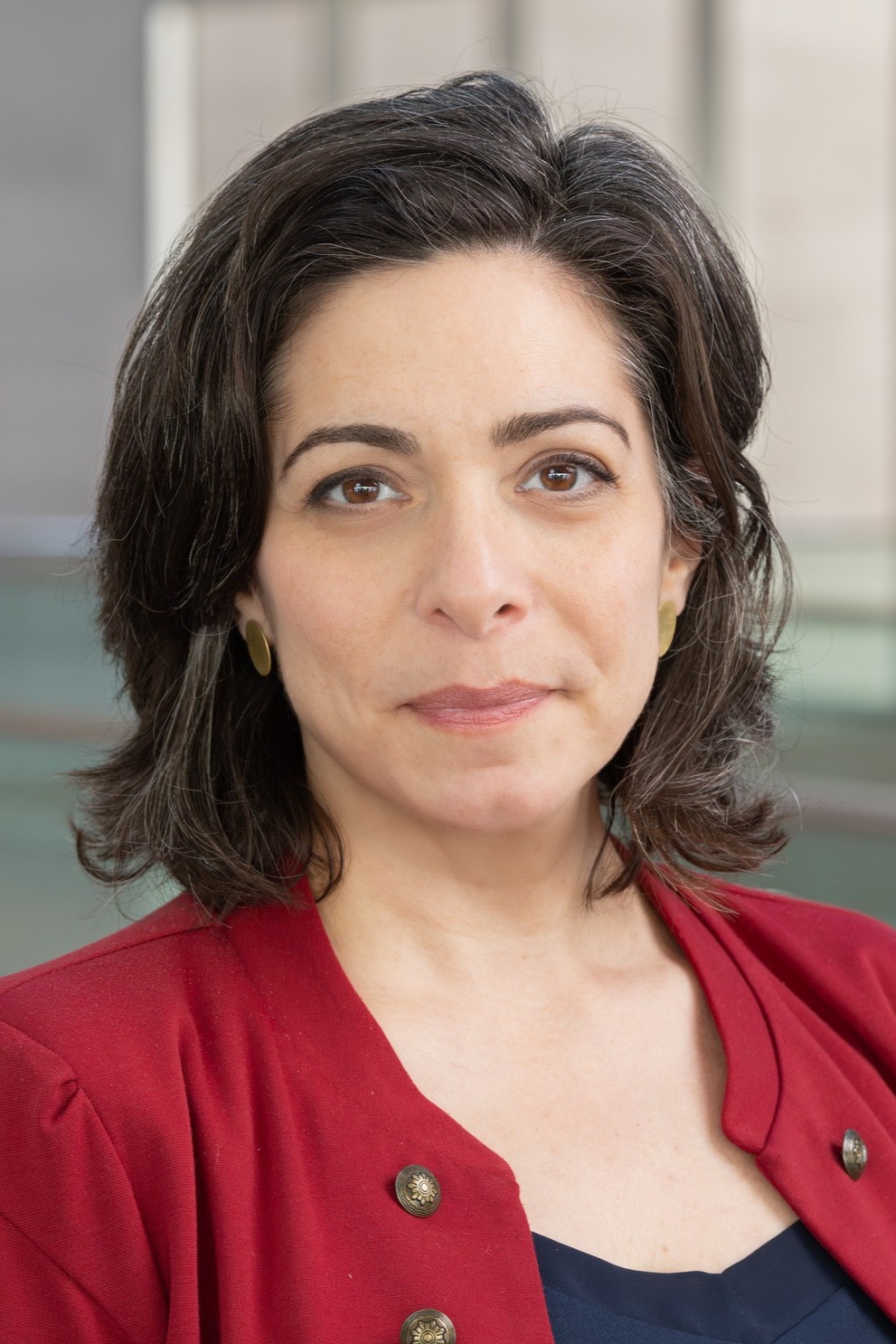
National Gallery of Art, Washington DC
Dr. Andaleeb Badiee Banta is the Andrew W. Mellon Senior Curator of Prints and Drawings at the National Gallery of Art in Washington. A specialist in Renaissance and Baroque European art, Dr. Banta has held curatorial positions at the Allen Memorial Art Museum at Oberlin College and the Baltimore Museum of Art. She has particular interest in the material and social aspects of art, and in demonstrating the pervasive contributions of women to the arts of pre-modern Europe. Her work has been supported with fellowships and grants from the Fulbright Foundation, the American Academy in Rome, and the National Endowment for the Humanities.
Is the Future Female?
The rallying cry “The Future is Female” has re-emerged since its origins in second wave feminism, demanding a status check among today’s museum professionals. The pronounced uptick in exhibitions, museum acquisitions, and research related to pre-modern women artists has been galvanizing, but whether this direction will continue as robustly and precipitously as it has in the past decade remains to be seen. How might the “woman question” adapt to accommodate broader approaches to the historical awareness of gender identity and presentation? What could gender parity look like in museum galleries and exhibitions, and is that outcome the collective goal? How might this apply on a global scale in our consideration of the pre-modern context? This talk hopes to raise more questions than answers as we navigate our path forward.