
In his review of the oeuvre of Vincent van Gogh (1853-1890) in the journal Mercure de France in 1890, the art critic Gabriel Albert Aurier (1865-1892) addressed the painter’s complex relationship with the artistic heritage of the seventeenth-century Netherlands. Although Aurier’s text became highly influential, remarkably little attention has been paid to this relationship. This is striking given the recent academic interest in reconstructing Van Gogh’s worldview. Van Gogh is known as a pioneering innovator, but he nourished himself with the art of the past in all kinds of ways, nevertheless.
Van Gogh’s dialogue with the seventeenth century is the subject of this voluminous double issue of Oud Holland. The artist’s letters, which served as the basis for this research, reveal a painter who is fascinated, even obsessed, with Netherlandish art from that period. Not only did he see and study his seventeenth-century predecessors through the lens of his own time, his ideas were also shaped by what French authors such as Théophile Thoré (1807-1869) and Eugène Fromentin (1820-1876) had previously written about them.
In addition, the idiosyncratic Van Gogh had personal convictions about the art that so mesmerized him. He was interested in seventeenth-century painters such as Rembrandt van Rijn, Jacob van Ruisdael, Frans Hals, Johannes Vermeer, but also, more unexpectedly, in Jan van Goyen and Peter Paul Rubens. What appealed to Van Gogh about these artists was subjective, ranging from painting techniques and color schemes to philosophical notions about humans and nature. In this special issue, what emerges is an image of an artist who was resolutely shaped by the past, but who also adapted that past to suit his own needs. Van Gogh looked forward in this way, but also backwards at the same time.
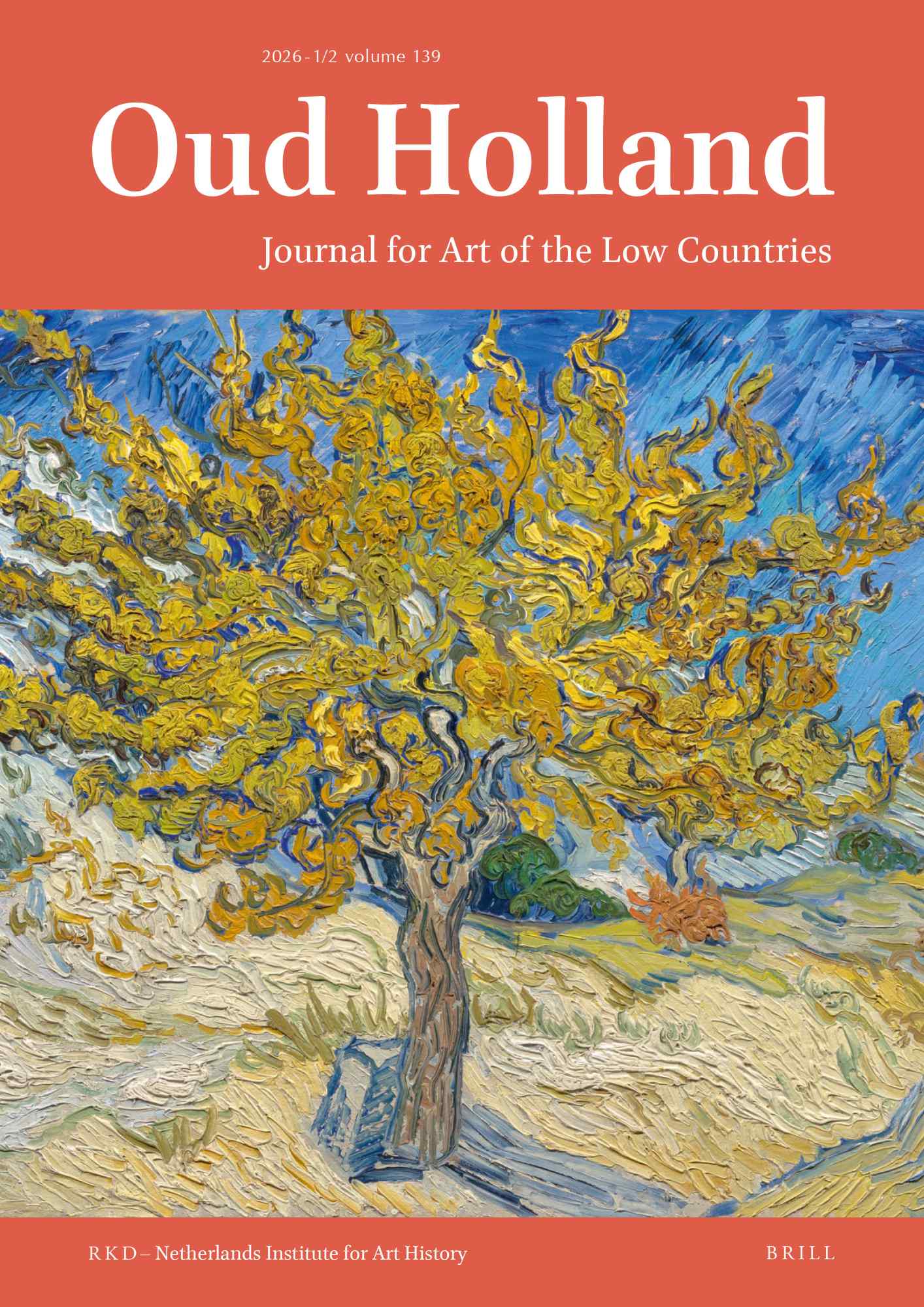
Cover Oud Holland 2026-1/2, volume 139
Oud Holland – Journal for Art of the Low Countries 2026, nr. 1/2:
Special issue: Vincent van Gogh and seventeenth-century Netherlandish art
Jan Dirk Baetens & Elmer Kolfin
‘He is well and truly Dutch’: Vincent van Gogh and seventeenth-century Netherlandish art
Read online
Elmer Kolfin
Twenty years of intense study: Van Gogh’s favourite books on Dutch seventeenth-century art
Read online
Alison McQueen
Van Gogh looks to Rembrandt van Rijn: Self-compassion, associative memory, creative process
Read online
Iris Louwersheimer
In search of the essence of nature: Van Gogh and Jacob van Ruisdael
Read online
Christopher D.M. Atkins
Thinking through a body of work: Van Gogh’s turn to Frans Hals
Read online
Dien Bos & Elmer Kolfin
Van Gogh’s admiration for Jan van Goyen’s Landscape with two oaks (1641)
Read online
Elmer Kolfin
An arrangement of lemon yellow, pale blue and pearl grey: What Van Gogh saw in Johannes Vermeer
Read online
Teio Meedendorp
Van Gogh and Peter Paul Rubens: Portraits and colour as form
Read online
Oud Holland – Journal for Art of the Low Countries
The oldest surviving art-historical journal in the world is a Dutch periodical. From 1883 until now Oud Holland – Journal for Art of the Low Countries publishes scholarly articles about important archival finds and major art-historical discoveries. The scope of Oud Holland is art from the Low Countries from ca. 1400 to 1920. For more information and news about recent issues of Oud Holland, online reviews, subscriptions and information for authors.