
My path toward Netherlandish art was certainly not written in the stars. Although my parental home was well supplied with books, there was nothing among our few art books and catalogues that ignited in me a passion for art history. But in my teens, I was fortunate to have an inspiring art teacher who encouraged me to enroll in art history classes set up by the Muzeum Sztuki in Łódź. There I met some amazing people and developed an enduring love of Dutch and Flemish art. Those years were formative in every sense, and the experience led me to pursue a degree in art history at the University of Warsaw.
I wrote my master’s thesis under the supervision of Professor Antoni Ziemba, who at that time was also Chief Curator of the Department of Foreign Painting at the National Museum in Warsaw. I completed an internship in his department as part of my studies, helping to compile materials for a catalogue that was being prepared by Hanna Benesz and Maria Kluk. In 2016, the project culminated in the publication of the two-volume Early Netherlandish, Dutch, Flemish and Belgian Paintings 1494–1983 in the Collections of the National Museum in Warsaw and the Palace at Nieborów: Complete Illustrated Summary Catalogue. The artworks it describes (insofar as they are still among the Museum’s holdings) can now be consulted online through the Digital Collections of the National Museum in Warsaw.
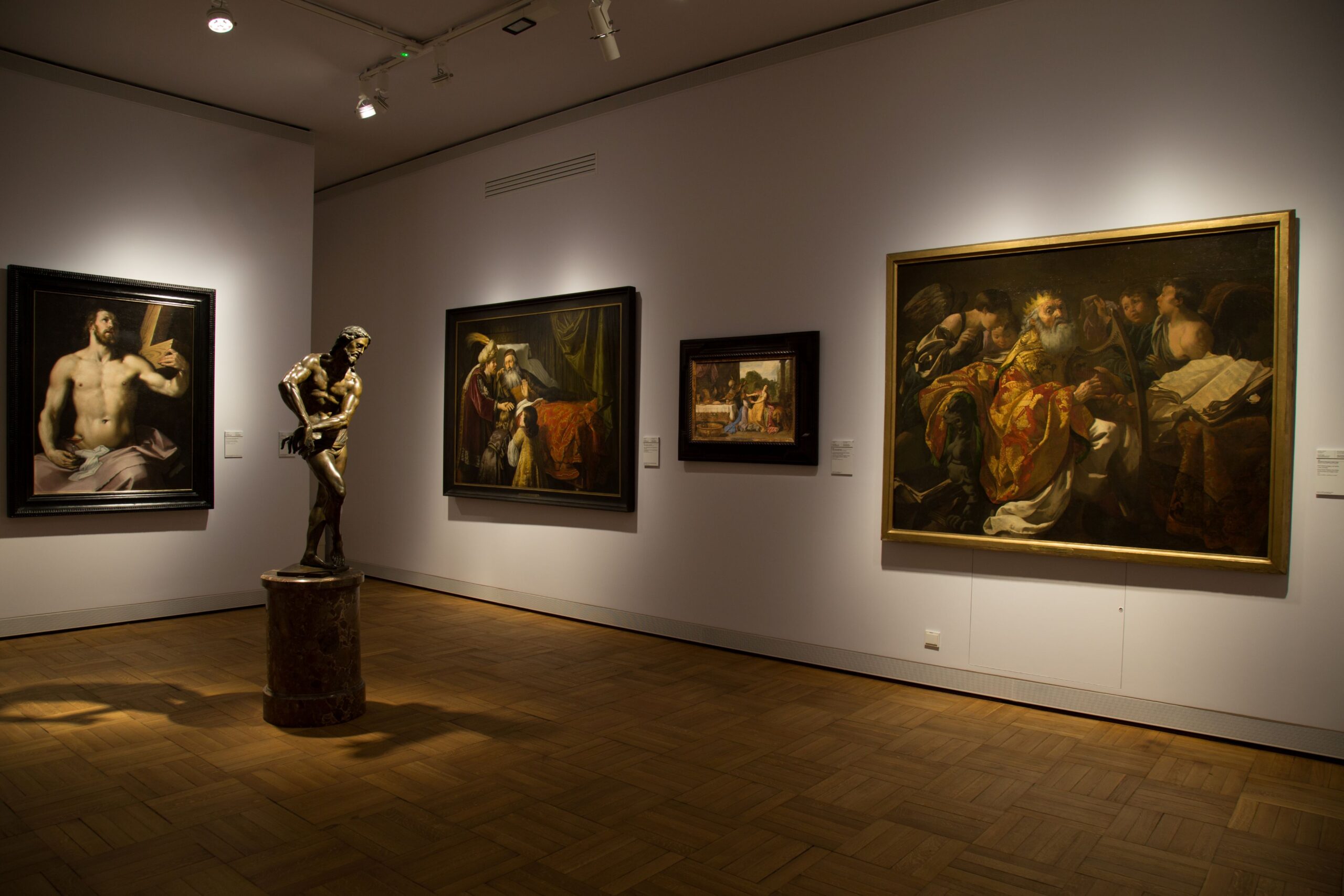
The Old Masters Gallery at the National Museum in Warsaw
Photo by Monika Bajkowska
The development and history of the National Museum in Warsaw’s collection are inextricably bound up with the wider history of Poland. Its origins date back to 1862, when the Warsaw School of Fine Arts established a museum. At that time, the Kingdom of Poland was a semi-autonomous state – with Warsaw its capital — subject to the authority of the Russian tsar and his designated viceroy. That same year, the museum’s first director, Justynian Karnicki (1806–1876), purchased paintings at the auction of the Johann Peter Weyer collection in Cologne that would form the new collection’s foundational core. They included superb works from both the Northern and Southern Netherlands, such as Cornelis Cornelisz. van Haarlem’s Christ with the Cross and a Chalice and Jacob Jordaens’s The Holy Family with Saint John. In the decades that followed, the collection expanded considerably, eventually becoming the largest of its kind in Poland, with nearly a thousand paintings originating from the Low Countries. The main highlights remain on permanent display in the Gallery of Old Masters and the Medieval Gallery.
In 2013, I became Junior Curator of the Dutch painting collection in the Department of Old Masters (formerly known as the Department of Foreign Painting), where Hanna Benesz introduced me to the professional practice of the art curator. She was exceptionally generous in sharing her expertise and I found her tireless dedication to the Flemish paintings she held so dear to be truly inspiring. One of my earliest tasks was to arrange the display of Maarten van Heemskerck’s Ecce Homo. The triptych had been housed at the J. Paul Getty Center since 2010, where it had undergone restoration and extensive research conducted by Yvonne Szafran, Alan Phenix, and Anne T. Woollett. Their findings were subsequently published under the title Drama and Devotion: Heemskerck’s Ecce Homo Altarpiece from Warsaw (Los Angeles, 2012), accompanied by a dedicated exhibition at the J. Paul Getty Museum. It was my job to organize a comparable presentation of the work in Warsaw.
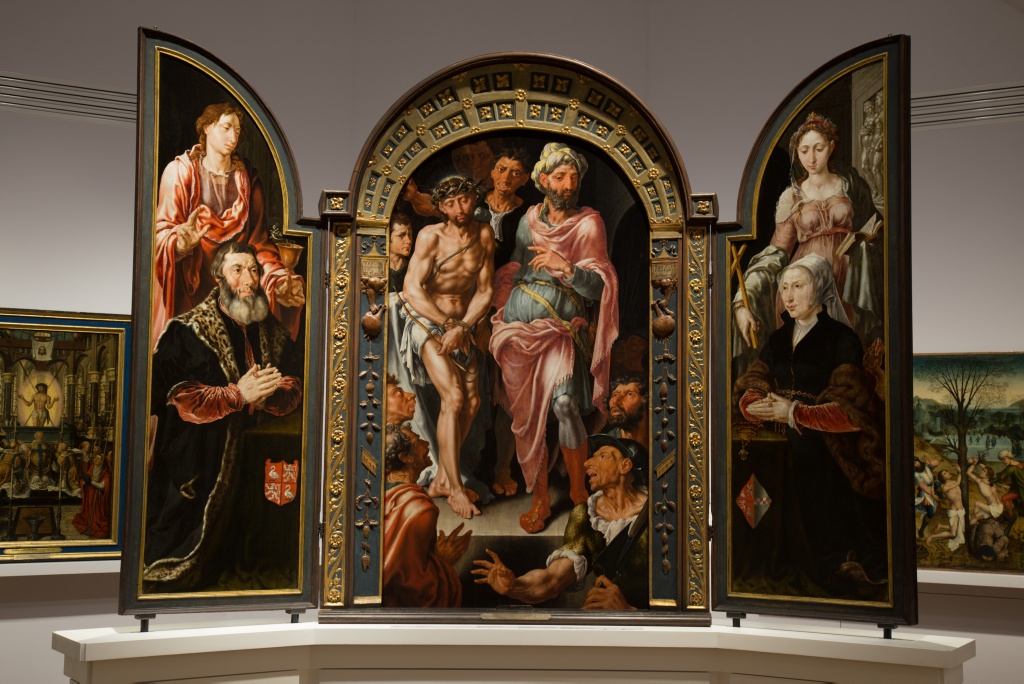
Maarten van Heemskerck (1498-1574), Ecce Homo, 1544
National Museum in Warsaw, photo by Monika Bajkowska
In 2017, Piotr Borusowski and I co-curated the exhibition In the Workshop of a Netherlandish Master: Dutch and Flemish Drawings from the Collection of the National Museum in Warsaw, which included underdrawings identified within Netherlandish paintings. The exhibition was preceded by a major technical research project in which both drawings and paintings were analyzed to learn more about the techniques and supports used in their creation. I found this project a deeply rewarding professional experience. The fact that the CODART Congress was held in Warsaw that year was a real boon, providing an opportunity to share and discuss our findings with visiting colleagues from across the field.
We made an important discovery while examining the paintings with an infrared camera. In the Triptych of Lamentation, which was then attributed to Jean Bellegambe, significant overpainting was revealed on both wings. On the left wing, in the composition depicting the Mass of Saint Gregory, a figure of a male donor had been added; on the right wing, the portrait of the female donor and her patron saint showed that Saint Josse had originally been depicted as Saint Dominic, while a Dominican monk had been painted out. These discoveries fundamentally altered our understanding of the work, calling into question the prevailing hypothesis concerning the identity of the triptych’s donor. I discussed this matter in my article The Lamentation Triptych from the National Museum in Warsaw in Light of a New Technological Analysis, which subsequently became the starting point for my doctoral research. In January 2024, I was awarded a PhD for my dissertation, Modifications in Netherlandish Donor Portraits of the Fifteenth and First Half of the Sixteenth Century: An Anthropology of Agency and Presence. None of this scholarly trajectory would have unfolded had I not, some years earlier, encountered an overpainted Dominican friar hidden beneath the painted surface of the Triptych of Lamentation. Unsurprisingly, this triptych remains my favorite work within the collection.
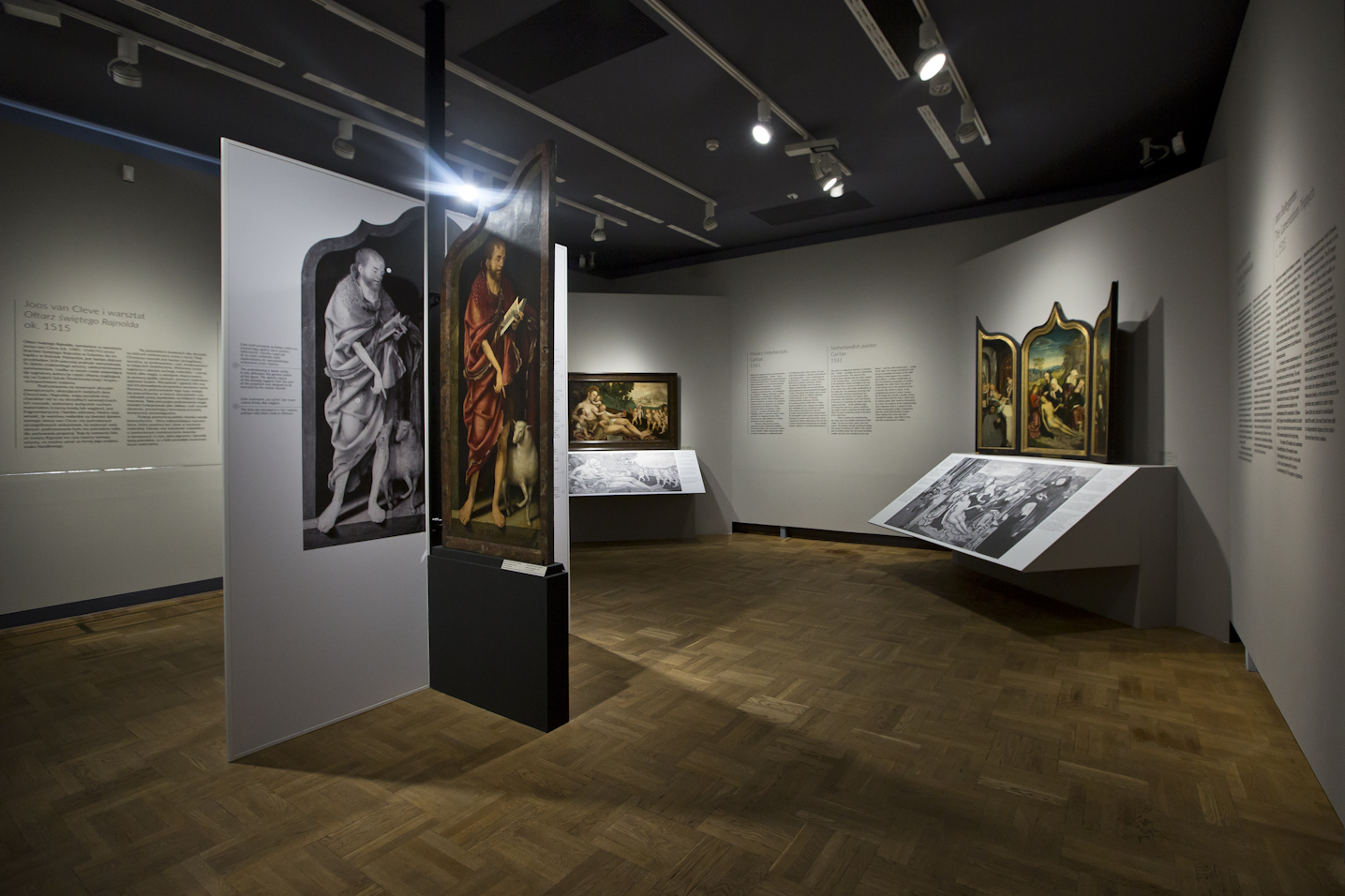
Exhibition In the Workshop of a Netherlandish Master, National Museum in Warsaw 2017
My CODART membership has had a decisive influence on my professional development, above all by enabling me to build up a network of international colleagues on whom I have been able to rely for guidance and collaboration. The resulting partnerships led to the exhibition With a Curious Eye: Mannerist Paintings from the Collection of the National Museum in Warsaw, co-curated with Greta Koppel and presented at the Kadriorg Art Museum in Tallinn (2017–2018). In 2021, I curated Different Perspectives: Dutch and Flemish Painting from the ERGO Hestia Collection, a project undertaken during the pandemic. During that period, when libraries were closed and travel was effectively impossible, the ability to correspond with colleagues by email was crucial in enabling me to complete this work.
I am also honored to serve as a member of the Advisory Panel on Inclusion. This role allows me to take part in ongoing discussions concerning the challenges that curators face when addressing questions of inclusion in our work. It has broadened my perspective considerably, prompting me to reflect more critically on how collections such as ours are presented, interpreted, and made accessible to increasingly diverse audiences.
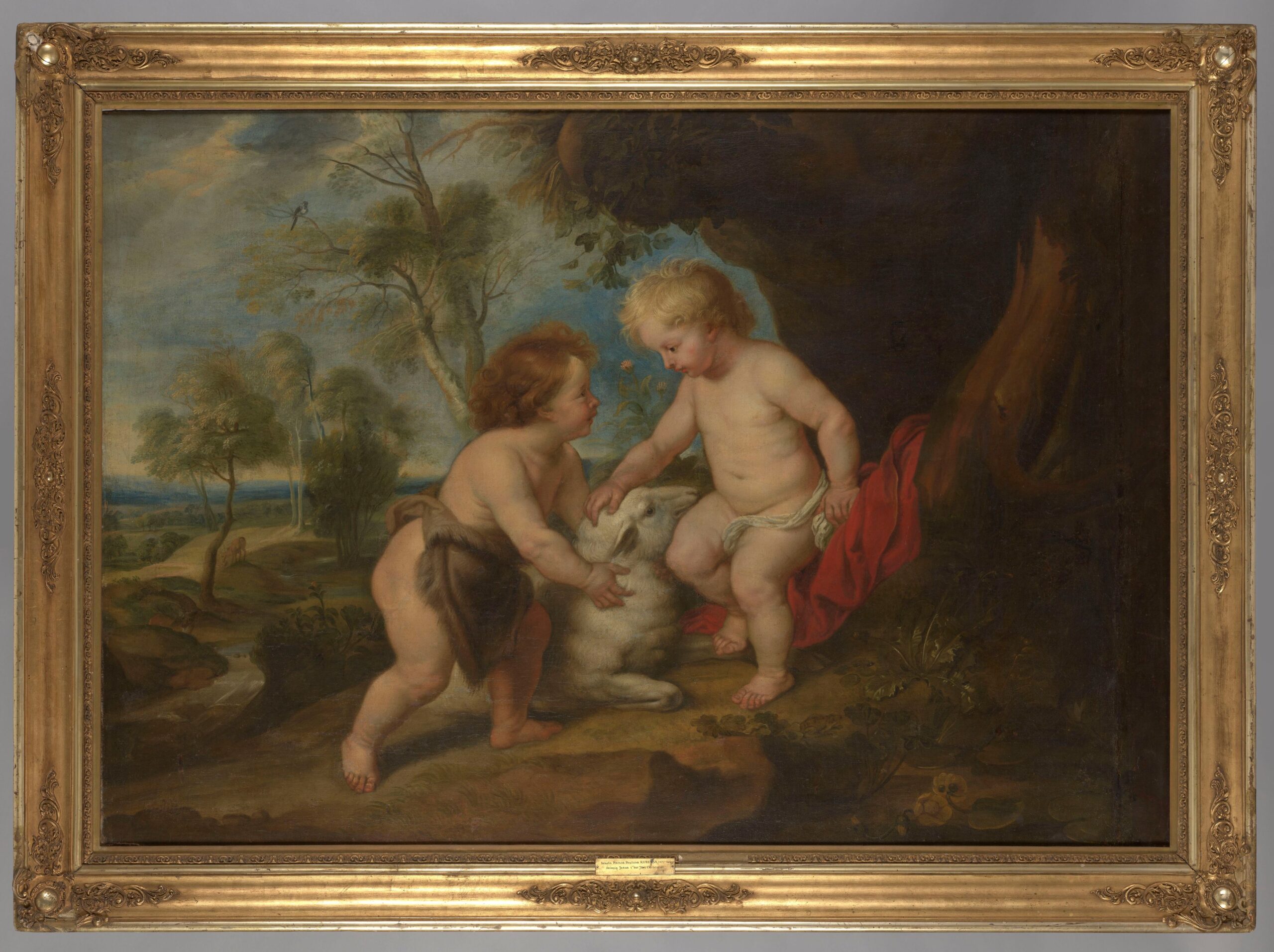
Workshop of Peter Paul Rubens, Child Jesus and St. John the Baptist, after 1628
National Museum in Warsaw, photo courtesy of the National Museum in Warsaw
Since 2023, I have held the position of Chief Curator of Old Masters Collection, succeeding Joanna Kilian-Michieletti and before her Professor Antoni Ziemba. In this capacity, I remain responsible for the collection of paintings from the Netherlands and Flanders produced between the early sixteenth and late eighteenth centuries. I am currently launching a new project focused on the paintings in our collection that reflect the influence of compositions by Peter Paul Rubens. The aim is to establish when each of these works was created and to reconstruct the process by which the master’s compositions were copied. This project is inspired in part with a view to the forthcoming celebrations marking the 450th anniversary of Rubens’s birth. In the longer term, we also intend to present our findings in a dedicated exhibition, which we hope will offer new insight into the enduring reach of Rubens’s artistic legacy within Polish collections. In carrying out this new project, I will once again be relying on cooperation with CODART colleagues, whose generous assistance continues to prove invaluable to my work.
Aleksandra Janiszewska-Cardone is Chief Curator of the Old Masters Collection at Muzeum Narodowe w Warszawie in Warsaw. She has been a member of CODART since 2013, and sits on the Advisory Panel on Inclusion.