
The Tyrolean State Museums are an aggregate of several museums, exhibition spaces, and a storage and research facility, largely located in Innsbruck, Austria. They comprise collections of art, archaeology, historical and military objects, natural sciences, music and folk art, in addition to a folk music archive, an extensive library, and the Giant Tyrol Panorama Painting. The collecting focus – from the beginnings in the nineteenth century — has traditionally been objects from Tyrol within its historical boundaries. That means that provenances hail from the states of Tyrol and Vorarlberg in Austria and as far south as Trentino in Northern Italy. The art collections contain paintings, sculptures, graphic arts, and applied arts from the Middle Ages to the present day. These are usually presented in the Ferdinandeum – historically the main museum — which is currently under renovation.
The foundations for the extensive collections were laid in 1823, when the Society for the Tyrolean State Museum Ferdinandeum was established amid a surge of Tyrolean nationalism following the Napoleonic wars. The collection is unlike those of many larger museums in German-speaking countries in that it originated not from princely holdings but from contributions and acquisitions from the Society’s members. This is partly because members could pay their annual membership fee in kind: they donated objects equal in value to the fee. Some of these equivalents, such as the famous Artuqid Bowl, are now among the most valuable objects in our collection.
Although the Society’s primary aim was to collect objects produced or found in Tyrol (objects of natural science, books, artworks, curiosities, items of historical significance etc.), it also frequently acquired foreign works when the opportunity arose. Most of these pieces probably originated from its own members or from Tyrolean private collections. In the long run, these gifts and legacies may possibly have enhanced the development of the museum collection more than any collecting strategy could have done. The Society itself had only limited funds — which it invested with great care – but it had many wealthy members. Thus, entire private collections found their way into the museum through donations or bequests. This meant that personal collecting preferences sometimes overrode the museum’s regional focus.
The Origins of the Dutch and Flemish Collection
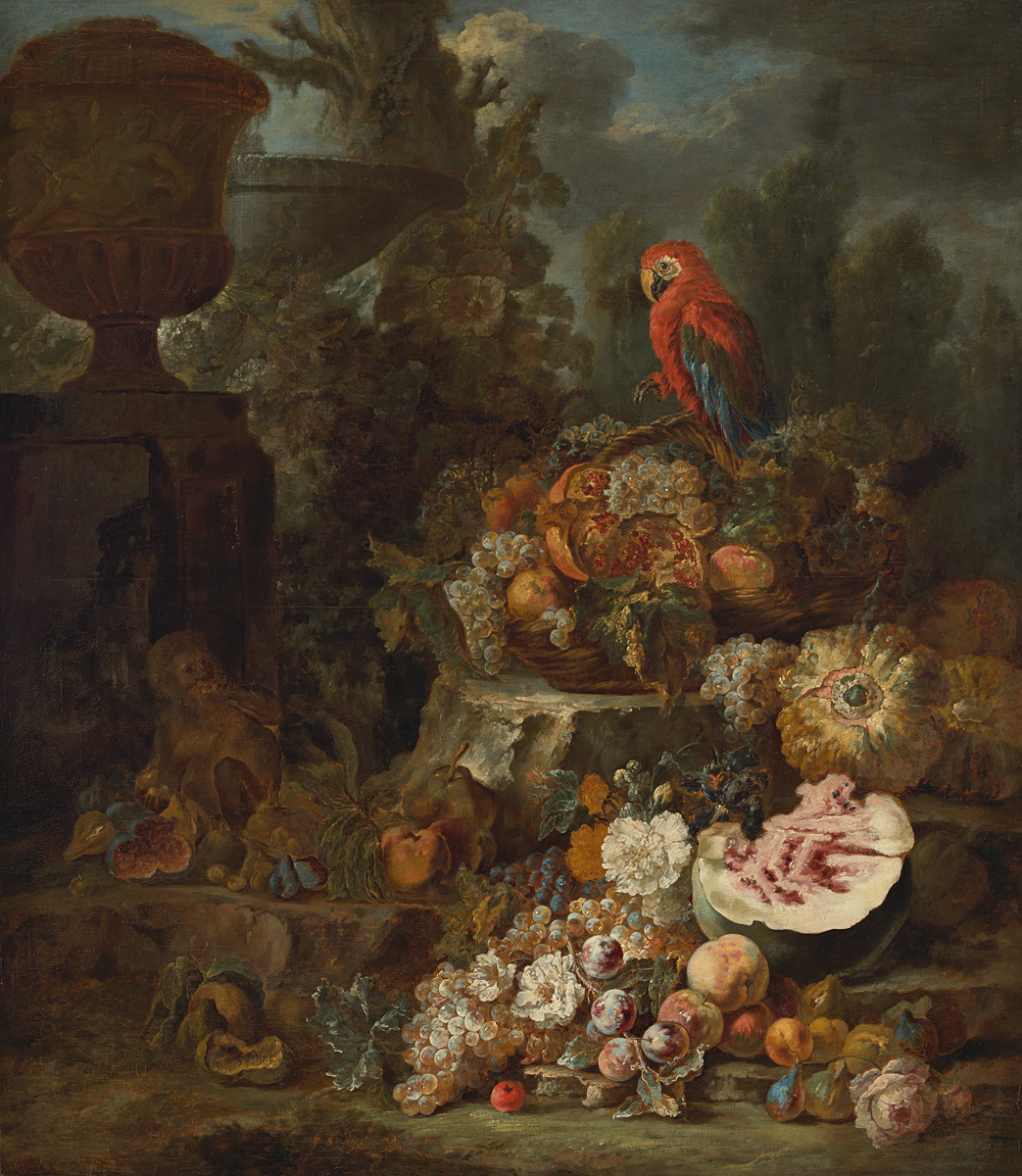
Fig. 1. Jacob van der Borcht (active from 1685/86), Fruit Still Life with a Parrot and Squash
© Tiroler Landesmuseen, photo: Johannes Plattner
The first report on the Society’s progress was published in 1825. It included a list of acquired paintings, some 160 of which were produced by Tyrolean artists and about 50 by foreign painters. The latter included about seven paintings that were probably made by Netherlandish artists. We can now identify six of them — four quite large Still Lifes (fig. 1) recently attributed to Jacob van der Borcht and two small portraits, copies after Jan Cornelisz. Vermeyen.
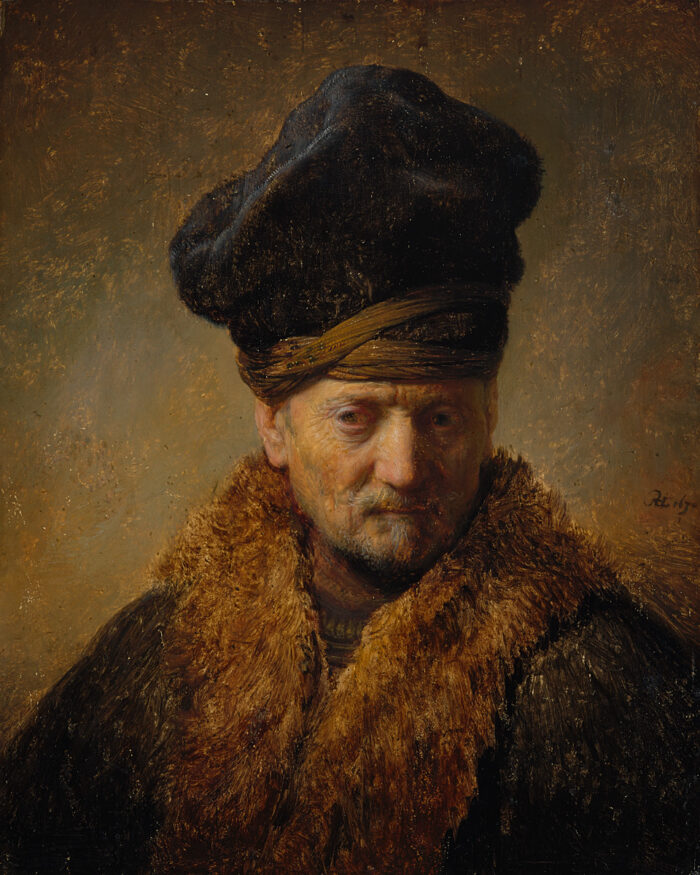
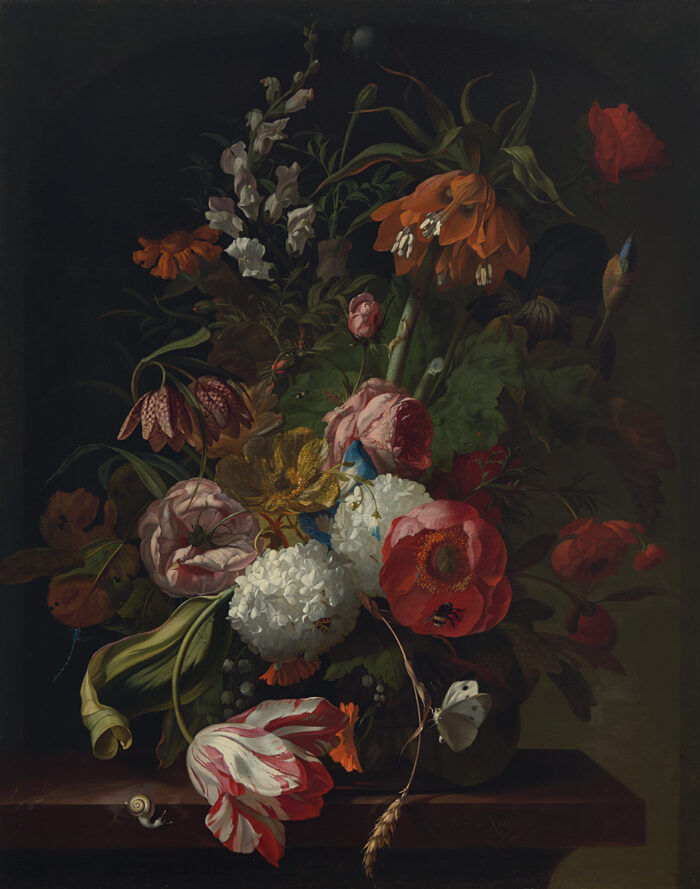
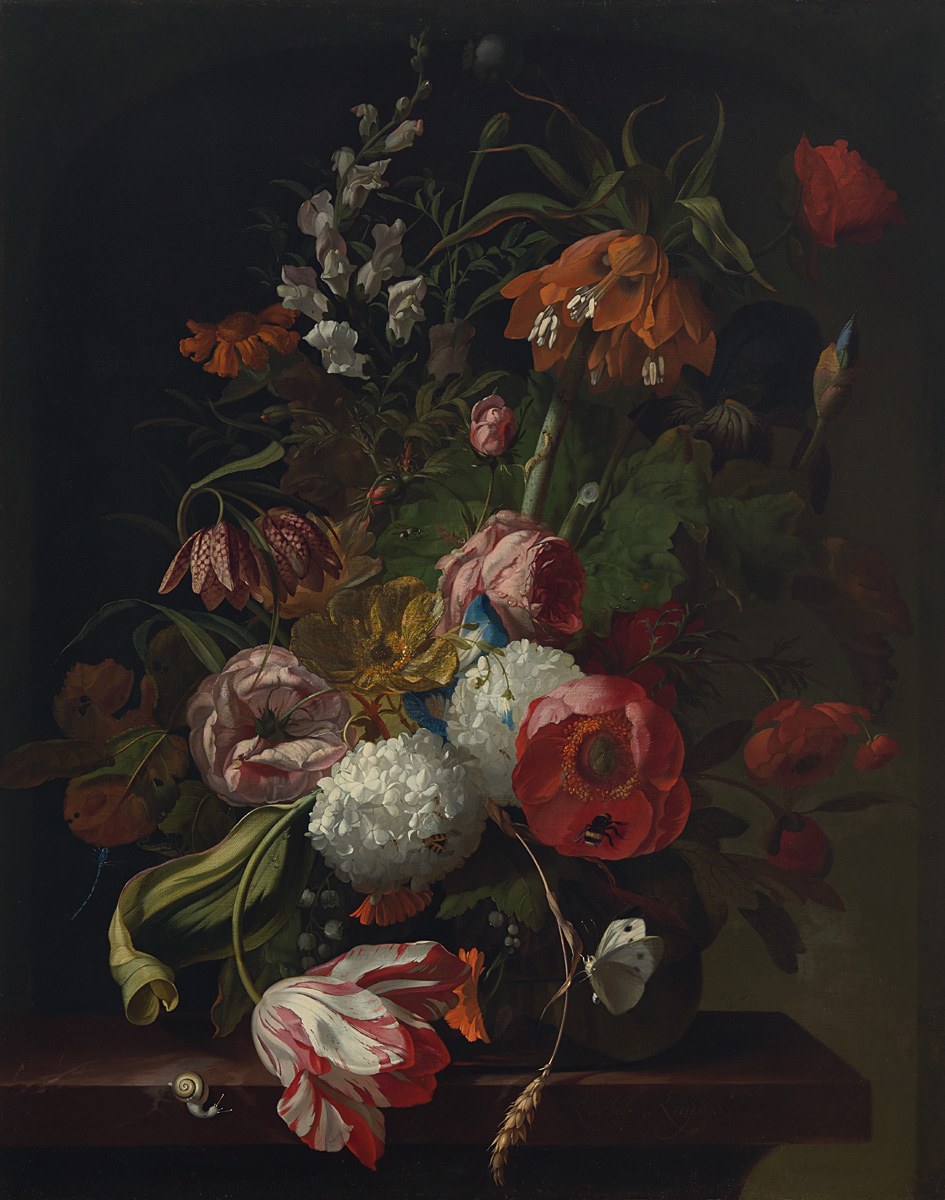
In the decades following that report, the number of Dutch or Flemish paintings initially grew very slowly. This changed significantly in 1856, when Josef Tschager bequeathed his fine collection of 112 paintings to the Society – including 70 that were described as of Dutch or Flemish origin. Tschager had acquired much of his collection in Vienna, at auction or through contacts with attachés formerly stationed in Belgium. It contained Rembrandt’s Old Man in a Fur Hat (fig. 2), Barent Fabritius’s Tobit and his Wife, two beautiful Flower Still Lifes (fig. 3) by Rachel Ruysch, and several other superb paintings. Their worth was recognized by the Society’s members: the introduction to the museum’s 1886 catalogue of paintings stated that every single one of Tschager’s paintings was “an enviable adornment of any gallery.”
-
-
Fig. 2. Rembrandt van Rijn (1606-1669), Old Man in a Fur Hat, 1630
© Tiroler Landesmuseen, photo: Johannes Plattner
-
-
Fig. 3. Rachel Ruysch (1664-1750), Flower Still Life, around 1700
© Tiroler Landesmuseen, photo: Johannes Plattner
The next major expansion of the holdings of Netherlandish paintings collection was not until the 1880s – but it was extremely dramatic. The brothers Johann Wieser and Ludwig von Wieser, both longstanding members of the museum society, bequeathed their enormous art collections to the museum. Johann died in 1886, leaving about 28 paintings and a staggering 10,000 prints to the museum. Ludwig donated 50 paintings in 1887 and 200 more followed after his death in 1888. The bequests also included thousands of other items – such as prints, objects of applied arts, chests, pieces of body armor, and weapons. Because of this huge quantity, each item was assessed for its suitability for a museum collection and several were immediately excluded and sold or exchanged.
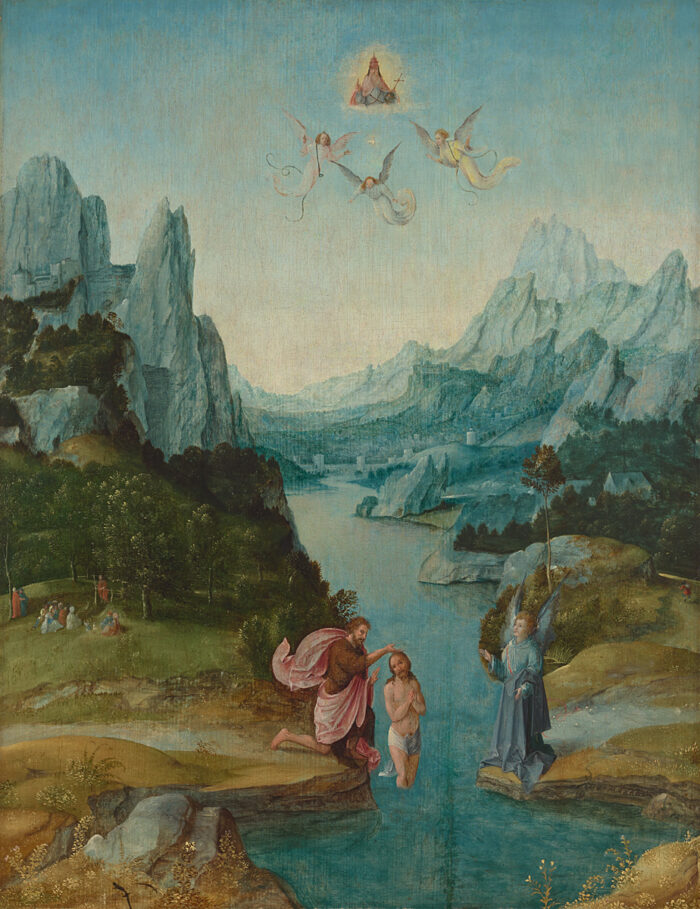
It is thought that about 16 Dutch and Flemish paintings were acquired from Johann Wieser’s bequest, including a Baptism of Christ (fig. 4) from the Workshop of Joachim Patinir. A further approximately 50 Netherlandish paintings entered the museum’s collection through Ludwig von Wieser’s donation in 1887 and his bequest. Highlights from his bequest include Pieter Brueghel the Younger’s Dance Around the Maypole and a beautiful Coastal Landscape With a Fortress and a Church by Bonaventura Peeters the Elder.
-
-
Fig. 4. Follower of Joachim Patinir, Baptism of Christ, between 1500 and 1535
© Tiroler Landesmuseen, photo: Johannes Plattner
-
-
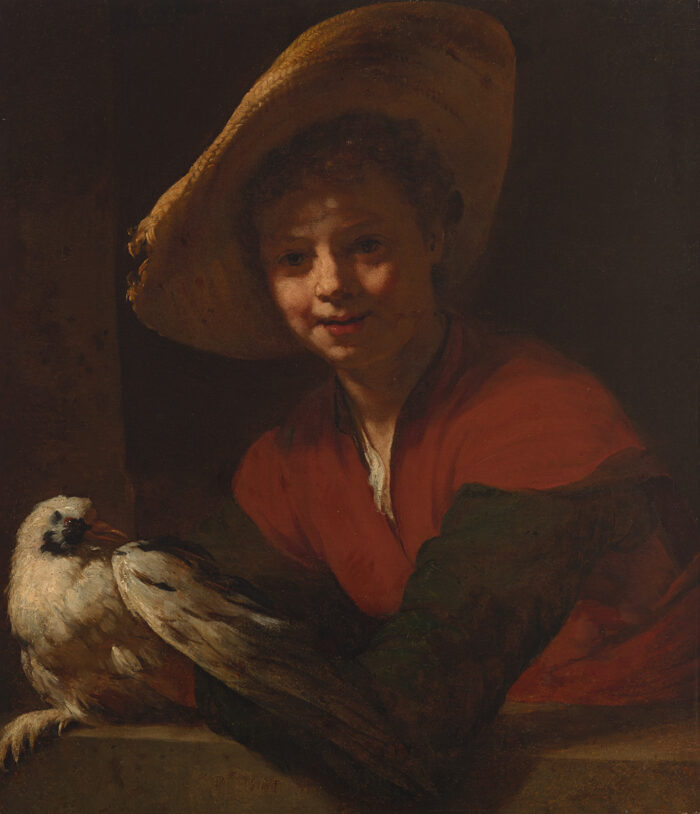
Fig. 5. Willem Drost (1633-1659), Boy with a Pidgeon, ca. 1656
© Tiroler Landesmuseen, photo: Johannes Plattner
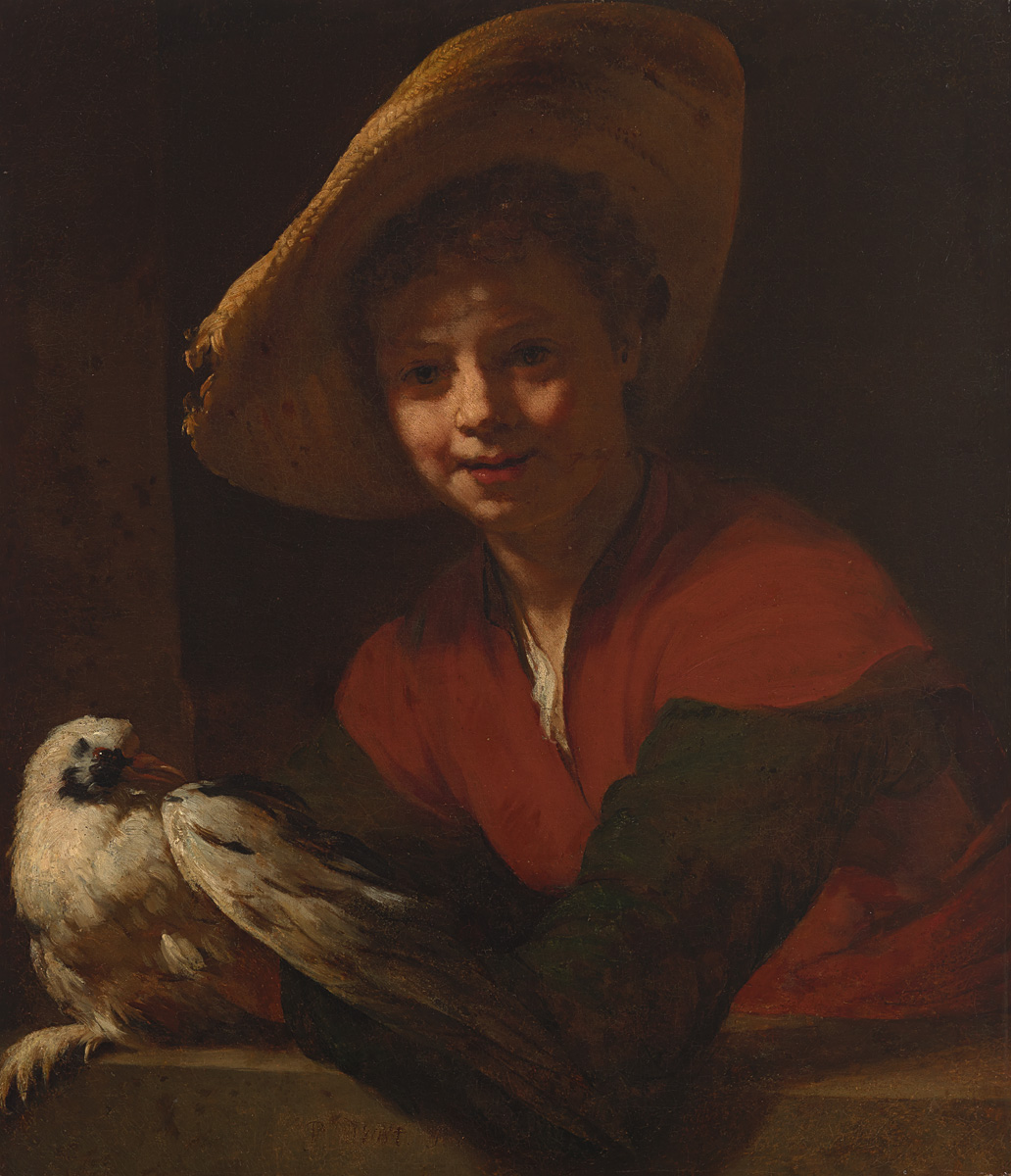
The final years of the nineteenth century were indeed the era of the museum’s most prominent supporters. In 1889, the Society’s member Leander Rigel bequeathed 78 paintings to the institution. Some 20 of them were of Netherlandish origin, including most notably Willem Drost’s Boy With a Pigeon (fig. 5). A final large group of paintings was obtained through the bequest of the painter Caspar Jele in 1893. By then, the Society had become more selective and it accepted only about half of the 40 paintings offered by Jele. The most remarkable pieces included two paintings by Pieter de Witte depicting Saint Catherine and Saint Margaret – which sadly no longer belong to the museum. Interestingly, Saint Margaret turned up at an auction at Sotheby’s in 2025.
The twentieth century brought few significant additions to the collection of Dutch and Flemish art. A 1943 bequest by the jeweler Bernhard Höfel included 14 Dutch and Flemish paintings, but most were copies or of low quality. Only Hendrick Cornelisz. Vroom’s Battle Between Spaniards and Englishmen (fig. 6) is worth mentioning here.
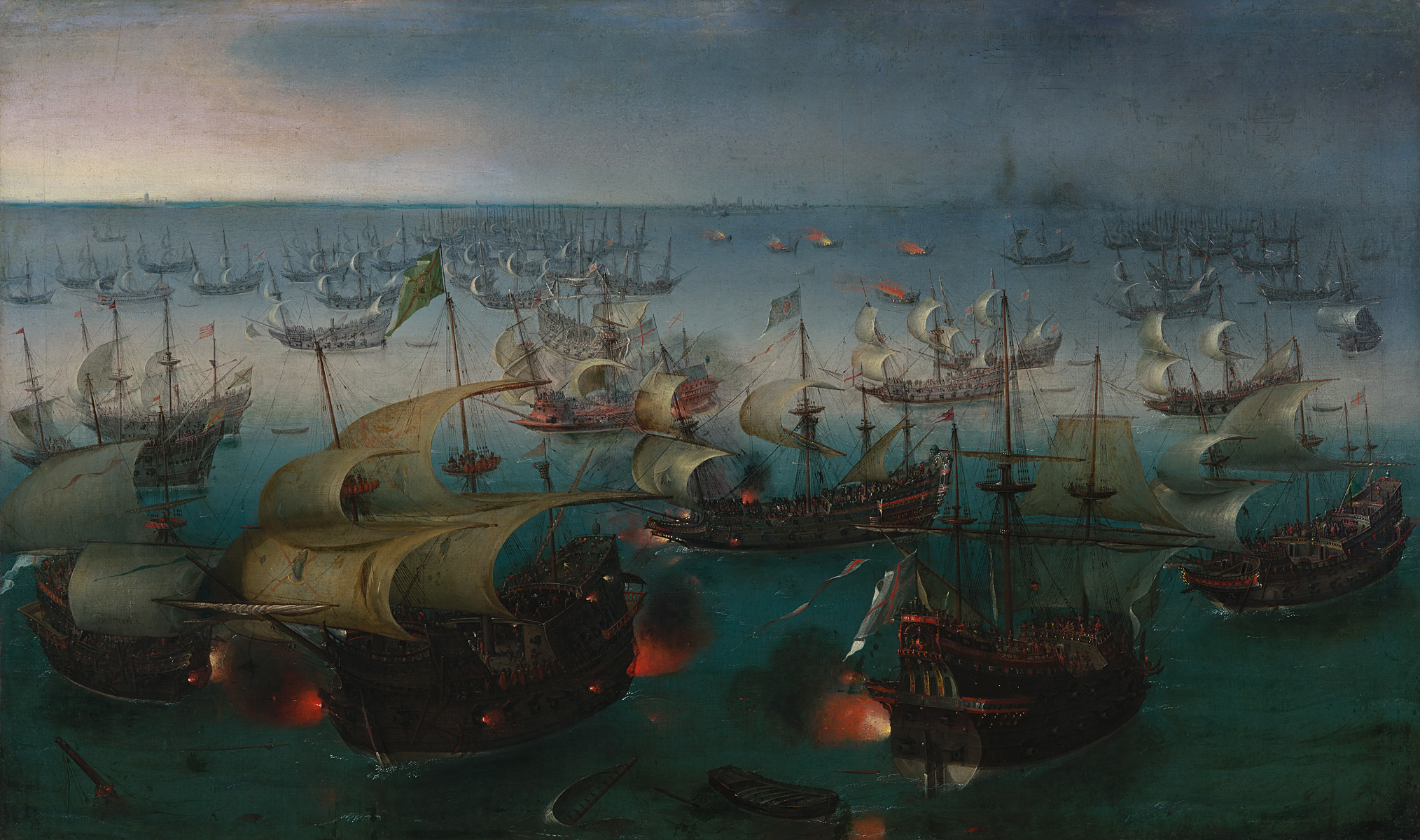
Fig. 6. Hendrick Cornelisz. Vroom (1566-1640), Sea Battle between Spaniards and Englishmen, 1601
© Tiroler Landesmuseen, photo: Johannes Plattner
Deaccessioning
The twentieth century proved to be a more turbulent chapter for the Netherlandish collection. The declining wealth among the bourgeoisie and changing tastes led to fewer donations. In addition, the acquisitions budget fell sharply in the Great Depression. The museum was forced to find new ways to fund its maintenance and purchases. One route was through deaccessioning. After a rehang of the cramped painting gallery in the 1920s, the storage was overflowing and objects had to be selected for sale. In 1938 and 1939, about 400 objects (mostly paintings and applied arts) were sold at the Dorotheum auction house in Vienna. Most of the objects sold off were of foreign origin and their removal was easy to justify by invoking the museum’s regional orientation. Several Netherlandish paintings left the museum that way. The proceeds of the auction were underwhelming and some losses are to be regretted now, but it is hard to say whether there was any viable alternative at the time.
Since the museum continued to suffer from financial constraints after the Second World War, it sometimes exchanged objects as a way of acquiring an especially desirable piece – which generally meant Tyrolean art. It sporadically found itself having to part with some of its more valuable pieces, which sadly included Children Playing with Bubbles by Matthijs Naiveu. Although exchanges were initially rare, they became more frequent in the 1970s and early 1980s. Some 100 paintings were deaccessioned in that period, among them 60 Dutch and Flemish paintings that had been deemed unfit for a museum. Of the 250 Netherlandish paintings that were originally part of the collection, about 160 remain today. The collection of Dutch and Flemish art — regarded as one of the highlights of the paintings collection around 1900 – did not fit into the Tyrol-centered narrative that dominated the museum’s display in the first few decades after the Second World War. It may be added that these Dutch and Flemish pieces may have been easier to sell than an anonymous German or Tyrolean painting. Fortunately, the most valuable Dutch and Flemish pieces remain in the collection to this day.
Research Project and Collection Catalogue
We are currently working on a major research project to gain a deeper understanding of our collection of Netherlandish art — of its qualities as well as its historical reception and conservation. This research builds on the foundations laid by Joop Nieuwstraten and Gregor J.M. Weber, who studied the collection in the 1990s. Weber was unable to complete the collection catalogue at that time but is collaborating on the current project. This art historical and art technical research project includes the Netherlandish paintings that have left the collection as well as those that currently belong to it. We want to trace what happened to them, if any new insights have arisen concerning their attributions or materials, and if their fronts or backs contain any information illuminating former owners, such as seals or notes. For this project, we have compiled an online database of the missing paintings, where we ask the public to help us find them. This database was presented at the Speaker’s Corner of the CODART conference in Ghent and can be found through this link. We would be grateful for any further information regarding these missing paintings.
Delia Scheffer is Curator of Art before 1900 at the Tiroler Landesmuseum in Innsbruck. She has been a member of CODART since 2024.