
Dear Gero, you were curator of old master art at the Staatliches Museum Schwerin for a quarter of a century! What an achievement – congratulations! Now, this time has come to an end. How do you feel? Relieved? Sad? A little bit of both? Is art history going to be part of the next chapter in your life?
“Many thanks! I do feel a bit sad because it has been one of the happiest parts of my professional life. It had its ups and downs, of course. Therefore, I also am glad to be relieved of the downsides of the job. I think it will be nice to be able carry on with art history without the daily affairs of administration. So maybe the next chapter will be even happier – but who knows, I’ve never been in retirement before.”
Looking back on an impressive career, do you still recall the moment when you decided to pursue this path? And could you tell us a little bit more about how you became interested in Dutch and Flemish art in particular?
“I grew up with art because my mother was an artist. At first, I was interested in German art of the 1920s and 30s and the early Renaissance in Italy. Later on, leading up to my PhD, I became interested in Dutch art of the seventeenth century and ended up specializing in Utrecht painting. My relationship to the museum world developed early on. When I taught at university, what I enjoyed most was to take students to the galleries and discuss original works of art. For a brief period, I became an assistant curator at the Kupferstichkabinett in Berlin. Being able to really dig into a collection of that size and scope was marvelous. That was when I realized how wonderful it would be to have a collection of my own, to care about and research. But my career took a different turn and it would take a while before I was charged with “my own” collection because I became what is called a “compiler” for the Hollstein Project for prints before 1700. That was really interesting because I got to travel a lot, to visit print rooms all over the world and got to know different curators. It was the beginning of a wonderful network, which I think is essential for the curator’s job. Even when I became a curator of paintings, I could rely on this network.”
Speaking of networks: CODART was a part of your professional career from the beginning. How important was this network for your work? Would you like to share some special memories with us?
“During my first months as curator in Schwerin Gary Schwartz encouraged me to become a member of CODART. I joined immediately and instantly felt at home. Everybody was welcoming, shared the same passion and was supportive and open towards other curators’ projects. This never changed. So you could say it all started with Gary. Also, some of my favorite exhibitions developed through CODART. One of my first exhibitions, in 2007, was dedicated to Nicholaes Berchem. It had been initiated by Pieter Biesboer, curator at the Frans Hals Museum, who approached me looking for potential partners for this project. I was immediately thrilled by the idea because my collection has a beautiful early painting by Berchem, Southern Landscape with the Ruins of Brederode Castle. Finally, my exhibition on Otto Marseus van Schrieck in 2017 was boosted by CODART. At the CODART congress in Madrid in 2016, I met Paul Knolle. When chatting over a glass of wine I told him about my plans for a show on Marseus and we decided to join forces that night. As it were, I exported an exhibition on a Dutch painter to the Netherlands which was really an achievement for me. In the end, I can say that the CODART network with its annual conferences and smaller focus meetings created lasting friendships.”
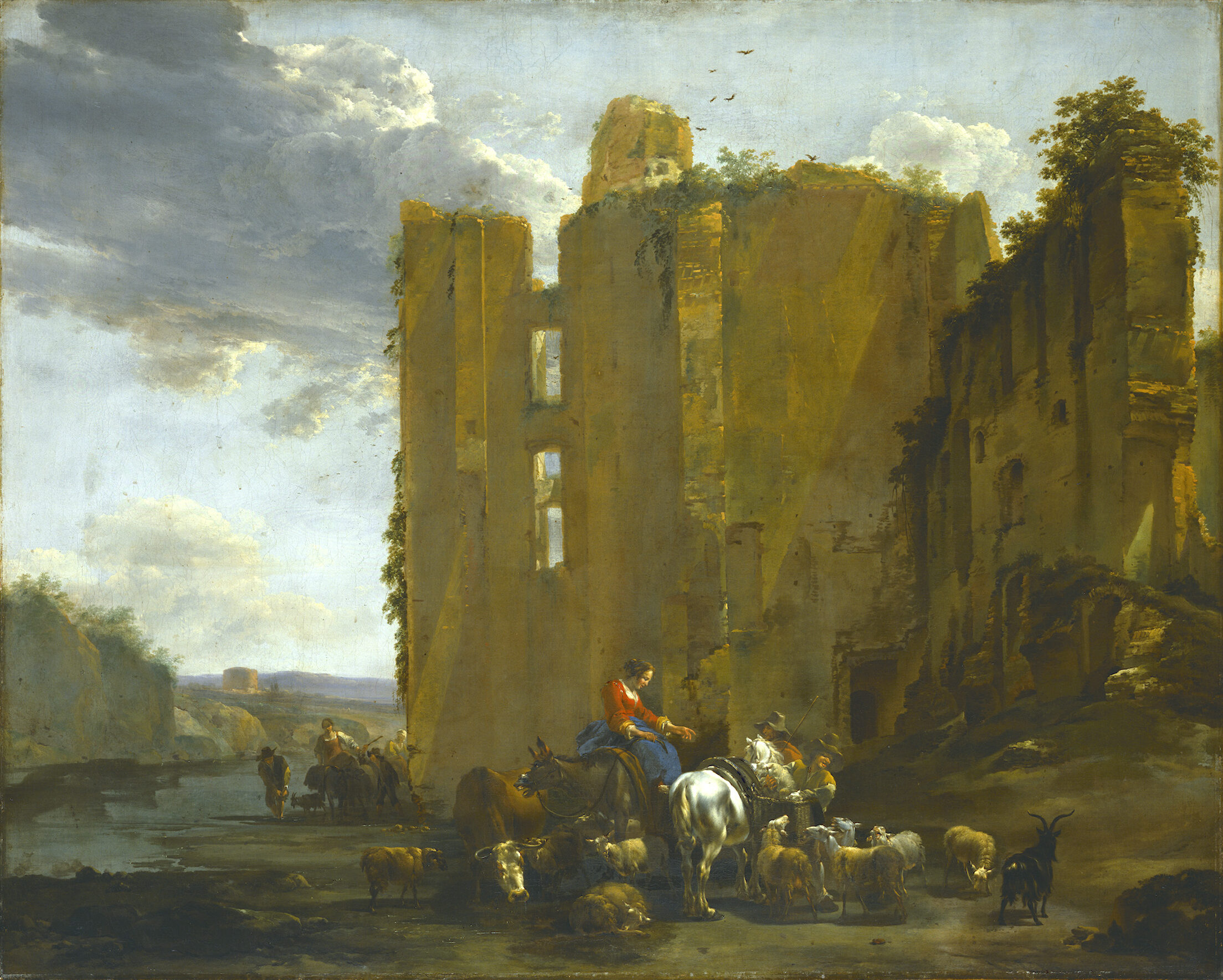
Nicolaas Berchem (1621/1622-1683), Southern Landscape with the Ruins of Brederode Castle, 1650
Staatliches Museum, Schwerin
Is there anything you would like to share with the “next generation” of curators? What is your advice for a successful and happy career in the museum world?
“Yes, I would like to stress that, next to your own institution itself, the network of people outside of it is the most important thing – not only for exhibition projects but also for daily work. I have constantly been in touch with colleagues from all over the world about research and attribution questions, which I greatly enjoyed. Already as a student I was happy to profit from older and more experienced colleagues who were willing to share their expertise and were in turn interested in what I thought. Later, as curator in Schwerin, I tried to do the same thing. What I would like to say is: be kind to one another. That makes life so much easier and more enjoyable.
One of the things that has given me a lot of strength has been the joy of preparing special exhibitions and finding new ways of presenting my permanent collection. At the same time, I found it important to maintain a standing as a scholar, to be able to publish, to be able to offer something to the community of researchers. The feedback from the community can also be a source of consolation if sometimes you do not get the appreciation you feel you deserve within your institution.
Also it is important to learn to communicate with the administration, with a staff that has no art historical background whatsoever. It always pays off to be on friendly terms with the people in different departments of your institution.
Not all ideas and projects will be realized in the end. Don’t be too disappointed if something does not work out. However, it’s worth fighting for your visions. Stand up for what you believe is important! Sometimes one has to be annoying and get on people’s nerves.”
I’ll remember that! Speaking of the museum world – what are the major changes you have noticed during the last 25 years, for the better and maybe also worse?
“I think there is a general trend that politicians and even museum managers become increasingly alienated from culture, from art, from history. This starts in school: in children’s education there is less emphasis on art and history than on the natural sciences, even though it is equally important to learn about the humanities. As a consequence, we as curators and art historians have to deal with people who lack an understanding of our work and the importance of preserving and presenting art and culture. Therefore, it’ll be a challenge for future generations of scholars and curators to make sure to be heard and understood. It is not so much about the number of visitors but also about the quality of their visit – what they take away, how much they have gained in their understanding of art and history. We will have to find a well-proportioned balance for a public that is ever more diverse.
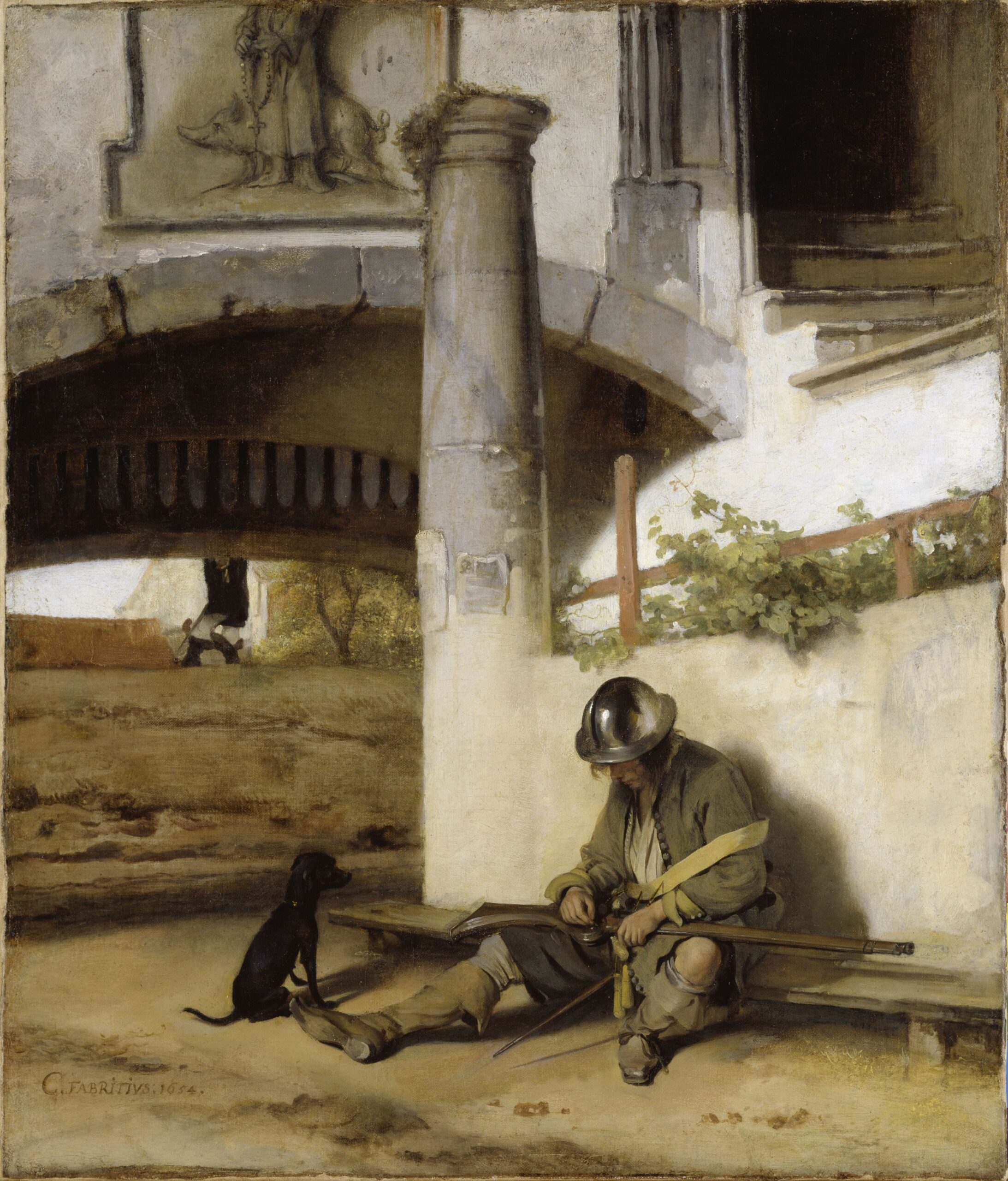
Carel Fabritius (1622-1654), The Sentry, 1654
Staatliches Museum, Schwerin
A huge change for the better are the possibilities offered by the internet to carry out research even from a remote place like Schwerin. In recent decades so much literature has been made available online. This is a great improvement compared to when I started here. Also, the fact that a lot of museums have made their collections accessible online is enormously helpful. This is a task Schwerin still has to tackle.”
The Staatliches Museum Schwerin has just reopened after a longer period of closure and renovation. How did your collection in particular benefit from it? Did you do a rehang?
“One fundamental and important change is the lighting. We are also happy that we can offer free entrance for the next four years. Naturally, the museum is much livelier and we get more visitors now. This is temporary, but for the time being, it’s my ideal version of a museum. Our collections are public property and shouldn’t be behind a paywall.
We did a rehang that pays tribute to the fact that the gallery is now the only window into the very diverse collections in Schwerin of objects and materials from antiquity until today. The intention was a slow rotation of the favorites with lesser known works from storage – quite a challenge for a curator loving his Berchem and Fabritius. I think this will surely be an opportunity for my successor to bring a fresh view to the collection and make completely different choices for combining and displaying works.”
Can you tell us a little bit more about the importance of researching your own collection? And were there any unexpected insights or outcomes of your research you would like to share?
“I think researching your own collection is vital and greatly underrated. Paintings have a story to tell and it is the curator’s job to bring it out. Through our preconceptions, stories are also overlooked. Schwerin, for instance, is very famous for its Dutch and Flemish paintings from the seventeenth century. Through my research, I have become quite convinced that its initiator, Duke Christian Ludwig of Mecklenburg, was not interested in Dutch and Flemish paintings as such, but in contemporary art. Thus we have paintings by Jan Griffier, for instance, who is a rather unknown but an interesting artist who could only be discovered by digging into the collection.
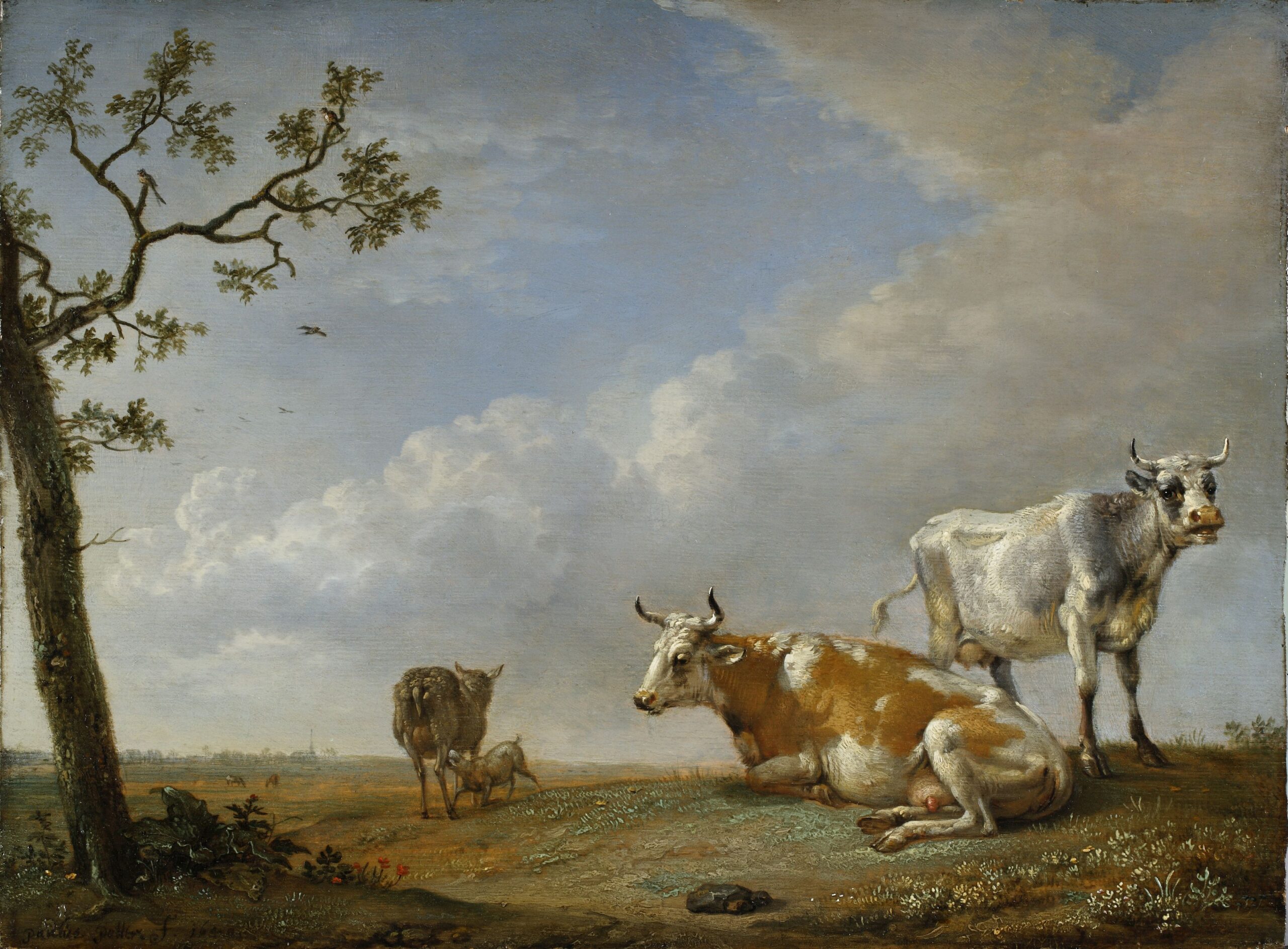
Paulus Potter (1625-1654), Cows in a Landscape, 1649
Staatliches Museum, Schwerin
Also I would like to mention the catalogue of genre paintings I published in 2010 for which the artworks were examined by our conservators. We made an exciting discovery about one of our paintings by Paulus Potter. From archival material I learned that the painting had originally been conceived in a landscape format before it was cropped on both sides. When examining the object we noticed that one of the cut off parts had been inserted into the frame. Thus, we were able to present a part of a painting which had been deemed lost. Such discoveries are only possible, if you have time, of course. Time is crucial for research.”
What do you think was your most important contribution to the Staatliches Museum Schwerin? Which mark did you leave?
“Such a question is always difficult to answer but I will try nevertheless. When I came here in 2001, I was happy to find a lot of research waiting for me. There was no critical catalogue of the collection, only a list of works with outdated attributions. Luckily, the archives are just across the street. There I could find the entire correspondence of Duke Christian Ludwig of Mecklenburg concerning his acquisitions of art in the Netherlands, which allowed me to pinpoint the acquisition of our Fabritius painting, for example. Understanding the creation of the collection and including this knowledge into the presentation of our permanent collection as well as into special exhibitions was something new.
Another highlight was an unusually large donation of paintings in 2013. The Berlin collector Christoph Müller, who sadly passed away two years ago, was a great admirer of our museum and decided to donate 155 paintings by Dutch and Flemish artists, many of them fairly unknown. They used to be presented in two separate rooms. For the reopening I reproduced this hanging as a tribute to Müller even though since his passing the paintings from his bequest may be combined with and integrated among the works from the rest of the collection. I am curious to see how my successor will work with those paintings and what new constellations will be created.”
About the future: what are your hopes for your collection’s future? Is there an exhibition or any other project you would like to see realized?
“There are still about 600 paintings, lost at the end of the Second World War, that keep cropping up. Currently, we are trying to retrieve a very attractive self-portrait by the German painter Jan Kupetzky. I believe that this reacquisition would be vital for our collection and raise the quality of the entire collection of portraits.
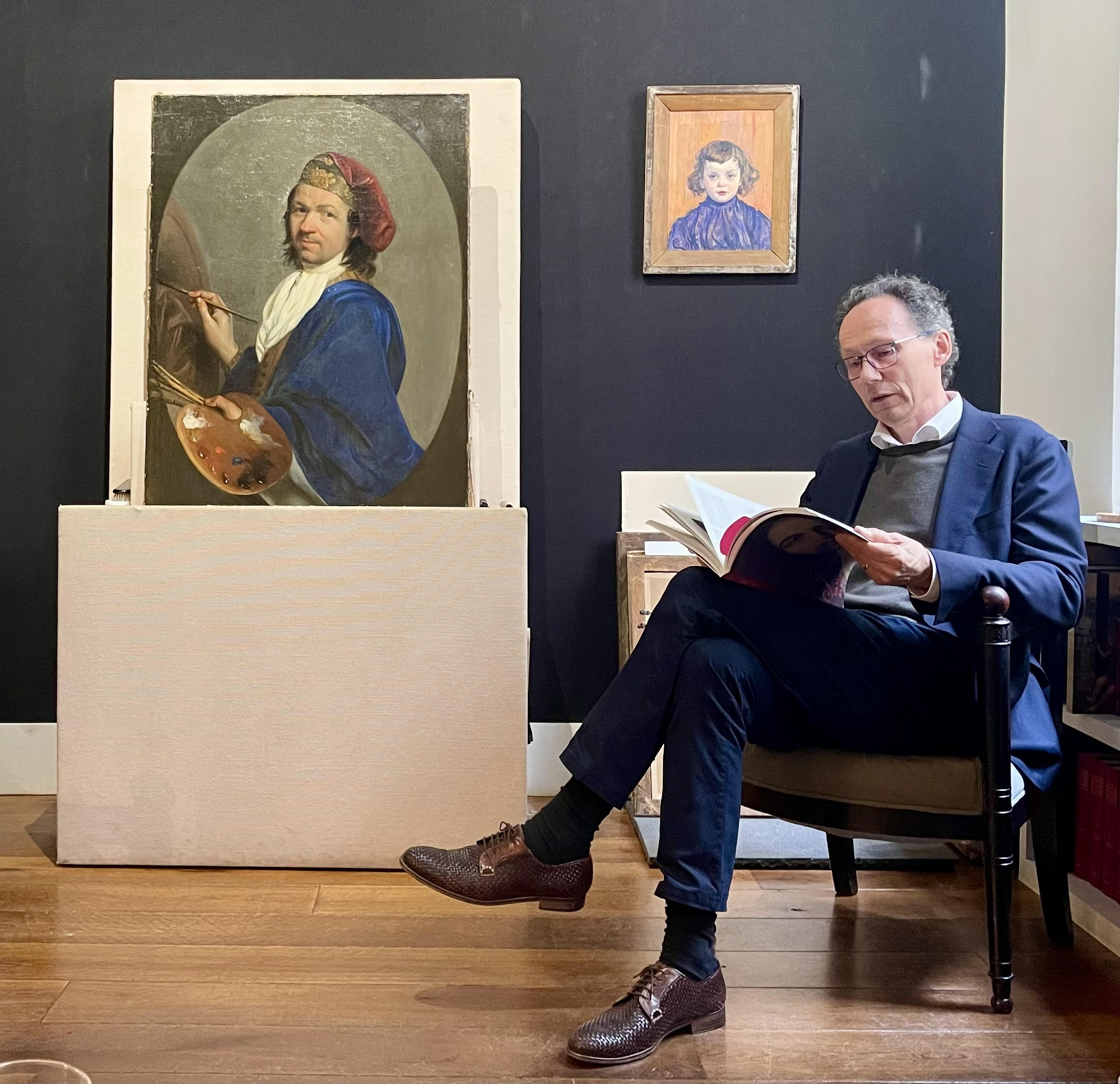
Gero Seelig with Jan Kupetzky’s Self Portrait
© Ute Edda Hammer
I also hope that awareness for our collection’s particular history will be raised. Therefore, I would have liked to do an exhibition on Christian Ludwig who has hitherto been neglected by historians and art historians. This would enhance our understanding of our collection’s specific history but also of the dukedom of Mecklenburg.”
One last question before we part: if you could, which painting from your collection would you take home as a souvenir?
“You might be surprised but it is not Fabritius’ The Sentry which has accompanied me since the beginning of my career and might be – as some say – the most renowned painting in our collection.
A painting I really fell in love with was our little painting by Paulus Potter, Cows in a Landscape, which I included in the new catalogue on Dutch landscape paintings. It conveys a benign and relaxed atmosphere by showing a very small strip of landscape under a wide sky with cows grazing. In the end, though, there are so many paintings which I “like best“ so I’m quite relieved that I don’t really have to make that choice!”
Thank you very much, Gero! I wish you all the best for your future and I’m looking forward to seeing you at a future CODART event!
Gero Seelig was Curator at Staatliches Museum in Schwerin from 2001 to April 2026. He has been a member of CODART since 2001. Corinna Gannon is Assistant Curator at the Städel Museum in Frankfurt. She has been a member of CODART since 2023.